
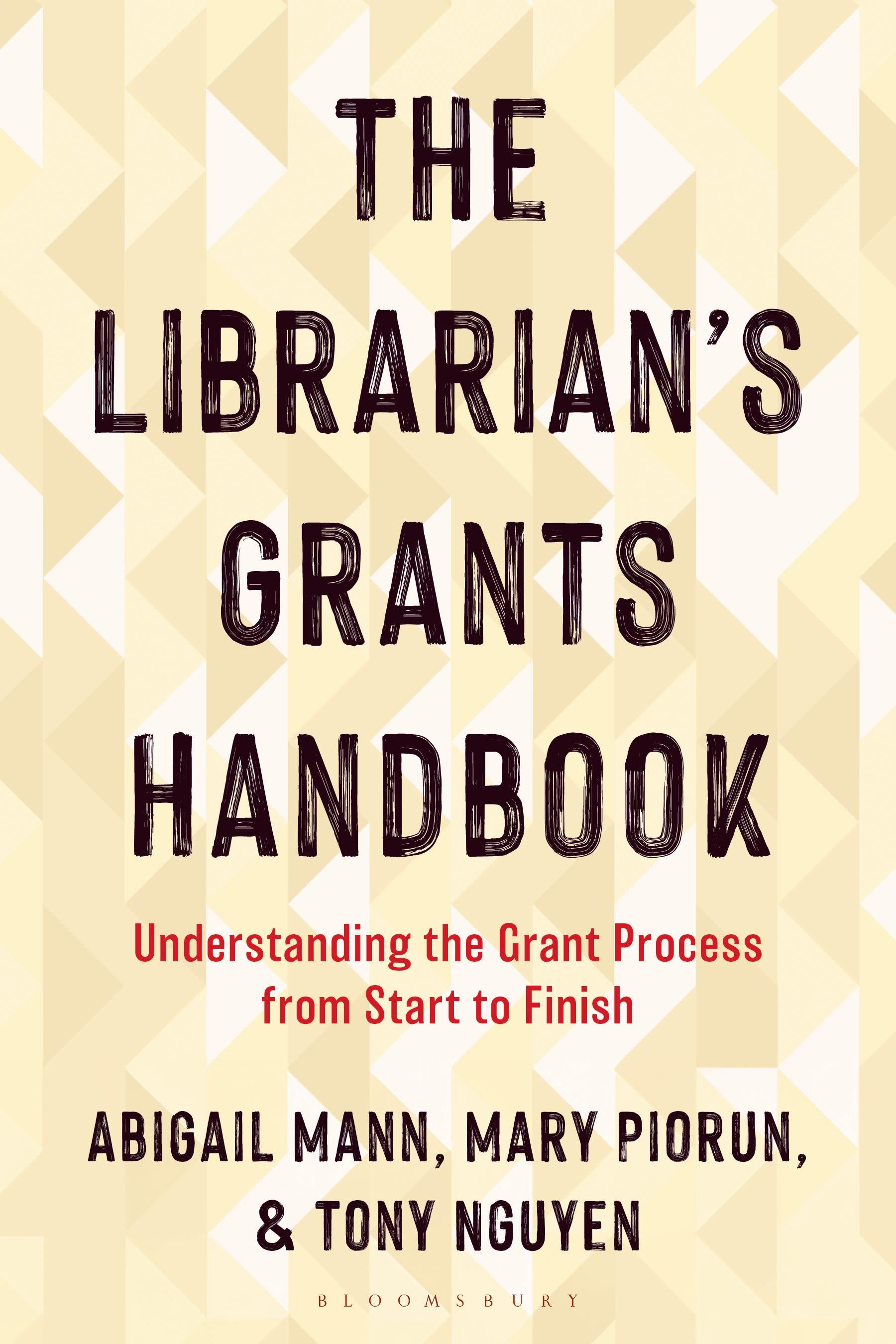
This book aims to help librarians develop grant proposals and juggle the differing demands of multiple collaborators both internally and externally.
Grants have long been a tool that allow libraries to increase their reach and offer access to more communities. Libraries are seen as a trusted bridge connecting communities with information and resources. They are often at the intersection of various disciplines, projects, and funding opportunities, making librarians a natural fit to lead grant development. The shifting realities of public, academic, and health sciences libraries today necessitate that information professionals must, more frequently, seek external funding for such projects. Yet few librarians are formally trained in grant-writing, nor in marshaling together a team of grant-seekers with varying positions, experiences, and knowledge fields. In addition, the institutional support staff that might have traditionally helped with such endeavors has frequently disappeared from rosters due to budgetary constraints within their institution, meaning that librarians seeking grants often do so without support often provided to academic researchers.
This book will be of particular use to librarians seeking funding for larger projects that allow more community outreach and librarians working to develop a grant proposal with faculty and community members who may lean on them for support.
Grants have long been a tool that allow libraries to increase their reach and offer access to more communities. Libraries are seen as a trusted bridge connecting communities with information and resources. They are often at the intersection of various disciplines, projects, and funding opportunities, making librarians a natural fit to lead grant development. The shifting realities of public, academic, and health sciences libraries today necessitate that information professionals must, more frequently, seek external funding for such projects. Yet few librarians are formally trained in grant-writing, nor in marshaling together a team of grant-seekers with varying positions, experiences, and knowledge fields. In addition, the institutional support staff that might have traditionally helped with such endeavors has frequently disappeared from rosters due to budgetary constraints within their institution, meaning that librarians seeking grants often do so without support often provided to academic researchers.
This book will be of particular use to librarians seeking funding for larger projects that allow more community outreach and librarians working to develop a grant proposal with faculty and community members who may lean on them for support.
Payez facilement par carte, Klarna, Apple Pay ou Google Pay. Pas satisfait ? Vous avez toujours une garantie de remboursement de 14 jours. En savoir plus dans nos conditions. Si vous avez des questions, envoyez-nous un e-mail à hello@memmo.org.
Memmo facilite tes études, où que tu sois dans le monde. On rassemble tes manuels de cours et des outils d'étude intelligents au même endroit : résumés, quiz, podcasts et flashcards. Et il y a Ted, ton compagnon d'étude qui répond à toutes tes questions. Plus de 50 000 étudiants étudient déjà ici – conçu pour t'aider à apprendre plus vite et à moins stresser.