
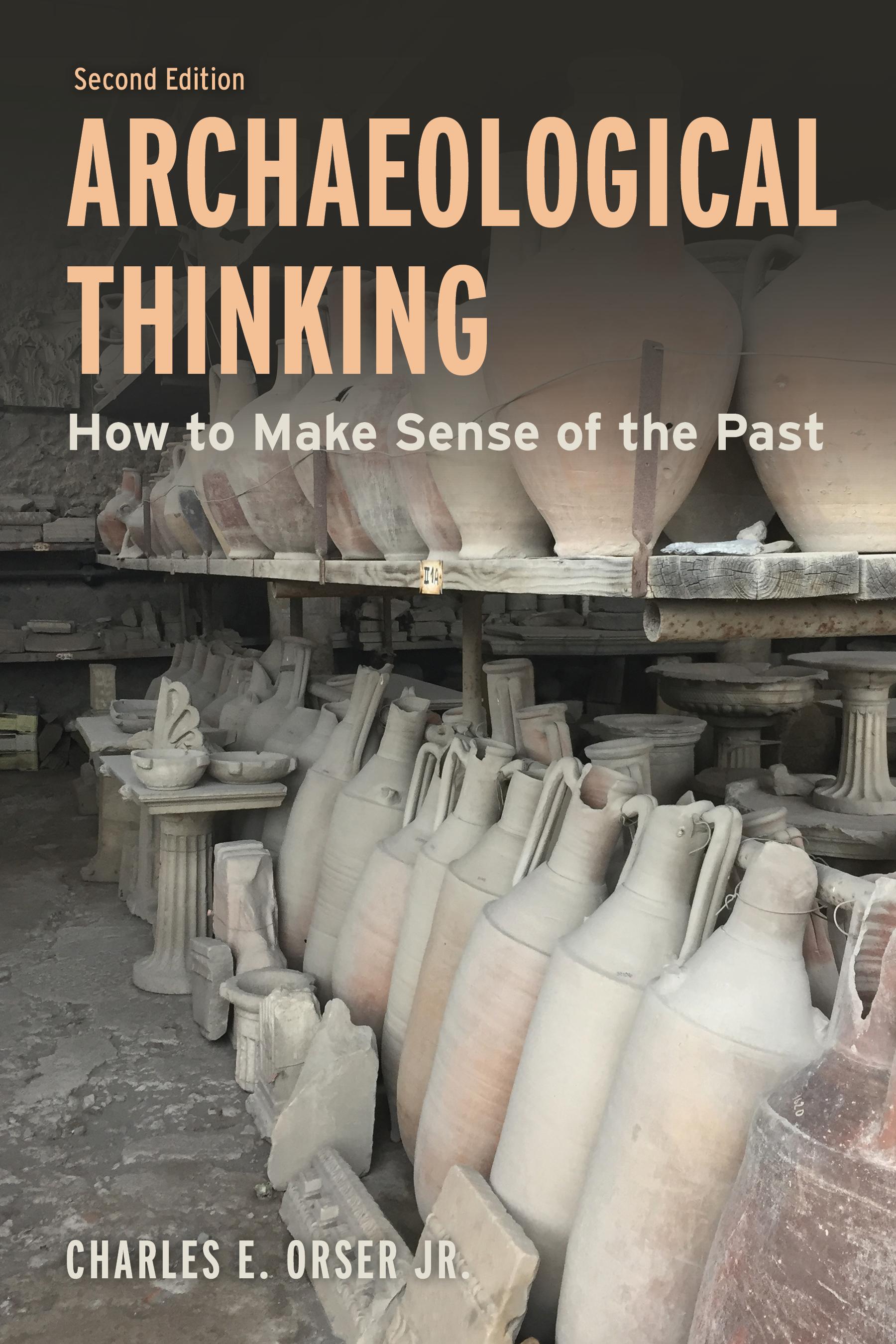
How do archaeologists think? How do archaeologists take the scattered and fragmentary remains collected from past settlements and create meaningful, reasonable interpretations of past human history? In the second edition of Archaeological Thinking, Charles E. Orser, Jr. provides answers to these questions and more by explaining in non-technical language the most basic elements of critical thinking in archaeology.
This book explores and explains such topics as:
the use of logic in framing argumentsthe curious issue of fact selectionthe use of analogiesthe role of archaeology in contemporary society and among present-day communitiesapproaches to understanding the pastand the dangers of deceitful archaeological thinking.
Examples taken from the world of ancient aliens, mythical sunken cities, and mysterious creatures help readers learn how to separate reality from fiction regardless of their desire to become a professional archaeologist.
This book explores and explains such topics as:
the use of logic in framing argumentsthe curious issue of fact selectionthe use of analogiesthe role of archaeology in contemporary society and among present-day communitiesapproaches to understanding the pastand the dangers of deceitful archaeological thinking.
Examples taken from the world of ancient aliens, mythical sunken cities, and mysterious creatures help readers learn how to separate reality from fiction regardless of their desire to become a professional archaeologist.
Payez facilement par carte, Klarna, Apple Pay ou Google Pay. Pas satisfait ? Vous avez toujours une garantie de remboursement de 14 jours. En savoir plus dans nos conditions. Si vous avez des questions, envoyez-nous un e-mail à hello@memmo.org.
Memmo facilite tes études, où que tu sois dans le monde. On rassemble tes manuels de cours et des outils d'étude intelligents au même endroit : résumés, quiz, podcasts et flashcards. Et il y a Ted, ton compagnon d'étude qui répond à toutes tes questions. Plus de 50 000 étudiants étudient déjà ici – conçu pour t'aider à apprendre plus vite et à moins stresser.