
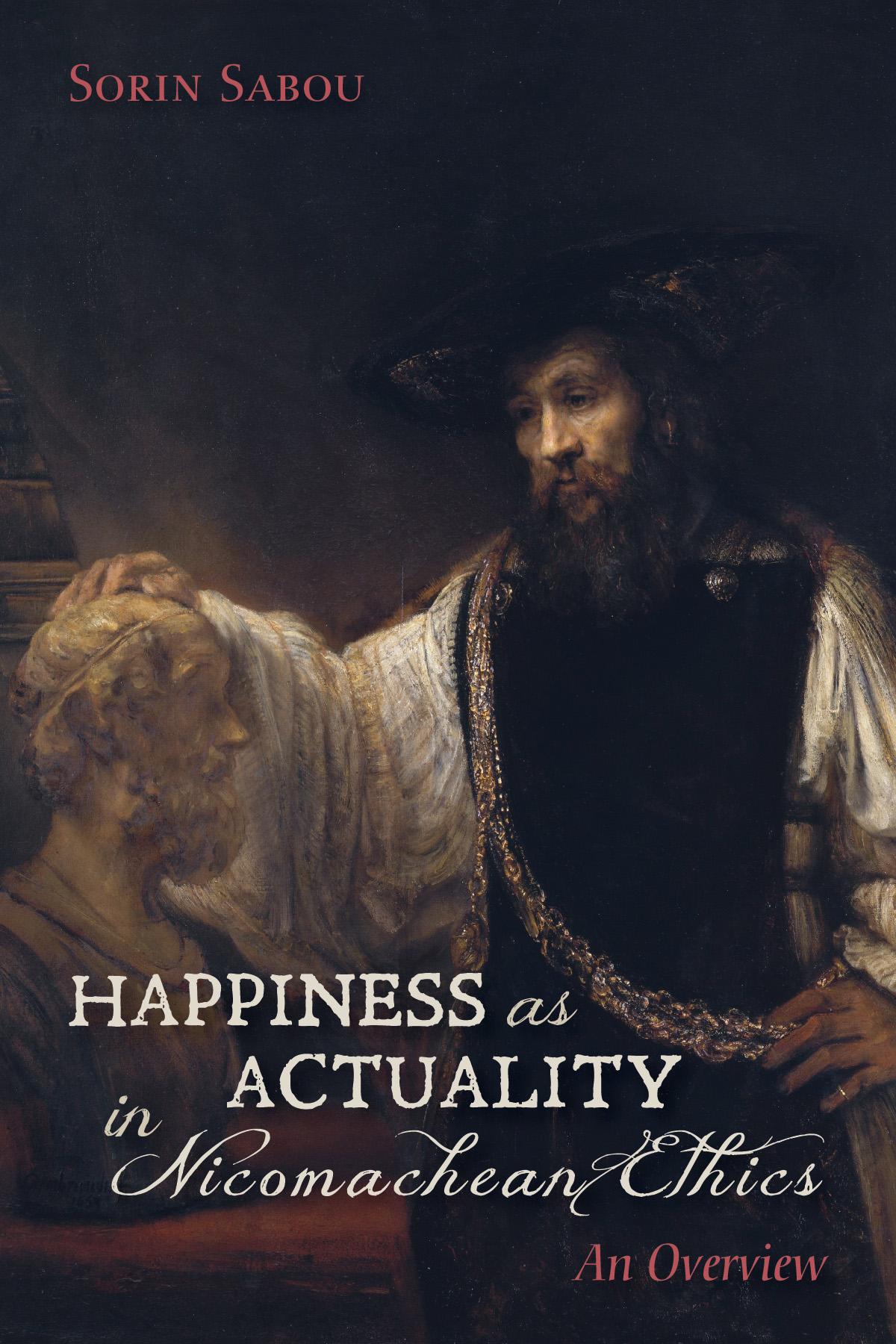
This is a study about the meaning of happiness (εὐδαιμονία) in Aristotle's Nicomachean Ethics (EN). It is argued that εὐδαιμονία in EN means actuality, and it has to be interpreted through the lenses of two metaphors used by Aristotle in EN 1.7 1098a21 and 10.6 1176a30: the "perimeter of good" and the "imprint of happiness." To explain the meaning of happiness Aristotle first has to delineate the "perimeter of good" of human beings, and he does that with the help of two criteria: the final end [τέλος] and the function of humanity [ἔργον ἀνθρώπου]. These two criteria are metaphysical concepts which describe the "good" as the final metaphysical aim of every person, and the best every person can be. This metaphysical teleological aim is the "actuality of the soul" according with excellence. This is the "perimeter" within which Aristotle enquires about εὐδαιμονία--the good of humans.
Payez facilement par carte, Klarna, Apple Pay ou Google Pay. Pas satisfait ? Vous avez toujours une garantie de remboursement de 14 jours. En savoir plus dans nos conditions. Si vous avez des questions, envoyez-nous un e-mail à hello@memmo.org.
Memmo facilite tes études, où que tu sois dans le monde. On rassemble tes manuels de cours et des outils d'étude intelligents au même endroit : résumés, quiz, podcasts et flashcards. Et il y a Ted, ton compagnon d'étude qui répond à toutes tes questions. Plus de 50 000 étudiants étudient déjà ici – conçu pour t'aider à apprendre plus vite et à moins stresser.
Tu pourrais aussi aimer
Acheter le livre0