
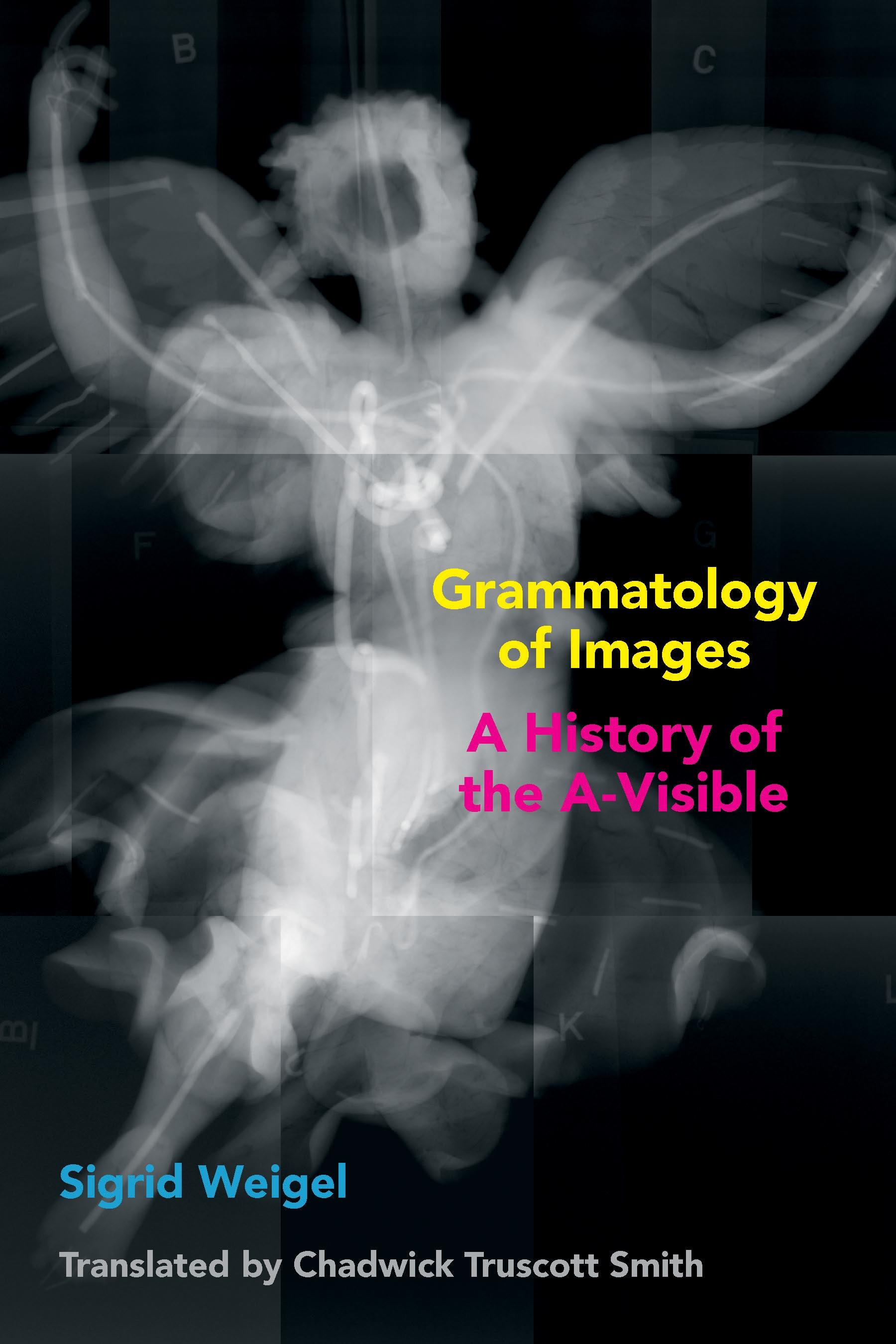
Grammatology of Images radically alters how we approach images. Instead of asking for the history, power, or essence of images, Sigrid Weigel addresses imaging as such. The book considers how something a-visible gets transformed into an image. Weigel scrutinizes the moment of mis-en-apparition, of making an appearance, and the process of concealment that accompanies any imaging.
Weigel reinterprets Derrida’s and Freud’s concept of the trace as that which must be thought before something exists. In doing so, she illuminates the threshold between traces and iconic images, between something immaterial and its pictorial representation. Chapters alternate between general accounts of the line, the index, the effigy, and the cult-image, and case studies from the history of science, art, politics, and religion, involving faces as indicators of emotion, caricatures as effigies of defamation, and angels as embodiments of transcendental ideas.
Weigel’s approach to images illuminates fascinating, unexpected correspondences between premodern and contemporary image-practices, between the history of religion and the modern sciences, and between things that are and are not understood as art.
Payez facilement par carte, Klarna, Apple Pay ou Google Pay. Pas satisfait ? Vous avez toujours une garantie de remboursement de 14 jours. En savoir plus dans nos conditions. Si vous avez des questions, envoyez-nous un e-mail à hello@memmo.org.
Memmo facilite tes études, où que tu sois dans le monde. On rassemble tes manuels de cours et des outils d'étude intelligents au même endroit : résumés, quiz, podcasts et flashcards. Et il y a Ted, ton compagnon d'étude qui répond à toutes tes questions. Plus de 50 000 étudiants étudient déjà ici – conçu pour t'aider à apprendre plus vite et à moins stresser.