
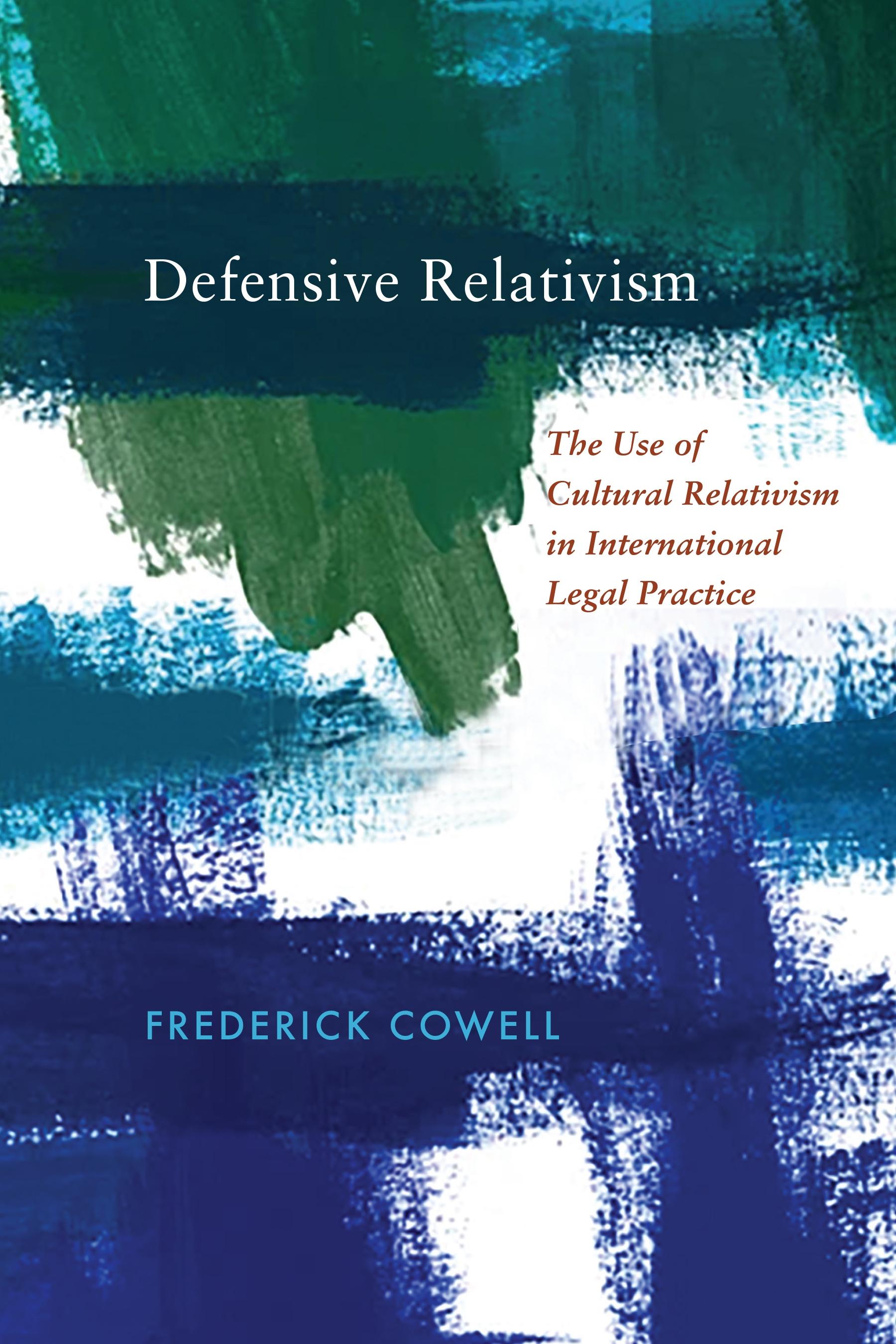
Defensive Relativism describes how governments around the world use cultural relativism in legal argument to oppose international human rights law. Defensive relativist arguments appear in international courts, at the committees established by human rights treaties, and at the United Nations Human Rights Council. The aim of defensive relativist arguments is to exempt a state from having to apply international human rights law, or to stop international human rights law evolving, because it would interfere with cultural traditions the state deems important. It is an everyday occurrence in international human rights law and defensive relativist arguments can be used by various types of states. The end goal of defensive relativism is to allow a state to appear human rights compliant while at the same time not implementing international human rights law.
Drawing on a range of materials, such as state reports on the Convention on the Elimination of All Forms of Discrimination Against Women (CEDAW) and cases from the European Court of Human Rights involving freedom of religion, this book provides a definitive survey of defensive relativism. Crucially, Frederick Cowell argues, defensive relativism is not about alternative practices of human rights law, or debates about the origins or legitimacy of human rights as a concept. Defensive relativism is instead a variety of tactical argument used by states to justify ignoring international human rights law. Yet, as Cowell concludes, defensive relativism can’t be removed from the law, as it is a reflection of unresolved tensions about the nature of what it means for rights to be universal.
Payez facilement par carte, Klarna, Apple Pay ou Google Pay. Pas satisfait ? Vous avez toujours une garantie de remboursement de 14 jours. En savoir plus dans nos conditions. Si vous avez des questions, envoyez-nous un e-mail à hello@memmo.org.
Memmo facilite tes études, où que tu sois dans le monde. On rassemble tes manuels de cours et des outils d'étude intelligents au même endroit : résumés, quiz, podcasts et flashcards. Et il y a Ted, ton compagnon d'étude qui répond à toutes tes questions. Plus de 50 000 étudiants étudient déjà ici – conçu pour t'aider à apprendre plus vite et à moins stresser.