
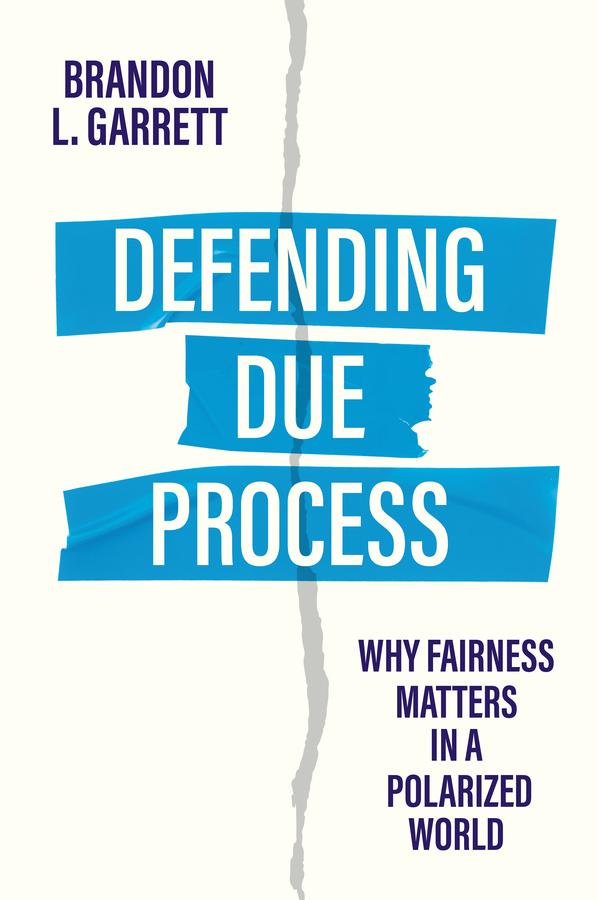
We all feel unfairness deeply when treated in rash ways. We expect, and the law requires, government officials to take fairness seriously, giving us notice and an opportunity to be heard before taking our rights away. That is why the U.S. Constitution commands, twice, that no one shall be deprived of life, liberty, or property without due process of law. Yet, in overheated debates, people argue that others do not deserve any presumption of innocence. In courtrooms and colleges, police stations and jails, restaurants and libraries, print and online, the democratic value of due process is up for grabs.
Why is due process under so much pressure? Brandon Garrett exposes widening fault lines. One division lies within our own attitudes, and he explores why we are tempted to put desired outcomes before fair process. Another lies in government, as judges adopt toothless due process rules. People are trapped in debt for unpaid traffic fines; sheriffs seize and forfeit belongings; algorithms suspend teachers’ employment; officials use flawed data to cancel healthcare; and magistrates order arrestees to be jailed because they cannot pay cash bail. Meanwhile, the rise of AI threatens what remains of due process with black-box technology.
To fight against such unfairness, lawyers try to challenge unjust systems, researchers demonstrate why such processes are so counterproductive, and lawmakers try to enact new protections. Common ground matters now more than ever to mend political polarization, cool simmering distrust of government, prevent injudicious errors, and safeguard constitutional rights. A revival of due process is long overdue.
Payez facilement par carte, Klarna, Apple Pay ou Google Pay. Pas satisfait ? Vous avez toujours une garantie de remboursement de 14 jours. En savoir plus dans nos conditions. Si vous avez des questions, envoyez-nous un e-mail à hello@memmo.org.
Memmo facilite tes études, où que tu sois dans le monde. On rassemble tes manuels de cours et des outils d'étude intelligents au même endroit : résumés, quiz, podcasts et flashcards. Et il y a Ted, ton compagnon d'étude qui répond à toutes tes questions. Plus de 50 000 étudiants étudient déjà ici – conçu pour t'aider à apprendre plus vite et à moins stresser.