
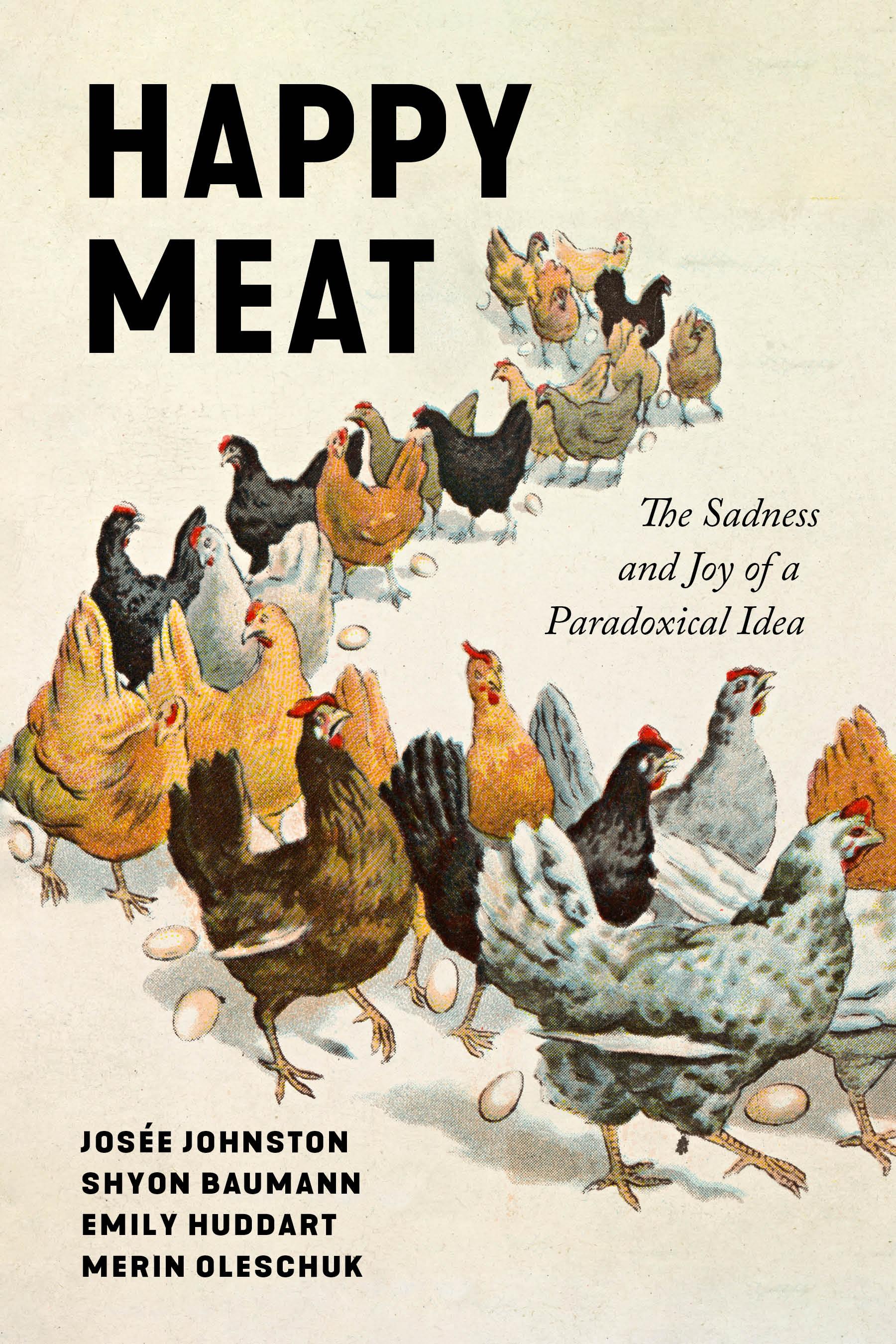
North Americans love eating meat. Despite the increased awareness of the meat industry's harms–violence against animals, health problems, and associations with environmental degradation–the rate of meat eating hasn't changed significantly in recent years. Instead, what has emerged is an uncomfortable paradox: a need to square one's values with the behaviors that contradict those values.
Using a large-scale, multidimensional, and original dataset, Happy Meat explores the thoughts and emotions that underpin our moral decision-making in this meat paradox. Conscientious meat-eaters turn to the notion of "happy meat" to make sense of their behaviors by consuming meat they see as more healthy, ethical, and sustainable. Happy meat might be labeled grass fed, free-range, antibiotic free, naturally raised, or humane. The people who produce and consume it, together, make up the complex landscape of conscientious meat-eating in modern Western societies.
The discourse of happy meat ultimately may not be a sufficient response to all the critiques of meat eating, rife as it is with contradictions. However, it offers a powerful case for understanding how moral boundaries and notions of the 'good eater' are constructed through negotiations of values, identity, and status.
Payez facilement par carte, Klarna, Apple Pay ou Google Pay. Pas satisfait ? Vous avez toujours une garantie de remboursement de 14 jours. En savoir plus dans nos conditions. Si vous avez des questions, envoyez-nous un e-mail à hello@memmo.org.
Memmo facilite tes études, où que tu sois dans le monde. On rassemble tes manuels de cours et des outils d'étude intelligents au même endroit : résumés, quiz, podcasts et flashcards. Et il y a Ted, ton compagnon d'étude qui répond à toutes tes questions. Plus de 50 000 étudiants étudient déjà ici – conçu pour t'aider à apprendre plus vite et à moins stresser.