
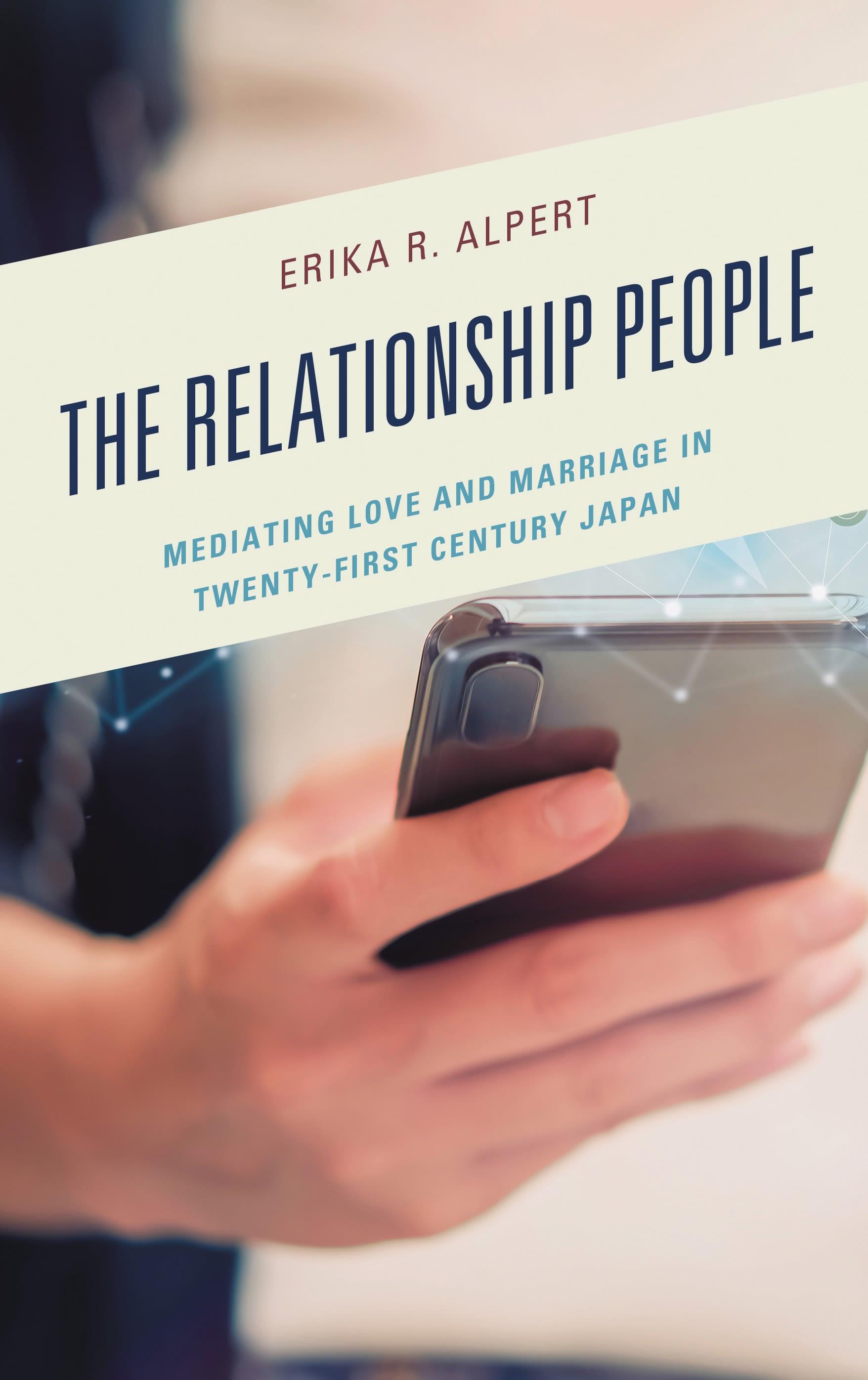
Japan has often been portrayed as a mysterious, sexless, troubled land. Birth rates and marriage rates have been decreasing for decades, and national surveys show that Japanese people are simply having less sex overall. But Japan is not so different from anywhere else—it’s simply on the leading edge of worldwide demographic shifts. Because of rigid norms around gender, marriage, childbearing, and work, and relatively strict immigration policies, Japan is also experiencing these shifts more acutely. In The Relationship People, Erika R. Alpert starts by exploring some of the factors that have contributed to later and less marriage and childbearing in Japan and elsewhere. Alpert then goes on to explore the disjuncture between what Japanese singles report as preventing them from getting married and popularly proposed solutions to this problem. Japanese singles point to economic factors, such as low income, as one of their most significant barriers to marriage. However, much of the popular discourse aimed at Japanese singles elides these economic concerns; instead, it encourages them to exert more personal effort to meet people in order to get married. These “marriage activities” (konkatsu) may take the form of signing up with a professional matchmaker, using an online dating site, or going to singles’ parties. By examining konkatsu from the perspective of matchmakers, clients, and online daters, Alpert looks at the linguistic processes of connection that underpin konkatsu and its successes—or more often, failures. Institutions of matchmaking and technological structures such as databases and online profiles give shape to the ways singles connect. As this research shows, understanding this linguistic connective tissue enables us to answer questions about what constitutes “attractive” and “marriageable” in Japan, what kind of consciousness konkatsu is supposed to instill in singles, and what role Japan’s various partner matching industries might be able to play in alleviating the country’s demographic crisis.
Payez facilement par carte, Klarna, Apple Pay ou Google Pay. Pas satisfait ? Vous avez toujours une garantie de remboursement de 14 jours. En savoir plus dans nos conditions. Si vous avez des questions, envoyez-nous un e-mail à hello@memmo.org.
Memmo facilite tes études, où que tu sois dans le monde. On rassemble tes manuels de cours et des outils d'étude intelligents au même endroit : résumés, quiz, podcasts et flashcards. Et il y a Ted, ton compagnon d'étude qui répond à toutes tes questions. Plus de 50 000 étudiants étudient déjà ici – conçu pour t'aider à apprendre plus vite et à moins stresser.