
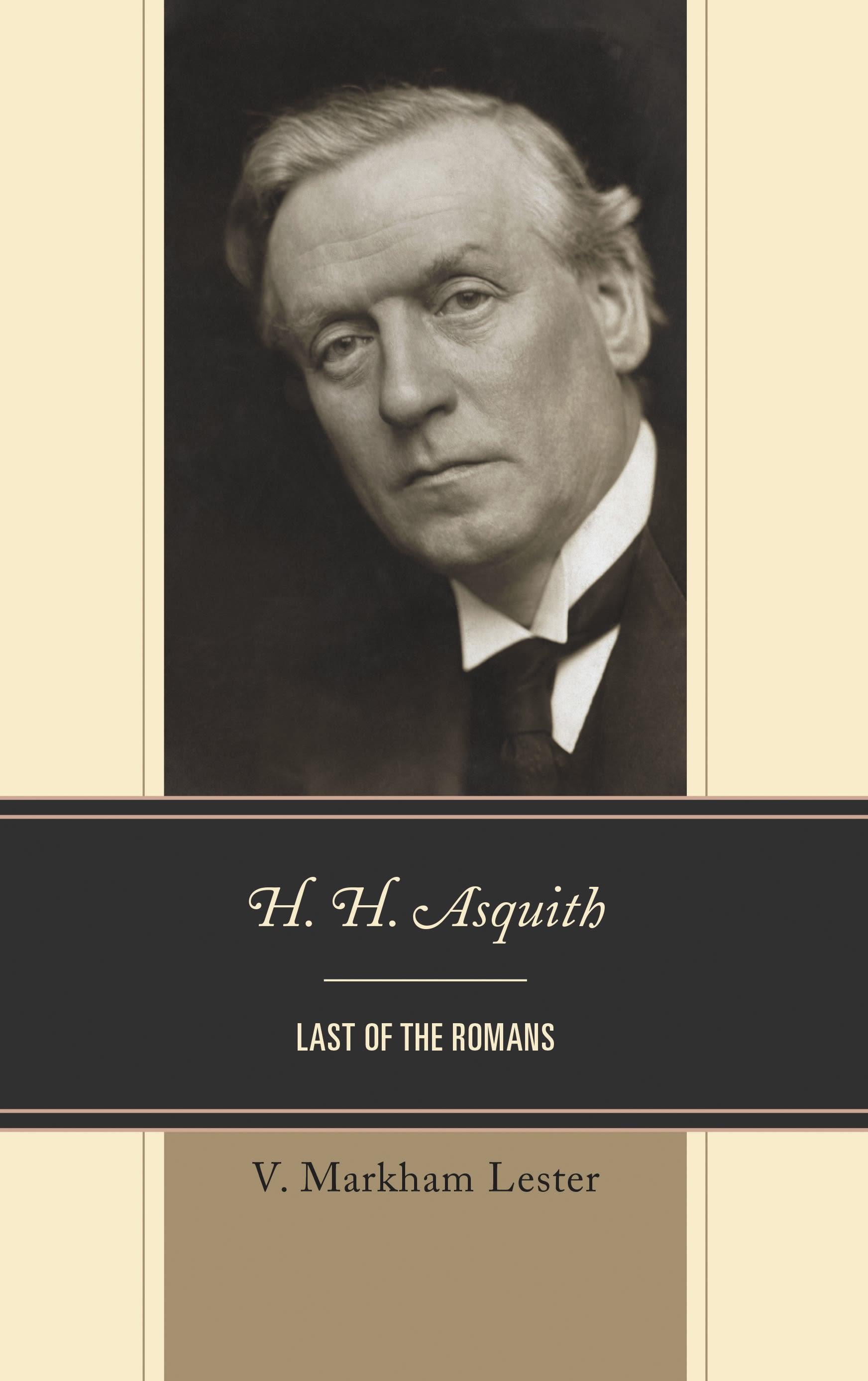
H. H. Asquith: Last of the Romans chronicles the life of H. H. Asquith (1852–1928), the longest-serving British prime minister between Lord Liverpool and Margaret Thatcher. In this study, V. Markham Lester argues that the key to understanding Asquith is to recognize the classical virtues he acquired early in his education.
Employing unpublished sources and documents made public since the last full-scale biography of Asquith was published more than forty years ago, Lester challenges many interpretations in earlier biographies. Previous studies of Asquith have often glossed over his education and early years, contending that his development did not contribute materially to his mature outlook. On the contrary, by examining thoroughly Asquith’s early career—particularly his tenure as home secretary and his time as a barrister—this book offers unappreciated insights into Asquith’s character and development as a political leader.
Lester further challenges the previous conclusions that Asquith failed as a war leader, demonstrating that Asquith succeeded in meeting the novel challenges of World War I and that his accomplishments have been insufficiently understood. He explains how Asquith’s lifelong reliance on rational thought, eloquence, and self-control produced the impressive leadership required to hold the fragile government together as it struggled to handle the unexpected and unprecedented challenges of world war and to lay the foundation for ultimate victory in the Great War.
Employing unpublished sources and documents made public since the last full-scale biography of Asquith was published more than forty years ago, Lester challenges many interpretations in earlier biographies. Previous studies of Asquith have often glossed over his education and early years, contending that his development did not contribute materially to his mature outlook. On the contrary, by examining thoroughly Asquith’s early career—particularly his tenure as home secretary and his time as a barrister—this book offers unappreciated insights into Asquith’s character and development as a political leader.
Lester further challenges the previous conclusions that Asquith failed as a war leader, demonstrating that Asquith succeeded in meeting the novel challenges of World War I and that his accomplishments have been insufficiently understood. He explains how Asquith’s lifelong reliance on rational thought, eloquence, and self-control produced the impressive leadership required to hold the fragile government together as it struggled to handle the unexpected and unprecedented challenges of world war and to lay the foundation for ultimate victory in the Great War.
Payez facilement par carte, Klarna, Apple Pay ou Google Pay. Pas satisfait ? Vous avez toujours une garantie de remboursement de 14 jours. En savoir plus dans nos conditions. Si vous avez des questions, envoyez-nous un e-mail à hello@memmo.org.
Memmo facilite tes études, où que tu sois dans le monde. On rassemble tes manuels de cours et des outils d'étude intelligents au même endroit : résumés, quiz, podcasts et flashcards. Et il y a Ted, ton compagnon d'étude qui répond à toutes tes questions. Plus de 50 000 étudiants étudient déjà ici – conçu pour t'aider à apprendre plus vite et à moins stresser.