
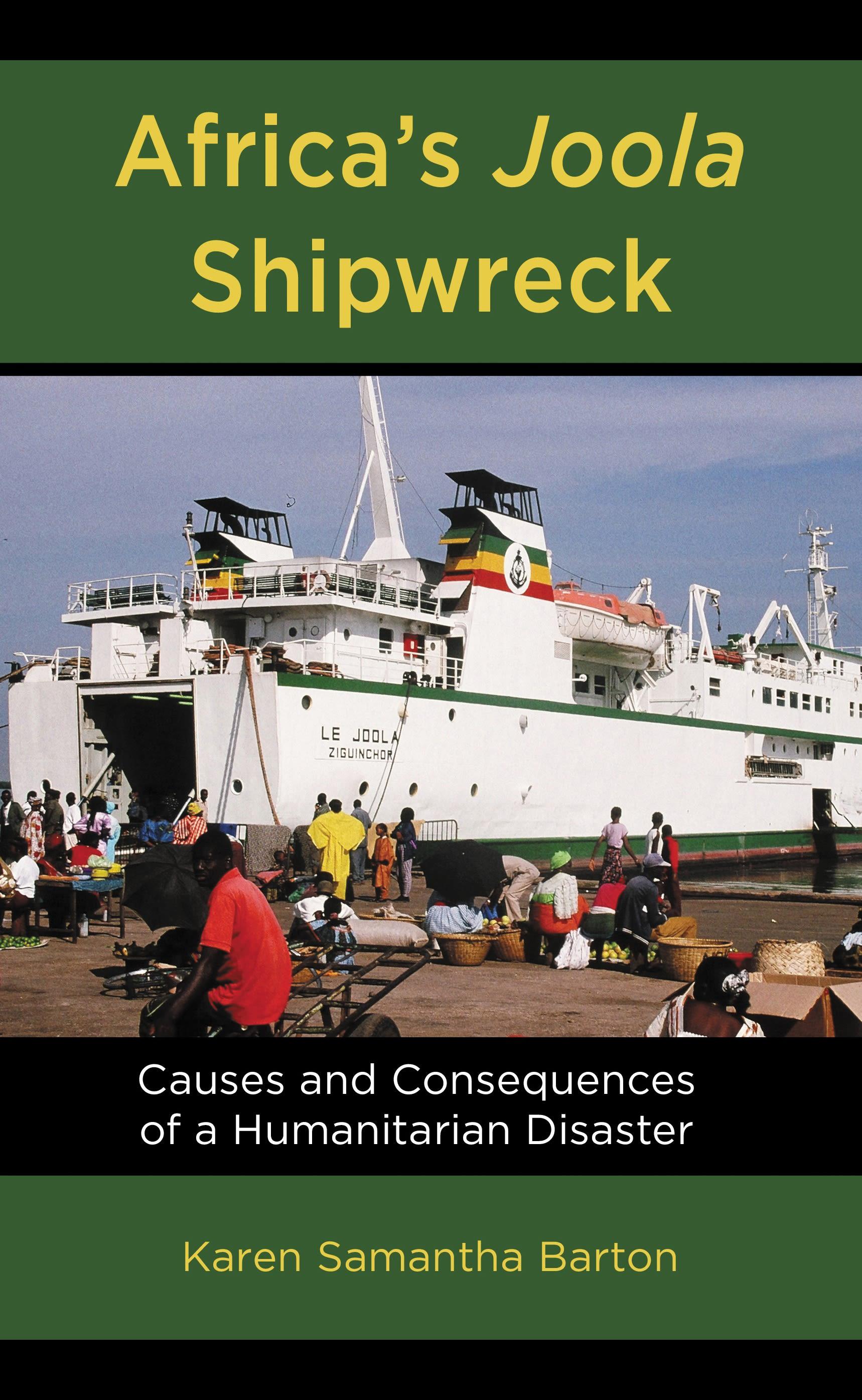
In 2002, a government-owned Senegalese ferry named the Joola capsized in a storm off the coast of The Gambia in a tragedy that killed 1,863 people and left 64 survivors, only one of them female. The Joola caused more human suffering than the Titanic yet no scholarly research to date has explored the political and environmental conditions in which this African crisis occurred. Africa’s Joola Shipwreck: Causes and Consequences of a Humanitarian Disaster investigates the roots of the Joola shipwreck and its consequences for Senegalese people, particularly those living in the rural south. Using three summers of field research in Senegal, Karen Samantha Barton unravels the geographical forces such as migration, colonial cartographies, and geographies of the sea that led to this humanitarian disaster and defined its aftermath. Barton shows how the Sufi tenet of “beautiful optimism” shaped community resilience in the wake of the shipwreck, despite the repercussions the event had on Senegalese society and space.
Payez facilement par carte, Klarna, Apple Pay ou Google Pay. Pas satisfait ? Vous avez toujours une garantie de remboursement de 14 jours. En savoir plus dans nos conditions. Si vous avez des questions, envoyez-nous un e-mail à hello@memmo.org.
Memmo facilite tes études, où que tu sois dans le monde. On rassemble tes manuels de cours et des outils d'étude intelligents au même endroit : résumés, quiz, podcasts et flashcards. Et il y a Ted, ton compagnon d'étude qui répond à toutes tes questions. Plus de 50 000 étudiants étudient déjà ici – conçu pour t'aider à apprendre plus vite et à moins stresser.