
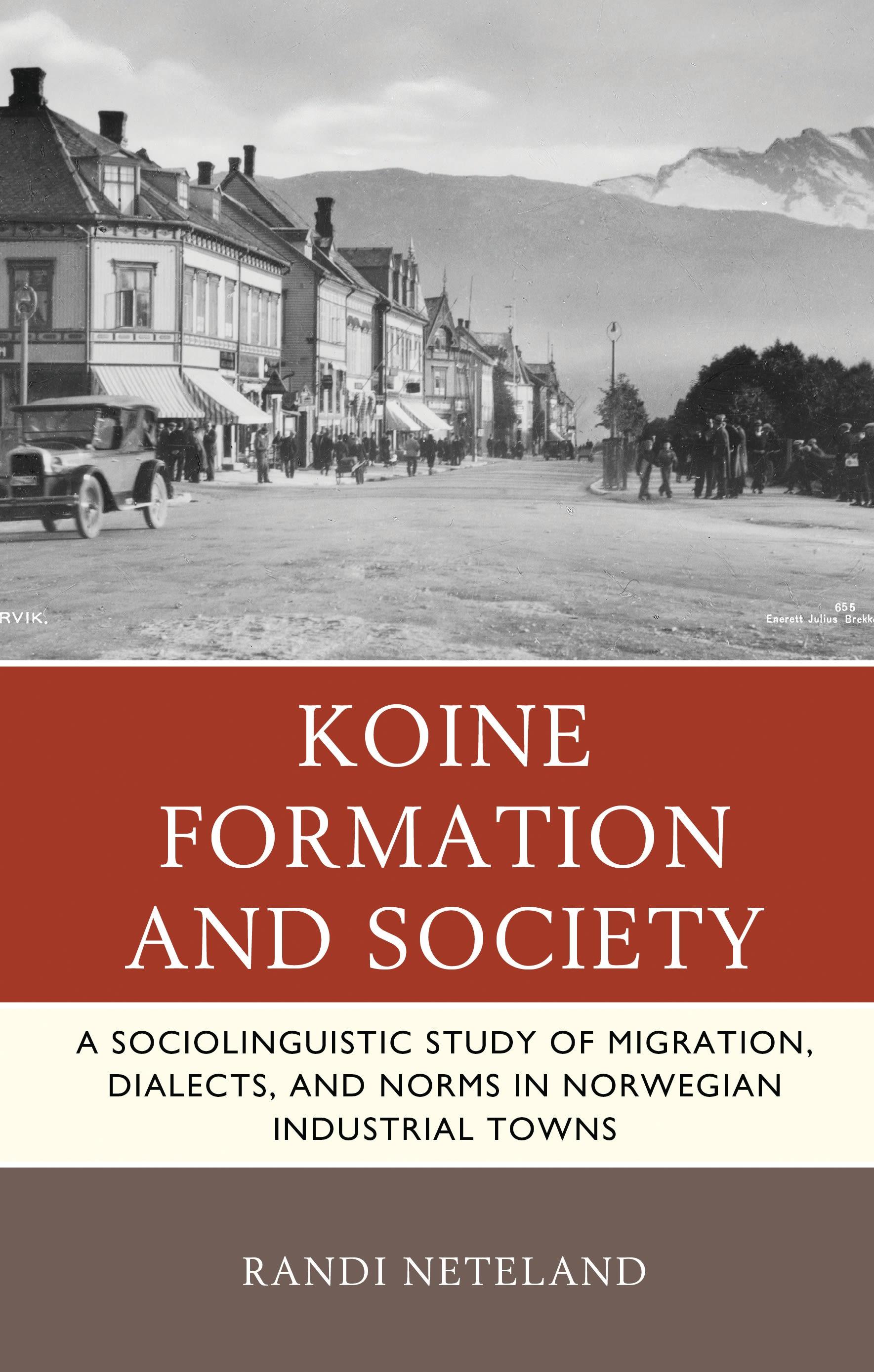
Massive in-migration to a new town leads to socio-cultural and linguistic contact and—inevitably--change. Which linguistic features are preferred in the new dialect? Why do these features prevail? And how does language use in the wider society influence the local process? Randi Neteland explores local and national conditions of koine formation in Koine Formation and Society, using three Norwegian industrial town dialects as main examples. The koine formation is characterized by a complex interplay between social and linguistic factors, such as in-migration rate, migrants’ social characteristics, housing conditions, social class distinctions, in-migrants’ dialect background, and linguistic distinctions among the varieties in contact. However, Neteland contextualizes the industrial towns within the larger society from which the in-migrants originate, and these case studies reveal to what extent the language use and norms for language use operating in the wider speech community can also influence the outcome of the koine formation. In Koine Formation and Society, Neteland explores how the social and linguistic factors work together and discusses determining factors and constraints on the local and national level.
Payez facilement par carte, Klarna, Apple Pay ou Google Pay. Pas satisfait ? Vous avez toujours une garantie de remboursement de 14 jours. En savoir plus dans nos conditions. Si vous avez des questions, envoyez-nous un e-mail à hello@memmo.org.
Memmo facilite tes études, où que tu sois dans le monde. On rassemble tes manuels de cours et des outils d'étude intelligents au même endroit : résumés, quiz, podcasts et flashcards. Et il y a Ted, ton compagnon d'étude qui répond à toutes tes questions. Plus de 50 000 étudiants étudient déjà ici – conçu pour t'aider à apprendre plus vite et à moins stresser.