
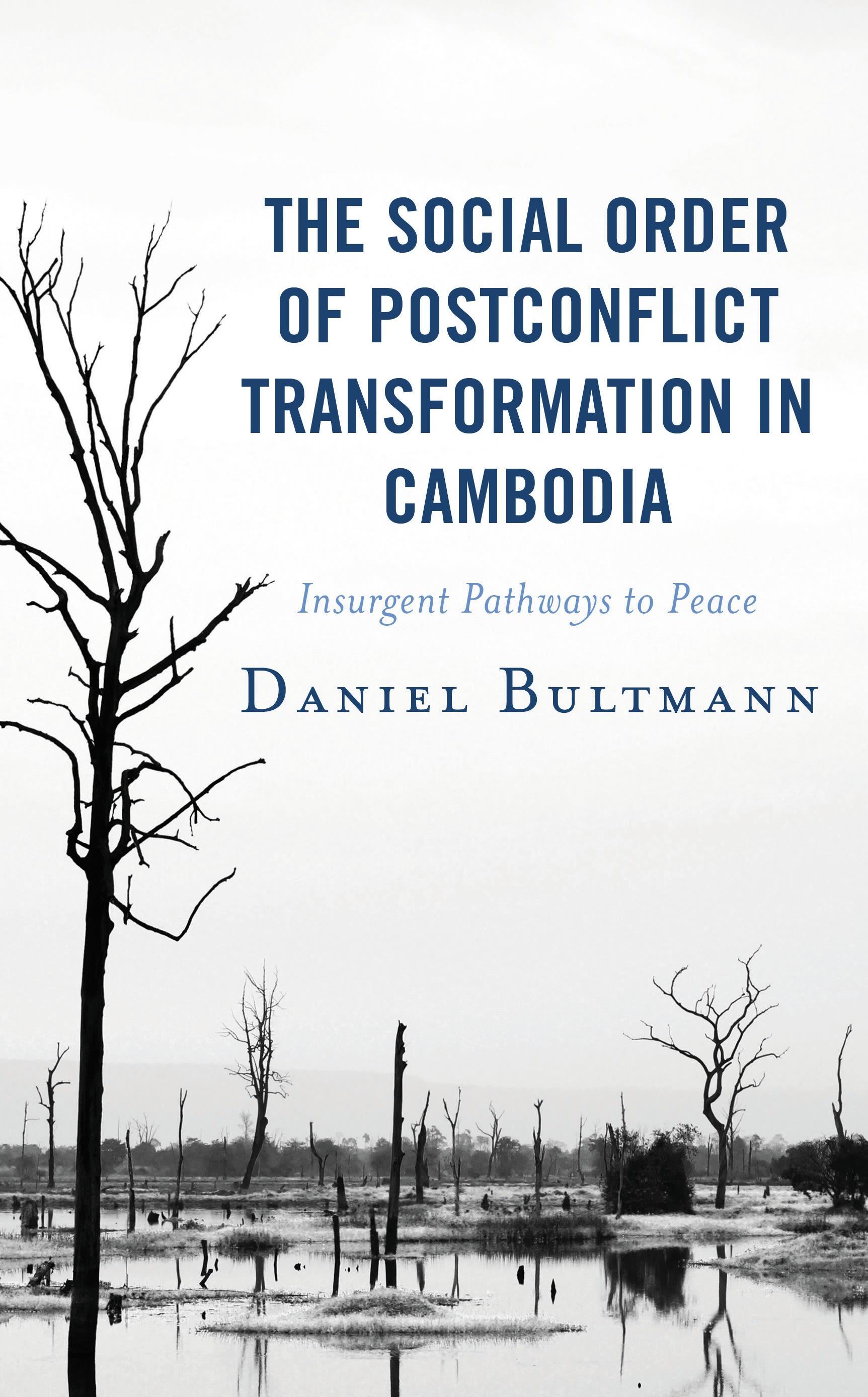
Drawing on data from three different insurgent groups within the Cambodian conflict, the book shows how the social backgrounds of combatants and commanders cause them to pursue different strategies during a decade-long transition into various postconflict settings, thereby creating different “pathways to peace.” By highlighting different vertical and horizontal ranks within the insurgent groups and the role of belligerents’ resources and networks, this qualitative study tackles an imbalance in the current research on Disarmament, Demobilization, and Reintegration (DDR), which tends to focus on top-down planning and the technicalities of reintegration programs. It helps explain why conflict dynamics and path-dependencies differ among various social groups within the field of insurgency. By analyzing the social position, life courses and postconflict trajectories of various groups within the insurgency, the book emphasizes the diversity of transitions to peace and “brings the social back in.”
The study is grounded in in-depth fieldwork conducted in Cambodia and its diaspora, including 168 firsthand interviews with ex-combatants from groups as diverse as Buddhist monks and Christian converts, intellectuals, powerful warlords, civil servants, and female communist soldiers. Using these details, the book not only builds a theory of the social structure and internal logic of armed groups, but also emphasizes the crucial importance of fighters’ own narratives about their roles in society. Therefore, in addition to advancing a sociological perspective on post-conflict transitions, the study also provides the most detailed treatment to date of the social fields of the insurgents who fought in the civil war that followed the fall of the Khmer Rouge regime in 1979. These social fields continue to have a profound influence on Cambodian politics, even today.
The study is grounded in in-depth fieldwork conducted in Cambodia and its diaspora, including 168 firsthand interviews with ex-combatants from groups as diverse as Buddhist monks and Christian converts, intellectuals, powerful warlords, civil servants, and female communist soldiers. Using these details, the book not only builds a theory of the social structure and internal logic of armed groups, but also emphasizes the crucial importance of fighters’ own narratives about their roles in society. Therefore, in addition to advancing a sociological perspective on post-conflict transitions, the study also provides the most detailed treatment to date of the social fields of the insurgents who fought in the civil war that followed the fall of the Khmer Rouge regime in 1979. These social fields continue to have a profound influence on Cambodian politics, even today.
Payez facilement par carte, Klarna, Apple Pay ou Google Pay. Pas satisfait ? Vous avez toujours une garantie de remboursement de 14 jours. En savoir plus dans nos conditions. Si vous avez des questions, envoyez-nous un e-mail à hello@memmo.org.
Memmo facilite tes études, où que tu sois dans le monde. On rassemble tes manuels de cours et des outils d'étude intelligents au même endroit : résumés, quiz, podcasts et flashcards. Et il y a Ted, ton compagnon d'étude qui répond à toutes tes questions. Plus de 50 000 étudiants étudient déjà ici – conçu pour t'aider à apprendre plus vite et à moins stresser.