
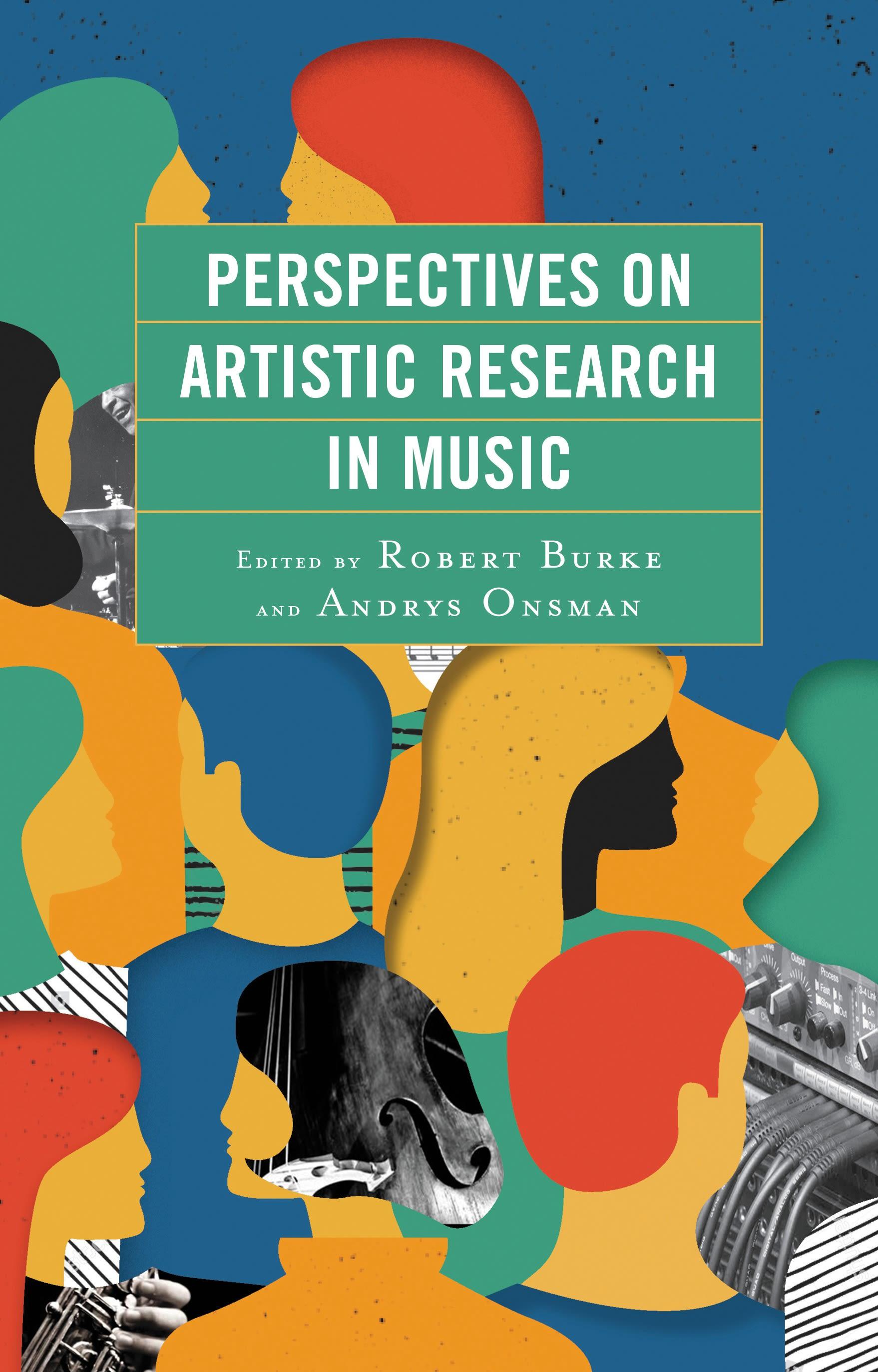
Perspectives on Artistic Research in Music
Auteur: Jenny Wilson, Linda Barwick, Tim Dargaville, Stephen Emmerson, Nick Haywood, Glen Hodges, Michael Hooper, Cat Hope, Zubin Kanga, Deniz Peters, Thomas Reiner, Johanna Selleck, Joseph Toltz, Robert Vincs, Robert Burke, Andrys Onsman
Éditeur: Bloomsbury Publishing
Édition: 1
Année de publication: 2017
ISBN: 9781498544818
The increasing interest in artistic research, especially in music, is throwing open doors to exciting ideas about how we generate new musical knowledge and understanding. This book examines the wide array of factors at play in innovative practice and how by treating it as research we can make new ideas more widely accessible.
Three key ideas propel the book. First, it argues that artistic research comes from inside the practice and exists in a space that accommodates both objective and subjective observation and analyses because the researcher is the practitioner. It is a space for dialogue between apparently opposing binaries: the composer and the performer, the past and the present, the fixed and the fluid, the intellectual and the intuitive, the abstract and the embodied, the prepared and the spontaneous, the enduring and the transitory, and so on. It is not so much constructed in a logical, sequential manner in the way of the scientific method of doing research but more as a “braided” space, woven from many disparate elements.
Second, the book articulates the notion that artistic research in music has its own verification procedures that need to be brought into the academy, especially in terms of the moderation of non-traditional research outputs, including the description of the criteria for allocation of research points for the purposes of data collection, as well as real world relevance and industry engagement.
Third, by way of numerous examples of original and creative music making, it demonstrates in practical terms how exploration and experimentation functions as legitimate academic research. Many of the case studies deliberately cross boundaries that were previously assumed to be rigid and definite in order to blaze new musical trails, creating new collaborations and synergies.
Three key ideas propel the book. First, it argues that artistic research comes from inside the practice and exists in a space that accommodates both objective and subjective observation and analyses because the researcher is the practitioner. It is a space for dialogue between apparently opposing binaries: the composer and the performer, the past and the present, the fixed and the fluid, the intellectual and the intuitive, the abstract and the embodied, the prepared and the spontaneous, the enduring and the transitory, and so on. It is not so much constructed in a logical, sequential manner in the way of the scientific method of doing research but more as a “braided” space, woven from many disparate elements.
Second, the book articulates the notion that artistic research in music has its own verification procedures that need to be brought into the academy, especially in terms of the moderation of non-traditional research outputs, including the description of the criteria for allocation of research points for the purposes of data collection, as well as real world relevance and industry engagement.
Third, by way of numerous examples of original and creative music making, it demonstrates in practical terms how exploration and experimentation functions as legitimate academic research. Many of the case studies deliberately cross boundaries that were previously assumed to be rigid and definite in order to blaze new musical trails, creating new collaborations and synergies.
Payez facilement par carte, Klarna, Apple Pay ou Google Pay. Pas satisfait ? Vous avez toujours une garantie de remboursement de 14 jours. En savoir plus dans nos conditions. Si vous avez des questions, envoyez-nous un e-mail à hello@memmo.org.
Memmo facilite tes études, où que tu sois dans le monde. On rassemble tes manuels de cours et des outils d'étude intelligents au même endroit : résumés, quiz, podcasts et flashcards. Et il y a Ted, ton compagnon d'étude qui répond à toutes tes questions. Plus de 50 000 étudiants étudient déjà ici – conçu pour t'aider à apprendre plus vite et à moins stresser.