
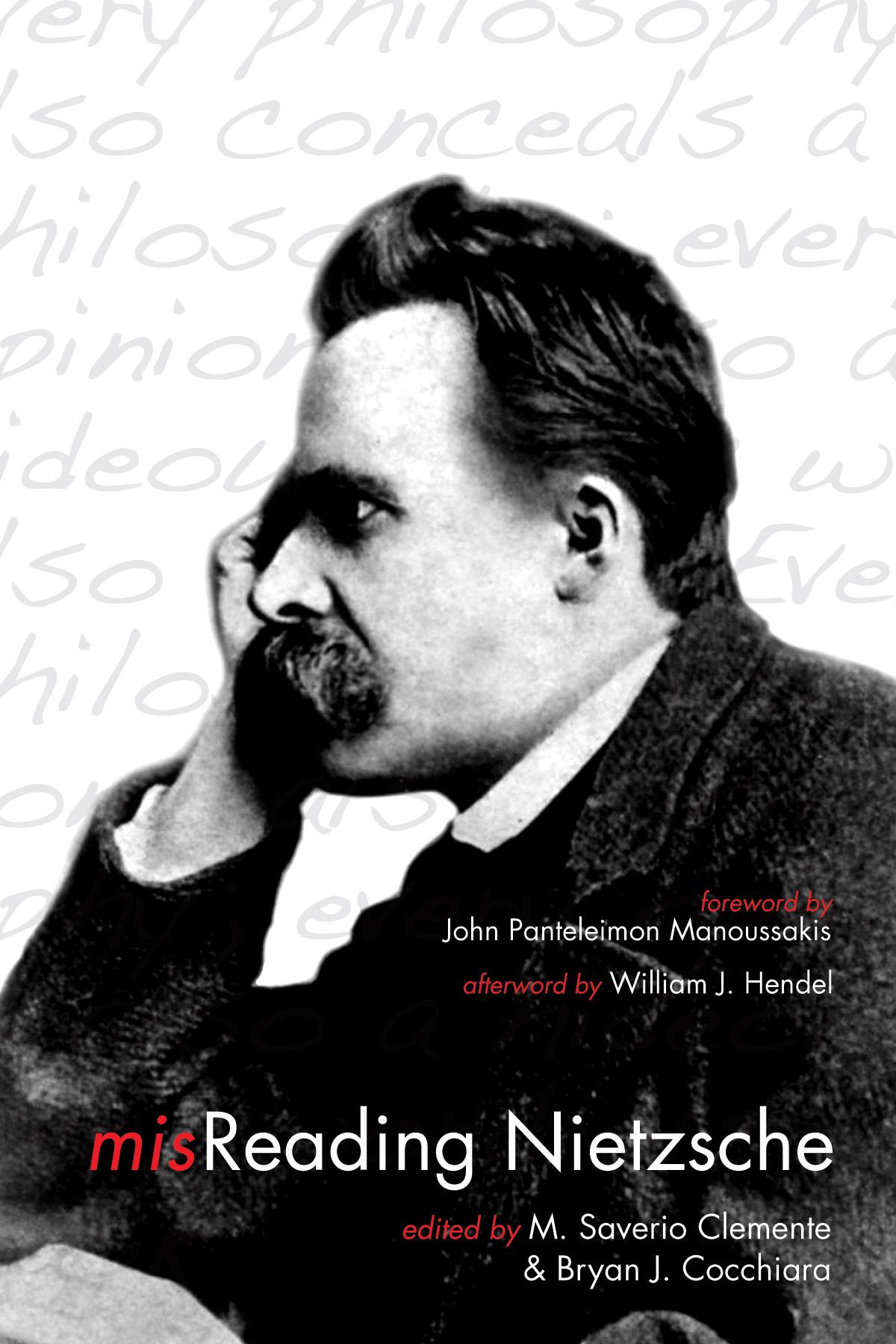
Perhaps more than any philosophy written in the past few centuries, the work of Friedrich Nietzsche has given rise to controversy, misunderstanding, and dissent. Today Nietzsche is remembered as the revolutionary author of such polemical ideas as the death of God, the revaluation of values, the will to untruth, and the Ubermensch. Yet is Nietzsche's philosophy as atheistic, relativistic, nihilistic, and immoral as some commentators have claimed? Or ought we perhaps to give more credence to Nietzsche's own assertion that one writes books "precisely to conceal what one harbors" (BGE, 9, 289)?
If "whatever is profound loves masks" (BGE, 2, 40) then might Nietzsche's more daring claims be interpreted as clever masks behind which he conceals a deeper philosophy and on which he reveals a hidden truth? Is it not possible that the standard readings of Nietzsche are in fact misreadings--that his work invites misreading, that it is intentionally unclear, deceptive, disguised?
The goal of this volume is to reread Nietzsche for all that he shows and all that he hides. It is to dig deeper into his work in order to challenge misreadings of old and invite misreadings anew--as, indeed, his work itself calls for and demands.
Payez facilement par carte, Klarna, Apple Pay ou Google Pay. Pas satisfait ? Vous avez toujours une garantie de remboursement de 14 jours. En savoir plus dans nos conditions. Si vous avez des questions, envoyez-nous un e-mail à hello@memmo.org.
Memmo facilite tes études, où que tu sois dans le monde. On rassemble tes manuels de cours et des outils d'étude intelligents au même endroit : résumés, quiz, podcasts et flashcards. Et il y a Ted, ton compagnon d'étude qui répond à toutes tes questions. Plus de 50 000 étudiants étudient déjà ici – conçu pour t'aider à apprendre plus vite et à moins stresser.
Tu pourrais aussi aimer
Acheter le livre0