
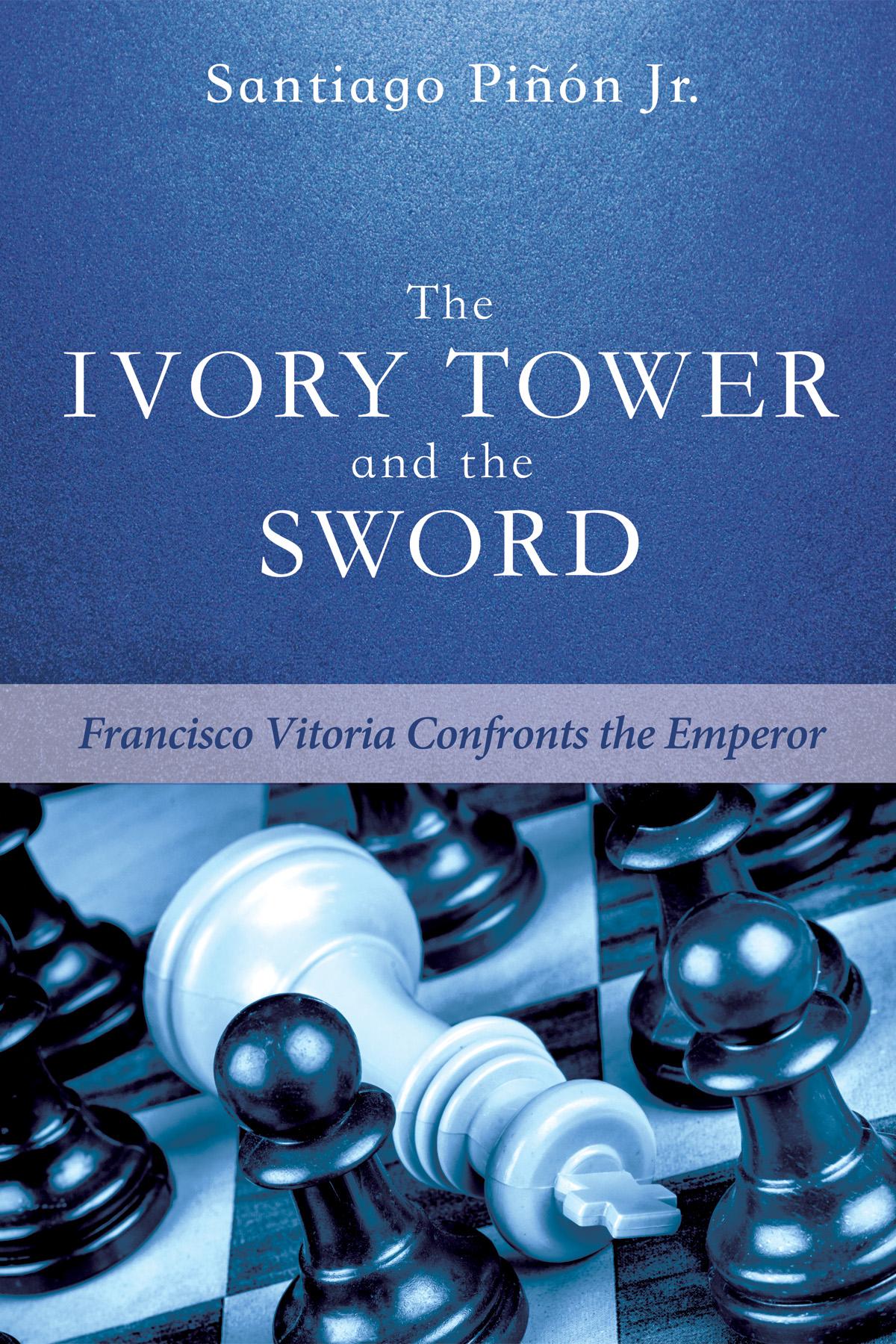
How can one be interested in social justice without participating in public protests? Must one go to jail for one's convictions in order to have integrity and legitimacy? Have academics succumbed to the negative connotations of the ivory tower by remaining in their cubicles, unaware of the social ills that threaten the very core of society? Or, is it possible for individuals who sit comfortably at their desks to have legitimate input into the evils that surround the cities in which we live? These are some of the questions that prompted The Ivory Tower and the Sword. By turning our attention to Francisco Vitoria, Santiago Pinon offers insight into a thought-provoking individual who was deeply concerned with the social injustices that his countrymen were committing. Living in the sixteenth century, Vitoria knew of the torturous practices that his fellow Spaniards had been conducting against the native peoples of the New World. Using the influence of his position as an academic theologian, Vitoria challenged these practices and held the Spanish emperor accountable for failing to intervene on behalf of the native peoples. From Vitoria we learn how to confront social ills from the ivory tower.
Payez facilement par carte, Klarna, Apple Pay ou Google Pay. Pas satisfait ? Vous avez toujours une garantie de remboursement de 14 jours. En savoir plus dans nos conditions. Si vous avez des questions, envoyez-nous un e-mail à hello@memmo.org.
Memmo facilite tes études, où que tu sois dans le monde. On rassemble tes manuels de cours et des outils d'étude intelligents au même endroit : résumés, quiz, podcasts et flashcards. Et il y a Ted, ton compagnon d'étude qui répond à toutes tes questions. Plus de 50 000 étudiants étudient déjà ici – conçu pour t'aider à apprendre plus vite et à moins stresser.
Tu pourrais aussi aimer
Acheter le livre0