
Winner of the 2018 Chicago Folklore Prize
and
Winner of the 2018 Opie Prize
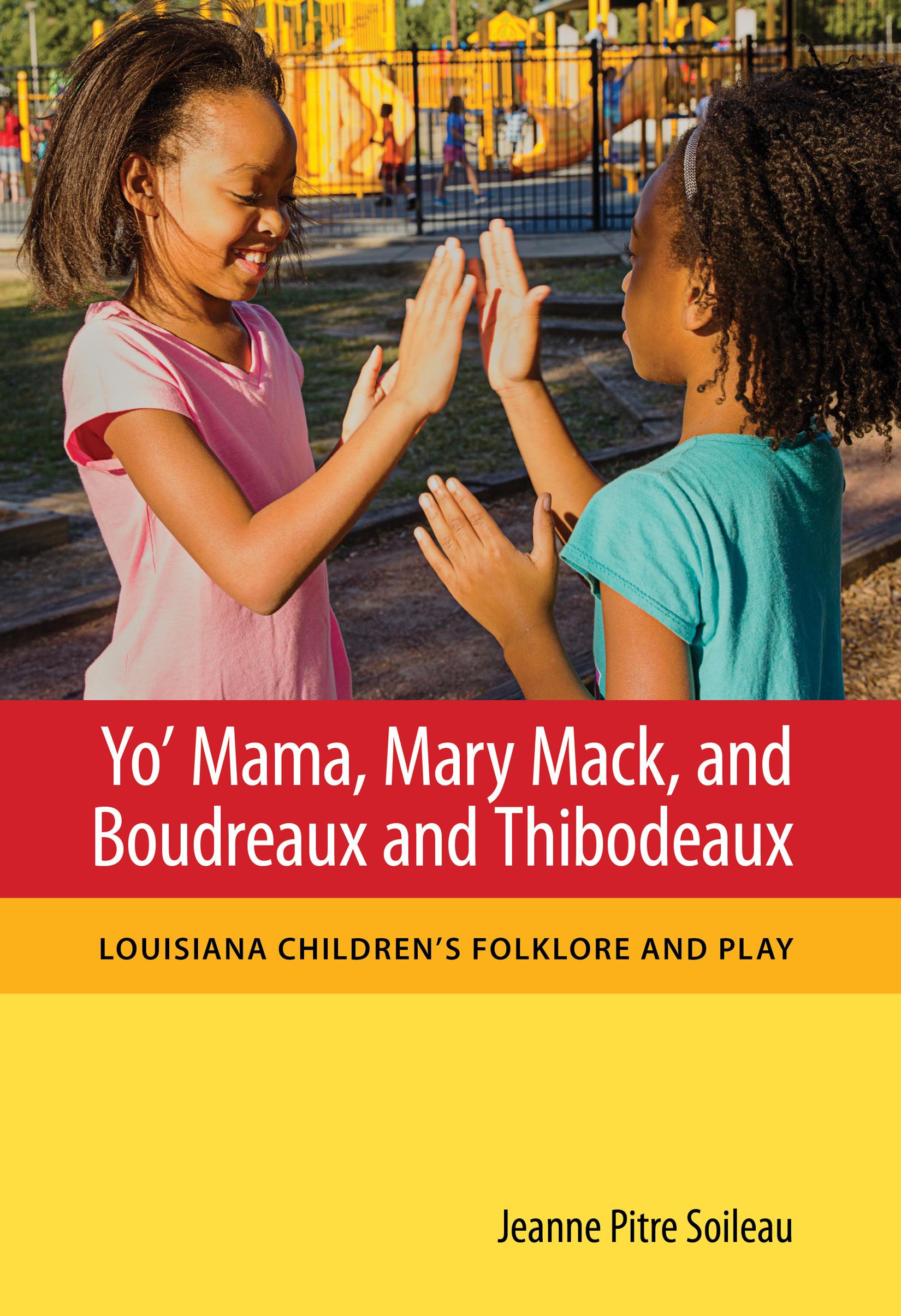
Jeanne Soileau, a teacher in New Orleans and south Louisiana for more than forty years, examines how children’s folklore, especially among African Americans, has changed. From the tumult of integration to the present, her experience afforded unique opportunities to observe children as they played. With integration in New Orleans during the 1960s, Soileau notes how children began to play with one another almost immediately. Children taught each other play routines, chants, jokes, jump-rope rhymes, cheers, taunts, and teases—all the folk games that happen in normal play on the street and playground. When adults—the judges and attorneys, the parents, and the politicians—haggled and shouted, children began to hold hands in a circle, fall down together to “Ring around the Rosie,” and tease each other in new and creative ways. Children’s ability to adapt can be seen not only in their response to social change, but in how they adopt and utilize pop culture and technology. Vast technological changes in the last third of the twentieth century influenced the way children sang, danced, played, and interacted. Soileau catalogs these changes and studies how games evolve and transform as much as they are preserved. She includes several topics of study: oral narratives and songs, jokes and tales, and teasing formulae gleaned from mostly African American sources. Because much of the field work took place on public school playgrounds, this body of oral narratives remains of particular interest to teachers, folklorists, linguists, and those who study play.
In the end, Soileau shows that despite the restrictions of air-conditioning, shorter recess periods, ever-increasing hours of television watching, the growing popularity of video games, and carefully scripted after-school activities, many children in south Louisiana sustain traditional games. At the same time, they invent varied and clever new ones. As Soileau observes, children strive through their folk play to learn how to fit into a rapidly changing society.
and
Winner of the 2018 Opie Prize
Jeanne Soileau, a teacher in New Orleans and south Louisiana for more than forty years, examines how children’s folklore, especially among African Americans, has changed. From the tumult of integration to the present, her experience afforded unique opportunities to observe children as they played. With integration in New Orleans during the 1960s, Soileau notes how children began to play with one another almost immediately. Children taught each other play routines, chants, jokes, jump-rope rhymes, cheers, taunts, and teases—all the folk games that happen in normal play on the street and playground. When adults—the judges and attorneys, the parents, and the politicians—haggled and shouted, children began to hold hands in a circle, fall down together to “Ring around the Rosie,” and tease each other in new and creative ways. Children’s ability to adapt can be seen not only in their response to social change, but in how they adopt and utilize pop culture and technology. Vast technological changes in the last third of the twentieth century influenced the way children sang, danced, played, and interacted. Soileau catalogs these changes and studies how games evolve and transform as much as they are preserved. She includes several topics of study: oral narratives and songs, jokes and tales, and teasing formulae gleaned from mostly African American sources. Because much of the field work took place on public school playgrounds, this body of oral narratives remains of particular interest to teachers, folklorists, linguists, and those who study play.
In the end, Soileau shows that despite the restrictions of air-conditioning, shorter recess periods, ever-increasing hours of television watching, the growing popularity of video games, and carefully scripted after-school activities, many children in south Louisiana sustain traditional games. At the same time, they invent varied and clever new ones. As Soileau observes, children strive through their folk play to learn how to fit into a rapidly changing society.
Payez facilement par carte, Klarna, Apple Pay ou Google Pay. Pas satisfait ? Vous avez toujours une garantie de remboursement de 14 jours. En savoir plus dans nos conditions. Si vous avez des questions, envoyez-nous un e-mail à hello@memmo.org.
Memmo facilite tes études, où que tu sois dans le monde. On rassemble tes manuels de cours et des outils d'étude intelligents au même endroit : résumés, quiz, podcasts et flashcards. Et il y a Ted, ton compagnon d'étude qui répond à toutes tes questions. Plus de 50 000 étudiants étudient déjà ici – conçu pour t'aider à apprendre plus vite et à moins stresser.
Tu pourrais aussi aimer
Acheter le livre0