
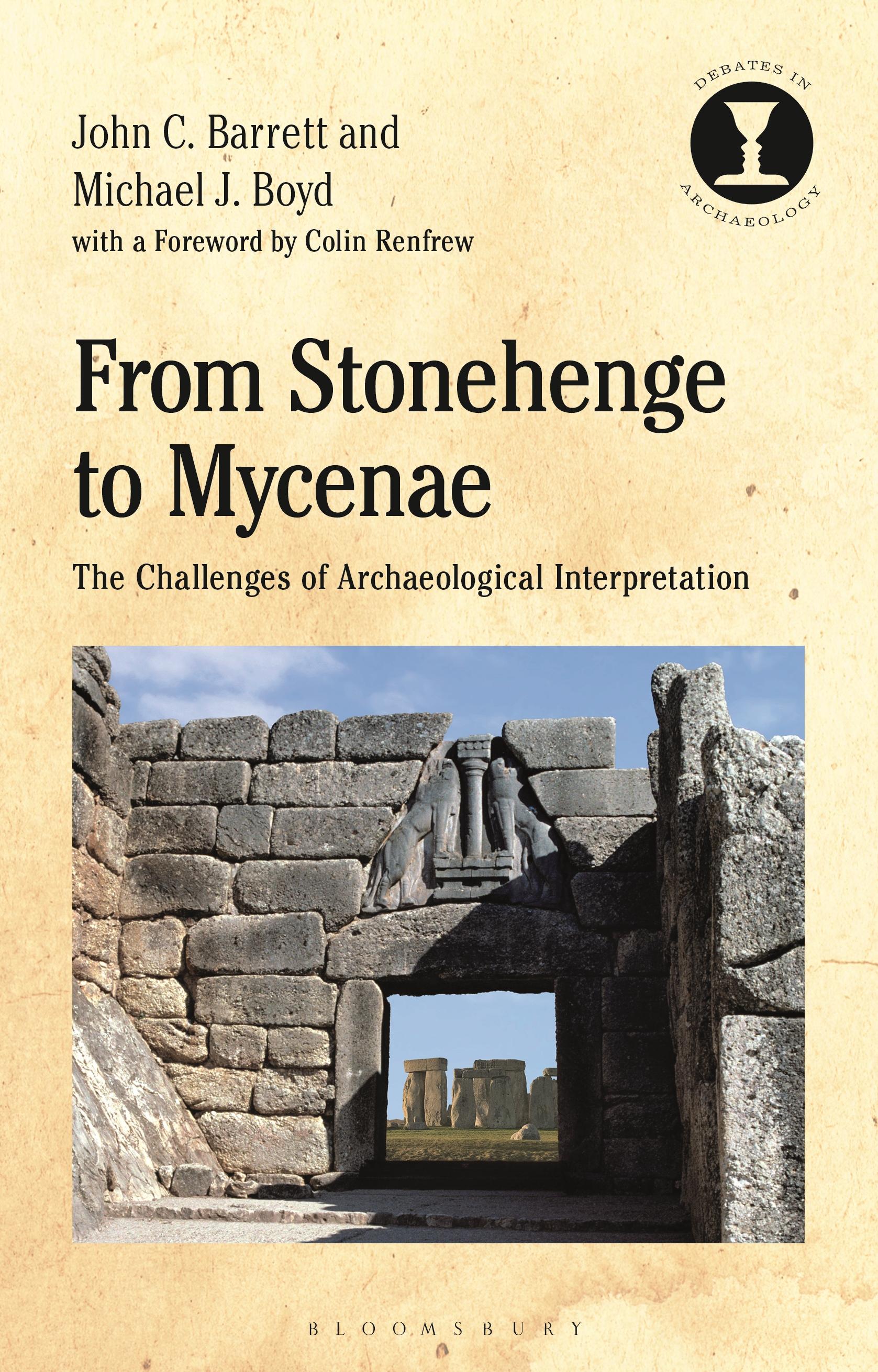
This book reconsiders how we can understand archaeology on a grand scale by abandoning the claims that material remains stand for the people and institutions that produced them, or that genetic change somehow caused cultural change. Our challenge is to understand the worlds that made great projects like the building of Stonehenge or Mycenae possible. The radiocarbon revolution made the old view that the architecture of Mycenae influenced the building of Stonehenge untenable. But the recent use of 'big data' and of genetic histories have led archaeology back to a worldview where 'big problems' are assumed to require 'big solutions'.
Making an animated plea for bottom-up rather than top-down solutions, the authors consider how life was made possible by living in the local and materially distinct worlds of the period. By considering how people once built connections between each other through their production and use of things, their movement between and occupancy of places, and their treatment of the dead, we learn about the kinds of identities that people constructed for themselves. Stonehenge did not require an architect from Mycenae for it to be built, but the builders of Stonehenge and Mycenae would have shared a mutual recognition of the kinds of humans that they were, and the kinds of practices these monuments were once host to.
Making an animated plea for bottom-up rather than top-down solutions, the authors consider how life was made possible by living in the local and materially distinct worlds of the period. By considering how people once built connections between each other through their production and use of things, their movement between and occupancy of places, and their treatment of the dead, we learn about the kinds of identities that people constructed for themselves. Stonehenge did not require an architect from Mycenae for it to be built, but the builders of Stonehenge and Mycenae would have shared a mutual recognition of the kinds of humans that they were, and the kinds of practices these monuments were once host to.
Payez facilement par carte, Klarna, Apple Pay ou Google Pay. Pas satisfait ? Vous avez toujours une garantie de remboursement de 14 jours. En savoir plus dans nos conditions. Si vous avez des questions, envoyez-nous un e-mail à hello@memmo.org.
Memmo facilite tes études, où que tu sois dans le monde. On rassemble tes manuels de cours et des outils d'étude intelligents au même endroit : résumés, quiz, podcasts et flashcards. Et il y a Ted, ton compagnon d'étude qui répond à toutes tes questions. Plus de 50 000 étudiants étudient déjà ici – conçu pour t'aider à apprendre plus vite et à moins stresser.