
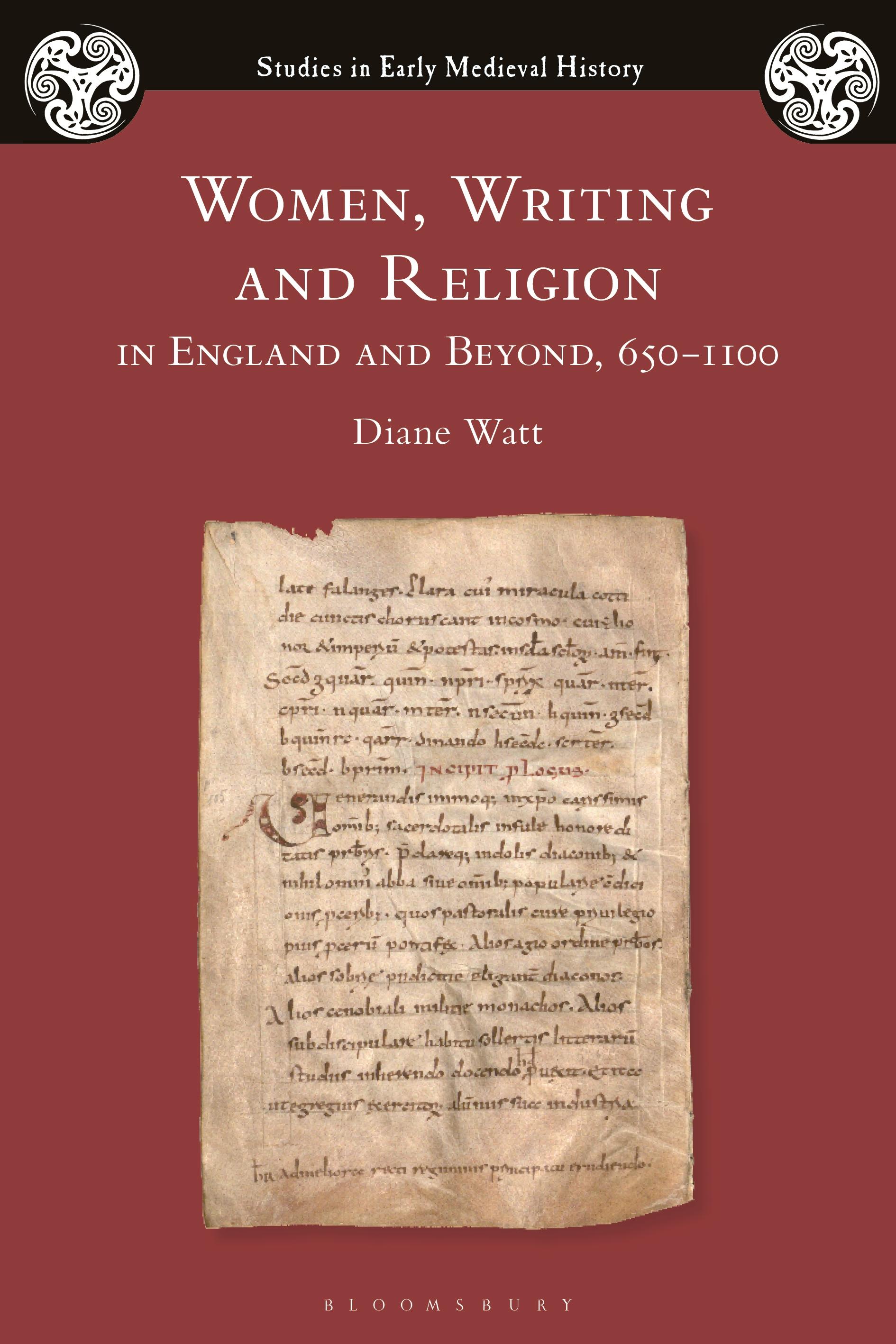
Women's literary histories usually start in the later Middle Ages, but recent scholarship has shown that actually women were at the heart of the emergence of the English literary tradition. Women, Writing and Religion in England and Beyond, 650–1100 focuses on the period before the so-called 'Barking Renaissance' of women's writing in the 12th century. By examining the surviving evidence of women's authorship, as well as the evidence of women's engagement with literary culture more widely, Diane Watt argues that early women's writing was often lost, suppressed, or deliberately destroyed. In particular she considers the different forms of male 'overwriting', to which she ascribes the multiple connotations of 'destruction', 'preservation', 'control' and 'suppression'. She uses the term to describe the complex relationship between male authors and their female subjects to capture the ways in which texts can attempt to control and circumscribe female autonomy.
Written by one of the leading experts in medieval women's writing, Women, Writing and Religion in England and Beyond, 650–1100 examines women's literary engagement in monasteries such as Ely, Whitby, Barking and Wilton Abbey, as well as letters and hagiographies from the 8th and 9th centuries. Diane Watt provides a much-needed look at women's writing in the early medieval period that is crucial to understanding women's literary history more broadly.
Written by one of the leading experts in medieval women's writing, Women, Writing and Religion in England and Beyond, 650–1100 examines women's literary engagement in monasteries such as Ely, Whitby, Barking and Wilton Abbey, as well as letters and hagiographies from the 8th and 9th centuries. Diane Watt provides a much-needed look at women's writing in the early medieval period that is crucial to understanding women's literary history more broadly.
Payez facilement par carte, Klarna, Apple Pay ou Google Pay. Pas satisfait ? Vous avez toujours une garantie de remboursement de 14 jours. En savoir plus dans nos conditions. Si vous avez des questions, envoyez-nous un e-mail à hello@memmo.org.
Memmo facilite tes études, où que tu sois dans le monde. On rassemble tes manuels de cours et des outils d'étude intelligents au même endroit : résumés, quiz, podcasts et flashcards. Et il y a Ted, ton compagnon d'étude qui répond à toutes tes questions. Plus de 50 000 étudiants étudient déjà ici – conçu pour t'aider à apprendre plus vite et à moins stresser.