
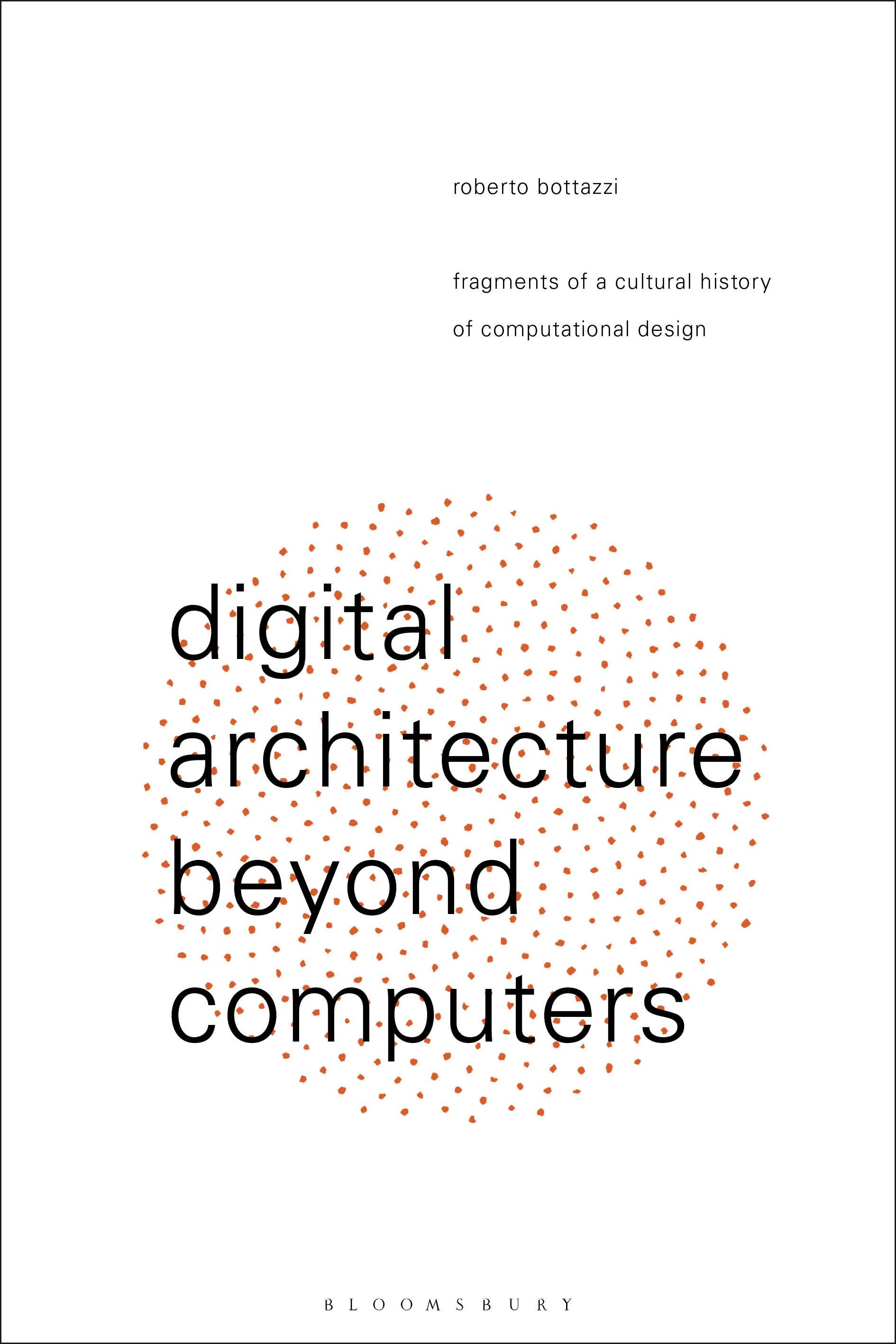
Digital Architecture Beyond Computers explores the deep history of digital architecture, tracing design concepts as far back as the Renaissance and connecting them with the latest software used by designers today. It develops a critical account of how the tools and techniques of digital design have emerged, and allows designers to deepen their understanding of the digital tools they use every day.
What aesthetic, spatial, and philosophical concepts converge within the digital tools architects employ? What is their history? And what kinds of techniques and designs have they given rise to? This book explores the answers to these questions, showing how digital architecture brings together complex ideas and trajectories which span across several domains and have evolved over many centuries. It sets out to unpack these ideas, trace their origin and permeation into architecture, and re-examine their use in contemporary software.
Chapters are arranged around the histories of nine 'fragments' – each a fundamental concept embedded in popular CAD applications: database, layers and fields, parametrics, pixel, programme, randomness, scanning, topology, and voxel/maxel – with each theme examined through a series of historical and contemporary case studies. The book thus connects the digital design process with architectural history and theory, allowing designers and theorists alike to develop more analytical and critical tools with which to conceptualise digital design and its software.
What aesthetic, spatial, and philosophical concepts converge within the digital tools architects employ? What is their history? And what kinds of techniques and designs have they given rise to? This book explores the answers to these questions, showing how digital architecture brings together complex ideas and trajectories which span across several domains and have evolved over many centuries. It sets out to unpack these ideas, trace their origin and permeation into architecture, and re-examine their use in contemporary software.
Chapters are arranged around the histories of nine 'fragments' – each a fundamental concept embedded in popular CAD applications: database, layers and fields, parametrics, pixel, programme, randomness, scanning, topology, and voxel/maxel – with each theme examined through a series of historical and contemporary case studies. The book thus connects the digital design process with architectural history and theory, allowing designers and theorists alike to develop more analytical and critical tools with which to conceptualise digital design and its software.
Payez facilement par carte, Klarna, Apple Pay ou Google Pay. Pas satisfait ? Vous avez toujours une garantie de remboursement de 14 jours. En savoir plus dans nos conditions. Si vous avez des questions, envoyez-nous un e-mail à hello@memmo.org.
Memmo facilite tes études, où que tu sois dans le monde. On rassemble tes manuels de cours et des outils d'étude intelligents au même endroit : résumés, quiz, podcasts et flashcards. Et il y a Ted, ton compagnon d'étude qui répond à toutes tes questions. Plus de 50 000 étudiants étudient déjà ici – conçu pour t'aider à apprendre plus vite et à moins stresser.