
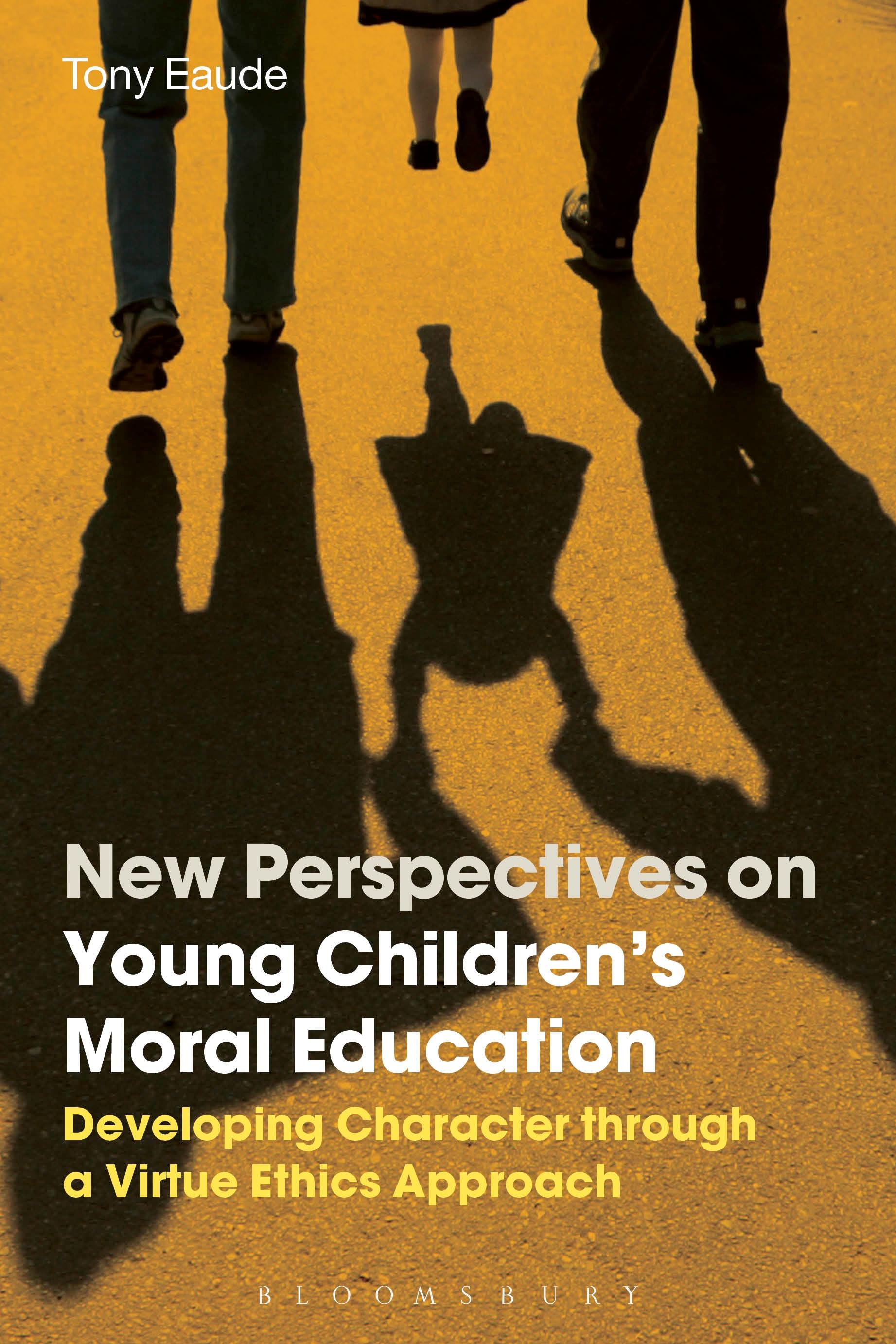
New Perspectives on Young Children's Moral Education explores how to approach young children's moral education in a world of uncertainty and change.
What is moral education? How do young children learn to act and interact appropriately? How do we enable children to recognise that how they act and interact matters? How can character, virtues and value help young children internalise qualities associated with living 'a good life'?
Challenging many current assumptions about ethics and education, Tony Eaude suggests that a moral dimension runs through every aspect of life and that ethics involves learning to act and interact appropriately, based on an 'ethic of care' and enduring qualities and attributes, to equip children to resist strong external pressures. Drawing accessibly on research in neuroscience and psychology, he discusses how young children learn, highlighting the role of emotion, culture, example, habituation and feedback. Small actions can help to develop agency, empathy and thoughtfulness and a sense of moral identity, with an increasing emphasis on self-regulation, a vocabulary of ethics and intrinsic motivation. Eaude explores how character, virtues and values can help young children and adults to recognize and internalize qualities associated with living 'a good life'. He identifies how adults and learning environments can support these processes and shows why an inclusive approach is needed, rather than focusing on these topics only in particular settings, programmes or lessons. Recognising pitfalls and dilemmas, Eaude argues that an approach based on virtue ethics and an apprenticeship model is suitable in school and other settings, both religious and otherwise, internationally.
What is moral education? How do young children learn to act and interact appropriately? How do we enable children to recognise that how they act and interact matters? How can character, virtues and value help young children internalise qualities associated with living 'a good life'?
Challenging many current assumptions about ethics and education, Tony Eaude suggests that a moral dimension runs through every aspect of life and that ethics involves learning to act and interact appropriately, based on an 'ethic of care' and enduring qualities and attributes, to equip children to resist strong external pressures. Drawing accessibly on research in neuroscience and psychology, he discusses how young children learn, highlighting the role of emotion, culture, example, habituation and feedback. Small actions can help to develop agency, empathy and thoughtfulness and a sense of moral identity, with an increasing emphasis on self-regulation, a vocabulary of ethics and intrinsic motivation. Eaude explores how character, virtues and values can help young children and adults to recognize and internalize qualities associated with living 'a good life'. He identifies how adults and learning environments can support these processes and shows why an inclusive approach is needed, rather than focusing on these topics only in particular settings, programmes or lessons. Recognising pitfalls and dilemmas, Eaude argues that an approach based on virtue ethics and an apprenticeship model is suitable in school and other settings, both religious and otherwise, internationally.
Payez facilement par carte, Klarna, Apple Pay ou Google Pay. Pas satisfait ? Vous avez toujours une garantie de remboursement de 14 jours. En savoir plus dans nos conditions. Si vous avez des questions, envoyez-nous un e-mail à hello@memmo.org.
Memmo facilite tes études, où que tu sois dans le monde. On rassemble tes manuels de cours et des outils d'étude intelligents au même endroit : résumés, quiz, podcasts et flashcards. Et il y a Ted, ton compagnon d'étude qui répond à toutes tes questions. Plus de 50 000 étudiants étudient déjà ici – conçu pour t'aider à apprendre plus vite et à moins stresser.