
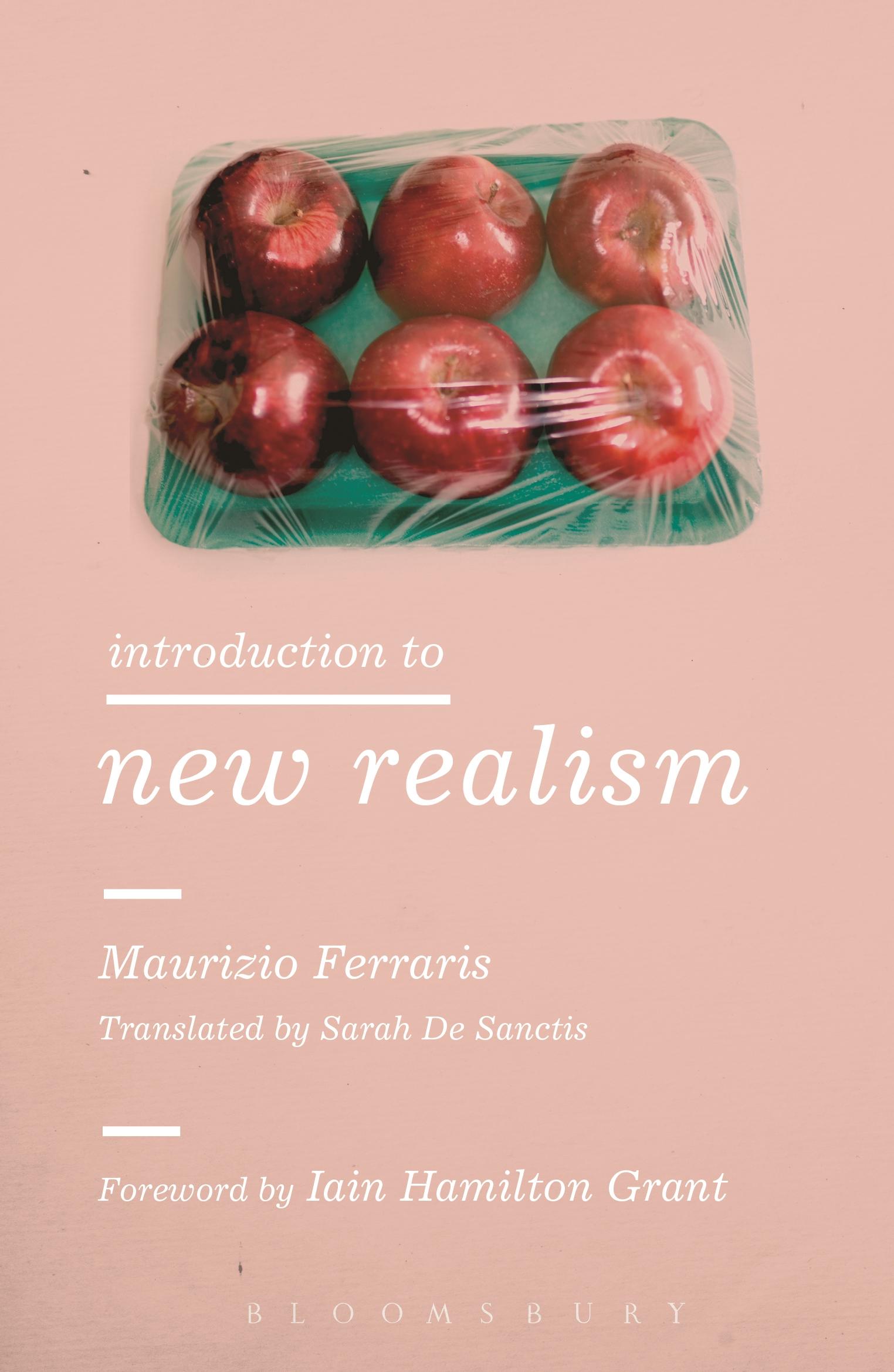
Introduction to New Realism provides an overview of the movement of contemporary thought named New Realism, by its creator and most celebrated practitioner, Maurizio Ferraris. Sharing significant concerns and features with Speculative Realism and Object Oriented Ontology, New Realism can be said to be one of the most prescient philosophical positions today. Its desire to overcome the postmodern antirealism of Kantian origin, and to reassert the importance of truth and objectivity in the name of a new Enlightenment, has had an enormous resonance both in Europe and in the US. Introduction to New Realism is the first volume dedicated to exposing this continental movement to an anglophone audience.
Featuring a foreword by the eminent contemporary philosopher and leading exponent of Speculative Realism, Iain Hamilton Grant, the book begins by tracing the genesis of New Realism, and outlining its central theoretical tenets, before opening onto three distinct sections. The first, 'Negativity', is a critique of the postmodern idea that the world is constructed by our conceptual schemas, all the more so as we have entered the age of digitality and virtuality. The second thesis, 'positivity', proposes the fundamental ontological assertion of New Realism, namely that not only are there parts of reality that are independent of thought, but these parts are also able to act causally over thought and the human world. The third thesis, 'normativity,' applies New Realism to the sphere of the social world. Finally, an afterword written by two young scholars explains in more detail the relationship between New Realism and other forms of contemporary realism.
Featuring a foreword by the eminent contemporary philosopher and leading exponent of Speculative Realism, Iain Hamilton Grant, the book begins by tracing the genesis of New Realism, and outlining its central theoretical tenets, before opening onto three distinct sections. The first, 'Negativity', is a critique of the postmodern idea that the world is constructed by our conceptual schemas, all the more so as we have entered the age of digitality and virtuality. The second thesis, 'positivity', proposes the fundamental ontological assertion of New Realism, namely that not only are there parts of reality that are independent of thought, but these parts are also able to act causally over thought and the human world. The third thesis, 'normativity,' applies New Realism to the sphere of the social world. Finally, an afterword written by two young scholars explains in more detail the relationship between New Realism and other forms of contemporary realism.
Payez facilement par carte, Klarna, Apple Pay ou Google Pay. Pas satisfait ? Vous avez toujours une garantie de remboursement de 14 jours. En savoir plus dans nos conditions. Si vous avez des questions, envoyez-nous un e-mail à hello@memmo.org.
Memmo facilite tes études, où que tu sois dans le monde. On rassemble tes manuels de cours et des outils d'étude intelligents au même endroit : résumés, quiz, podcasts et flashcards. Et il y a Ted, ton compagnon d'étude qui répond à toutes tes questions. Plus de 50 000 étudiants étudient déjà ici – conçu pour t'aider à apprendre plus vite et à moins stresser.