
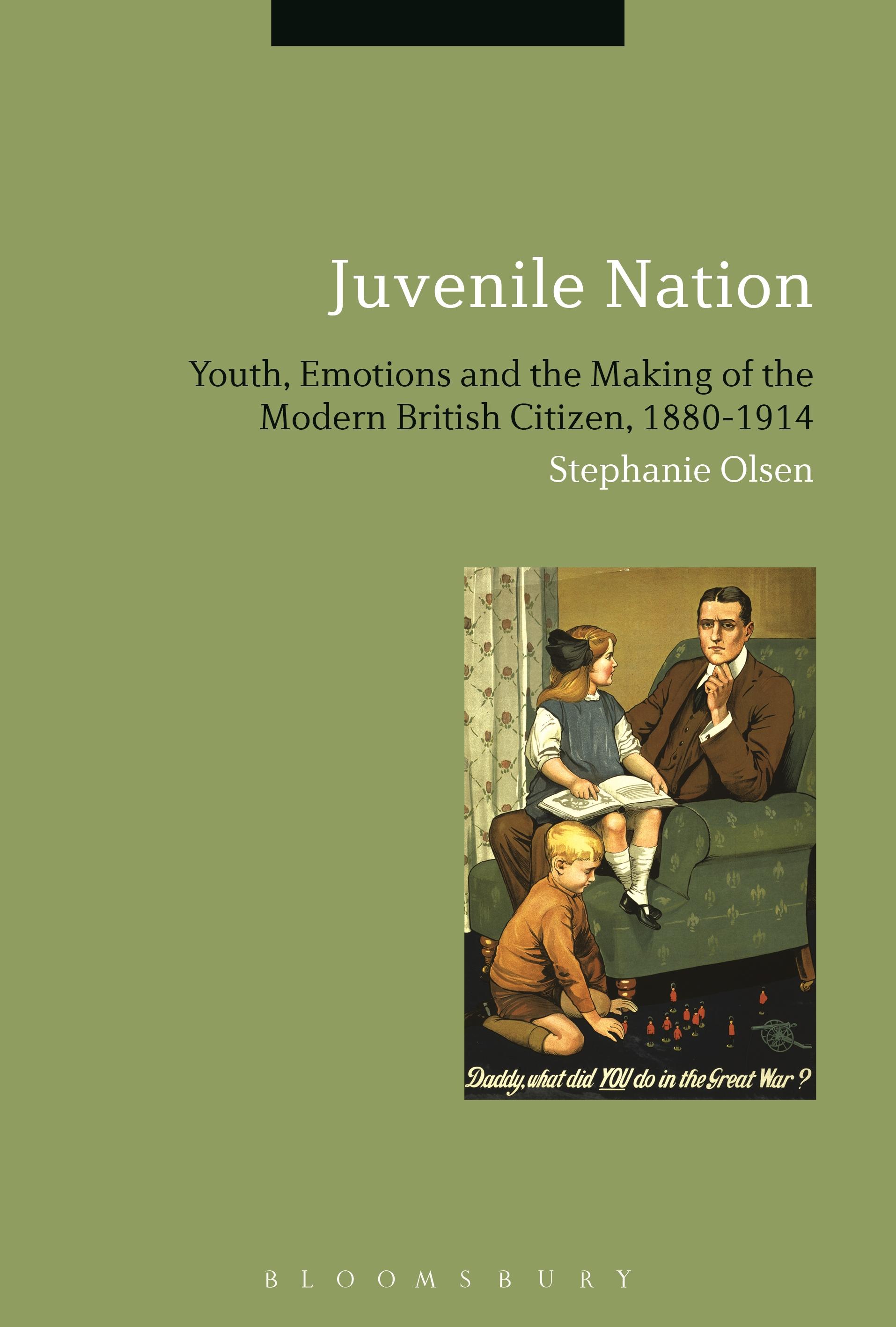
In the first five months of the Great War, one million men volunteered to fight. Yet by the end of 1915, the British government realized that conscription would be required. Why did so many enlist, and conversely, why so few? Focusing on analyses of widely felt emotions related to moral and domestic duty, Juvenile Nation broaches these questions in new ways.
Juvenile Nation examines how religious and secular youth groups, the juvenile periodical press, and a burgeoning new group of child psychologists, social workers and other 'experts' affected society's perception of a new problem character, the 'adolescent'. By what means should this character be turned into a 'fit' citizen? Considering qualities such as loyalty, character, temperance, manliness, fatherhood, and piety, Stephanie Olsen discusses the idea of an 'informal education', focused on building character through emotional control, and how this education was seen as key to shaping the future citizenry of Britain and the Empire.
Juvenile Nation recasts the militarism of the 1880s onwards as part of an emotional outpouring based on association to family, to community and to Christian cultural continuity. Significantly, the same emotional responses explain why so many men turned away from active militarism, with duty to family and community perhaps thought to have been best carried out at home. By linking the historical study of the emotions with an examination of the individual's place in society, Olsen provides an important new insight on how a generation of young men was formed.
Juvenile Nation examines how religious and secular youth groups, the juvenile periodical press, and a burgeoning new group of child psychologists, social workers and other 'experts' affected society's perception of a new problem character, the 'adolescent'. By what means should this character be turned into a 'fit' citizen? Considering qualities such as loyalty, character, temperance, manliness, fatherhood, and piety, Stephanie Olsen discusses the idea of an 'informal education', focused on building character through emotional control, and how this education was seen as key to shaping the future citizenry of Britain and the Empire.
Juvenile Nation recasts the militarism of the 1880s onwards as part of an emotional outpouring based on association to family, to community and to Christian cultural continuity. Significantly, the same emotional responses explain why so many men turned away from active militarism, with duty to family and community perhaps thought to have been best carried out at home. By linking the historical study of the emotions with an examination of the individual's place in society, Olsen provides an important new insight on how a generation of young men was formed.
Payez facilement par carte, Klarna, Apple Pay ou Google Pay. Pas satisfait ? Vous avez toujours une garantie de remboursement de 14 jours. En savoir plus dans nos conditions. Si vous avez des questions, envoyez-nous un e-mail à hello@memmo.org.
Memmo facilite tes études, où que tu sois dans le monde. On rassemble tes manuels de cours et des outils d'étude intelligents au même endroit : résumés, quiz, podcasts et flashcards. Et il y a Ted, ton compagnon d'étude qui répond à toutes tes questions. Plus de 50 000 étudiants étudient déjà ici – conçu pour t'aider à apprendre plus vite et à moins stresser.