
Winner of the Tianjin Social Science Outstanding Achievement Award.
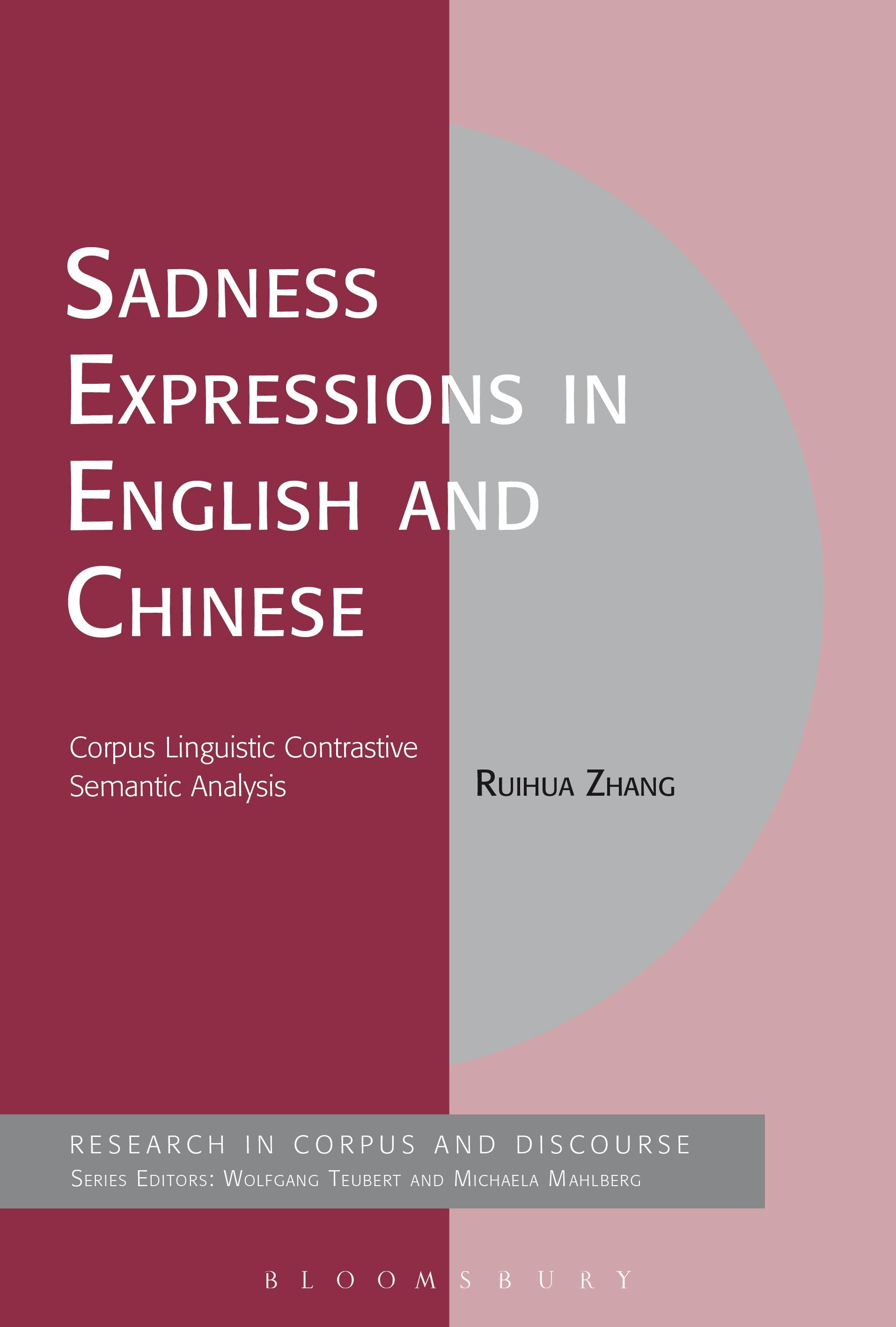
This book reports on the contrastive-semantic investigation of sadness expressions between English and Chinese, based on two monolingual general corpora and a parallel corpus. The exploration adopts a unique theoretical approach which integrates corpus-linguistic theories on meaning (as a social construct, usage and paraphrase) with a corpus-linguistic lexical model. It employs a new complex but workable methodology which combines computational tools with manual examination to tease meaning out of corpus evidence, to compare and contrast lexical items that do not match up neatly between languages. It looks at sadness expressions both within and across languages in terms of three corpus-linguistic structural categories, i.e. colligation, collocation and semantic association/preference, and paraphrase (both explicit and implicit) to capture their subtle nuances of meaning, disclose the culture-specific conceptualisations encoded in them, and highlight their respective cultural distinctiveness of emotion.
By presenting multidisciplinary original work, Sadness Expressions in English and Chinese will be of interest to researchers in corpus linguistics, contrastive lexical semantics, psychology, bilingual lexicography and language pedagogy.
This book reports on the contrastive-semantic investigation of sadness expressions between English and Chinese, based on two monolingual general corpora and a parallel corpus. The exploration adopts a unique theoretical approach which integrates corpus-linguistic theories on meaning (as a social construct, usage and paraphrase) with a corpus-linguistic lexical model. It employs a new complex but workable methodology which combines computational tools with manual examination to tease meaning out of corpus evidence, to compare and contrast lexical items that do not match up neatly between languages. It looks at sadness expressions both within and across languages in terms of three corpus-linguistic structural categories, i.e. colligation, collocation and semantic association/preference, and paraphrase (both explicit and implicit) to capture their subtle nuances of meaning, disclose the culture-specific conceptualisations encoded in them, and highlight their respective cultural distinctiveness of emotion.
By presenting multidisciplinary original work, Sadness Expressions in English and Chinese will be of interest to researchers in corpus linguistics, contrastive lexical semantics, psychology, bilingual lexicography and language pedagogy.
Payez facilement par carte, Klarna, Apple Pay ou Google Pay. Pas satisfait ? Vous avez toujours une garantie de remboursement de 14 jours. En savoir plus dans nos conditions. Si vous avez des questions, envoyez-nous un e-mail à hello@memmo.org.
Memmo facilite tes études, où que tu sois dans le monde. On rassemble tes manuels de cours et des outils d'étude intelligents au même endroit : résumés, quiz, podcasts et flashcards. Et il y a Ted, ton compagnon d'étude qui répond à toutes tes questions. Plus de 50 000 étudiants étudient déjà ici – conçu pour t'aider à apprendre plus vite et à moins stresser.