
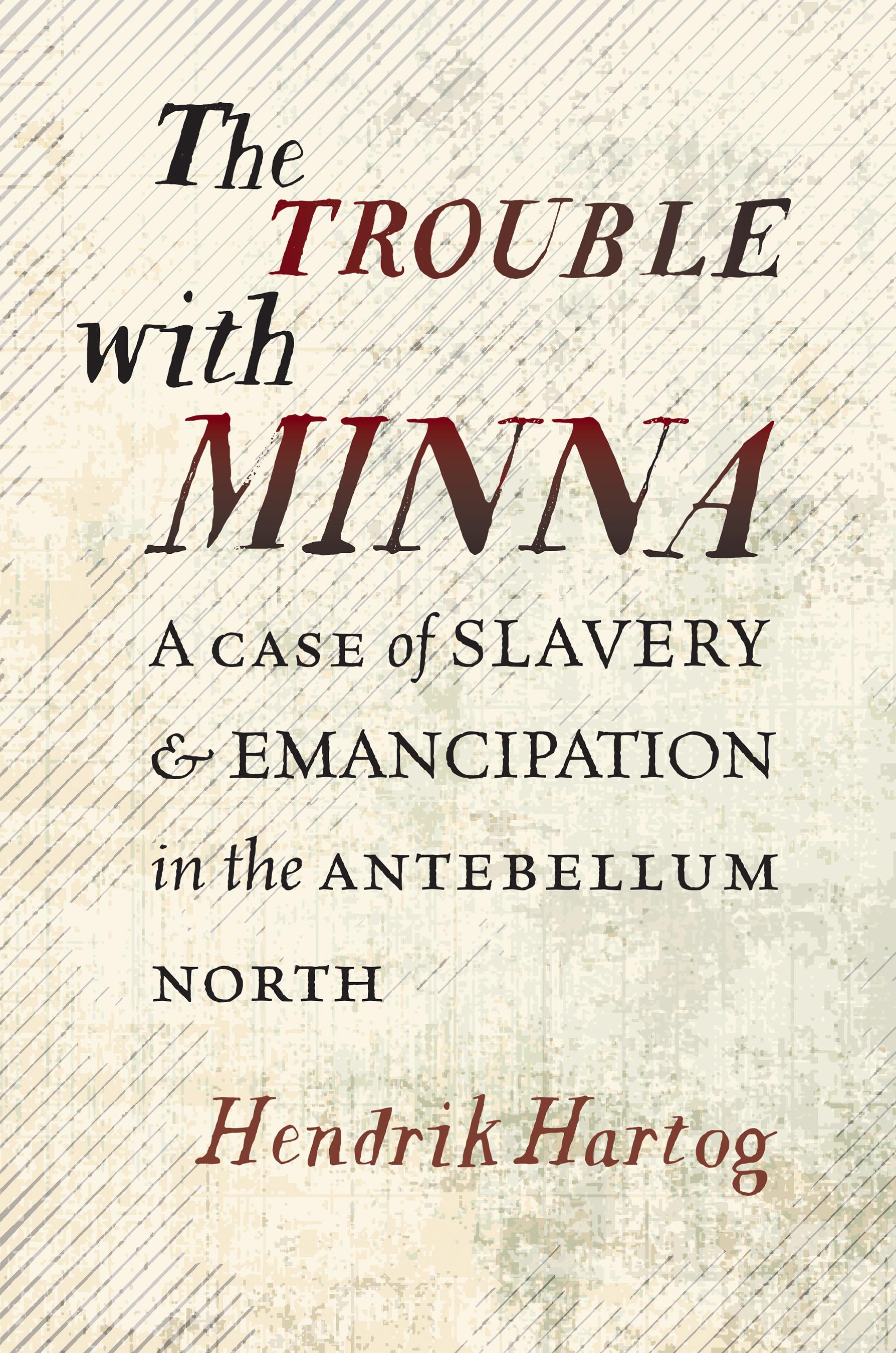
In this intriguing book, Hendrik Hartog uses a forgotten 1840 case to explore the regime of gradual emancipation that took place in New Jersey over the first half of the nineteenth century. In Minna’s case, white people fought over who would pay for the costs of caring for a dependent, apparently enslaved, woman. Hartog marks how the peculiar language mobilized by the debate—about care as a “mere voluntary courtesy”—became routine in a wide range of subsequent cases about “good Samaritans.” Using Minna’s case as a springboard, Hartog explores the statutes, situations, and conflicts that helped produce a regime where slavery was usually but not always legal and where a supposedly enslaved person may or may not have been legally free.
In exploring this liminal and unsettled legal space, Hartog sheds light on the relationships between moral and legal reasoning and a legal landscape that challenges simplistic notions of what it meant to live in freedom. What emerges is a provocative portrait of a distant legal order that, in its contradictions and moral dilemmas, bears an ironic resemblance to our own legal world.
Payez facilement par carte, Klarna, Apple Pay ou Google Pay. Pas satisfait ? Vous avez toujours une garantie de remboursement de 14 jours. En savoir plus dans nos conditions. Si vous avez des questions, envoyez-nous un e-mail à hello@memmo.org.
Memmo facilite tes études, où que tu sois dans le monde. On rassemble tes manuels de cours et des outils d'étude intelligents au même endroit : résumés, quiz, podcasts et flashcards. Et il y a Ted, ton compagnon d'étude qui répond à toutes tes questions. Plus de 50 000 étudiants étudient déjà ici – conçu pour t'aider à apprendre plus vite et à moins stresser.