
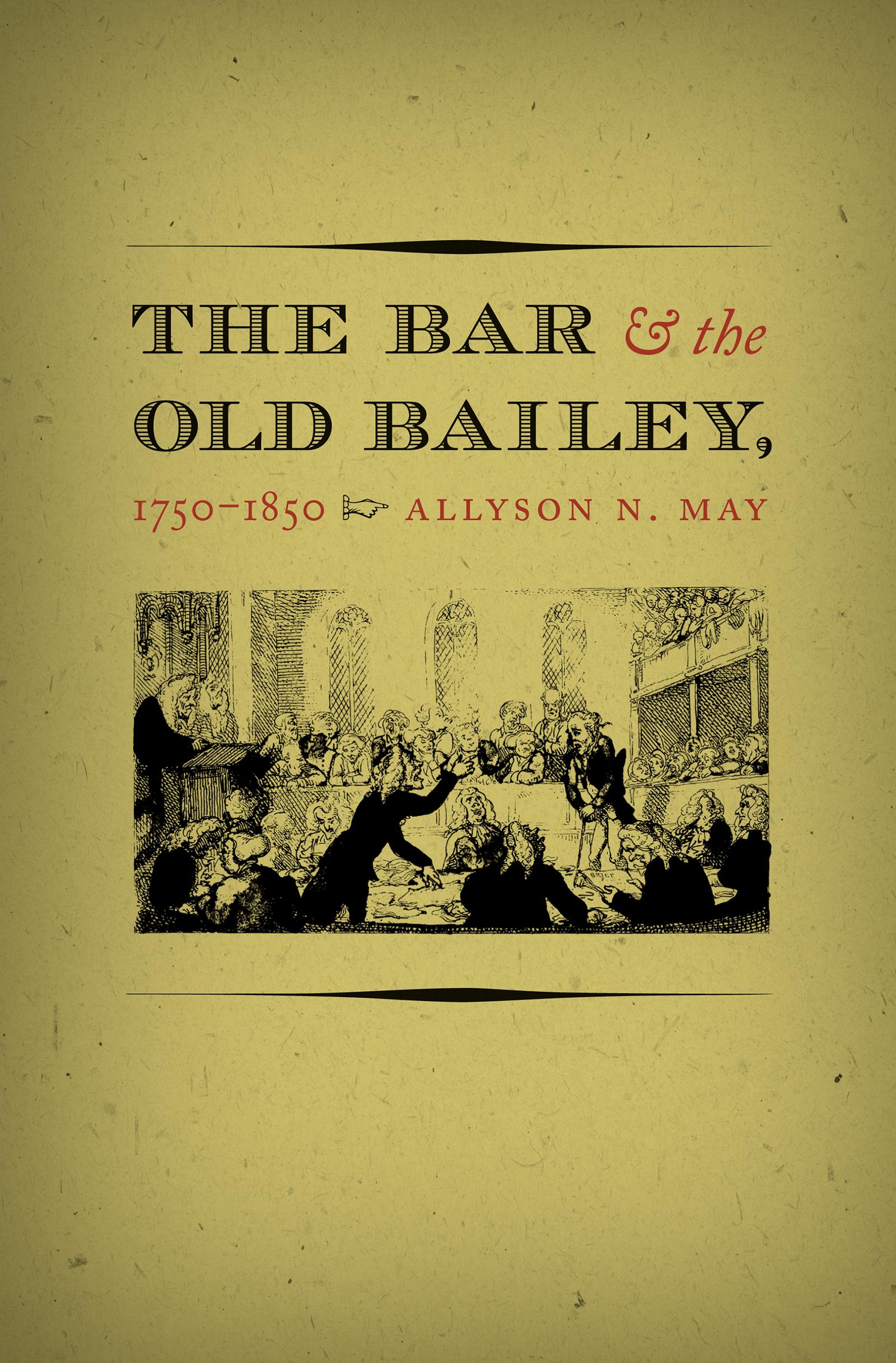
Allyson May chronicles the history of the English criminal trial and the development of a criminal bar in London between 1750 and 1850. She charts the transformation of the legal process and the evolution of professional standards of conduct for the criminal bar through an examination of the working lives of the Old Bailey barristers of the period. In describing the rise of adversarialism, May uncovers the motivations and interests of prosecutors, defendants, the bench, and the state, as well as the often-maligned “Old Bailey hacks” themselves.
Traditionally, the English criminal trial consisted of a relatively unstructured altercation between the victim-prosecutor and the accused, who generally appeared without a lawyer. A criminal bar had emerged in London by the 1780s, and in 1836 the Prisoners' Counsel Act recognized the defendant’s right to legal counsel in felony trials and lifted many restrictions on the activities of defense lawyers. May explores the role of barristers before and after the Prisoners' Counsel Act. She also details the careers of individual members of the bar — describing their civil practice in local, customary courts as well as their criminal practice — and the promotion of Old Bailey counsel to the bench of that court. A comprehensive biographical appendix augments this discussion.
Traditionally, the English criminal trial consisted of a relatively unstructured altercation between the victim-prosecutor and the accused, who generally appeared without a lawyer. A criminal bar had emerged in London by the 1780s, and in 1836 the Prisoners' Counsel Act recognized the defendant’s right to legal counsel in felony trials and lifted many restrictions on the activities of defense lawyers. May explores the role of barristers before and after the Prisoners' Counsel Act. She also details the careers of individual members of the bar — describing their civil practice in local, customary courts as well as their criminal practice — and the promotion of Old Bailey counsel to the bench of that court. A comprehensive biographical appendix augments this discussion.
Payez facilement par carte, Klarna, Apple Pay ou Google Pay. Pas satisfait ? Vous avez toujours une garantie de remboursement de 14 jours. En savoir plus dans nos conditions. Si vous avez des questions, envoyez-nous un e-mail à hello@memmo.org.
Memmo facilite tes études, où que tu sois dans le monde. On rassemble tes manuels de cours et des outils d'étude intelligents au même endroit : résumés, quiz, podcasts et flashcards. Et il y a Ted, ton compagnon d'étude qui répond à toutes tes questions. Plus de 50 000 étudiants étudient déjà ici – conçu pour t'aider à apprendre plus vite et à moins stresser.
Tu pourrais aussi aimer
Acheter le livre0