
Where does our food come from? Whose hands have planted, cultivated, picked, packed, processed, transported, scanned, sold, sliced, and cooked it? What production practices have transformed it from seed to fruit, from fresh to processed form? Who decides what is grown and how? What are the effects of those decisions on our health and the health of the planet?
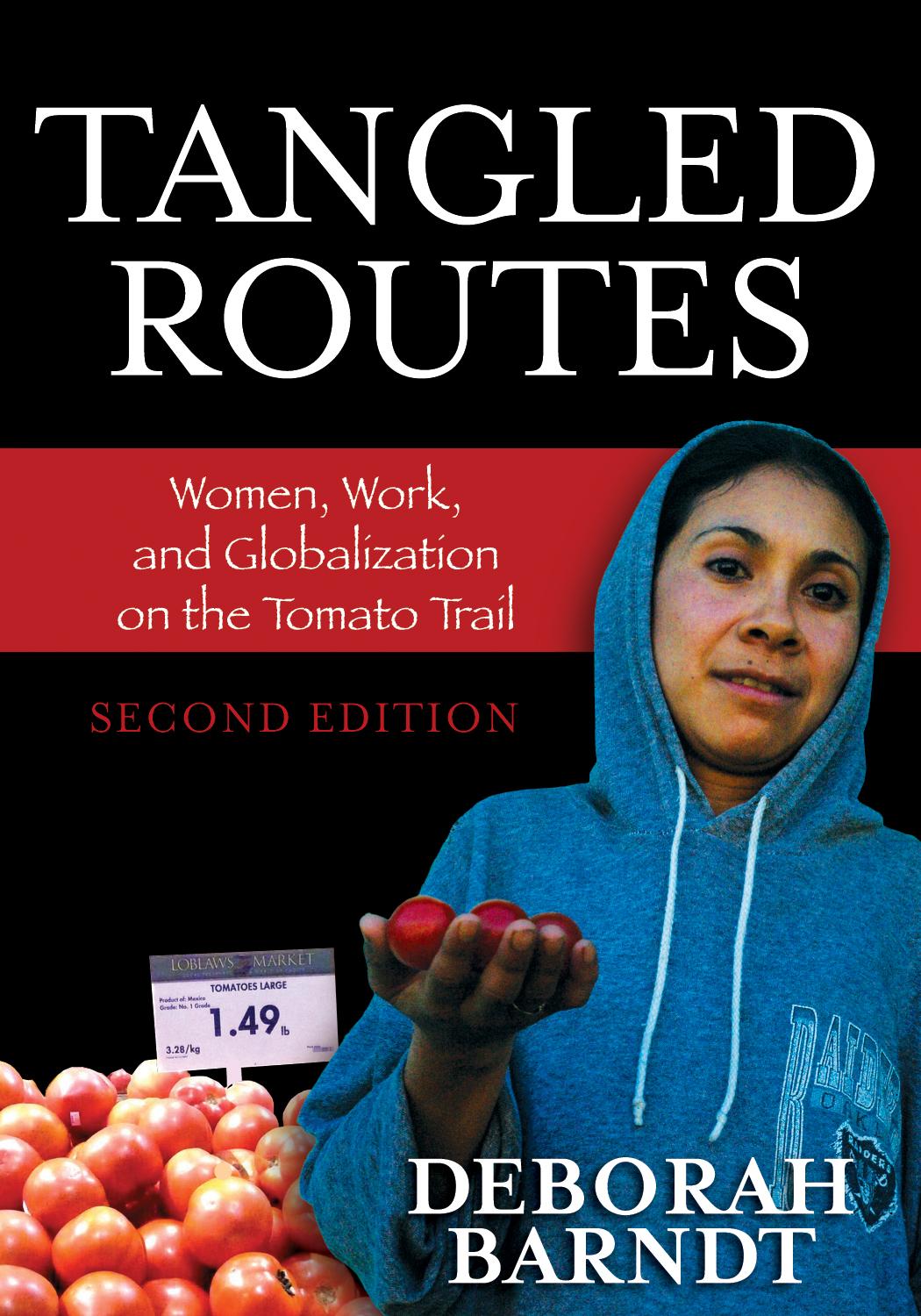
Tangled Routes tackles these fascinating questions and demystifies globalization by tracing the long journey of a corporate tomato from a Mexican field to a Canadian fast-food restaurant. Through an interdisciplinary lens, Deborah Barndt examines the dynamic relationships between production and consumption, work and technology, biodiversity and cultural diversity, and health and environment. A globalization-from-above perspective is reflected in the corporate agendas of a Mexican agribusiness, the U.S.-based McDonald's chain, and Canadian-based Loblaws supermarkets. The women workers on the front line of these businesses offer a humanized globalization-from-below perspective, while yet another "globalization" is revealed through examples of resistance and local alternatives.
This revised and updated edition highlights developments since the turn of the millennium, in particular the deepening economic integration of the NAFTA countries as well as the growing questioning of NAFTA's consequences and the crafting of alternatives built on foundations of sustainability and justice.
Tangled Routes tackles these fascinating questions and demystifies globalization by tracing the long journey of a corporate tomato from a Mexican field to a Canadian fast-food restaurant. Through an interdisciplinary lens, Deborah Barndt examines the dynamic relationships between production and consumption, work and technology, biodiversity and cultural diversity, and health and environment. A globalization-from-above perspective is reflected in the corporate agendas of a Mexican agribusiness, the U.S.-based McDonald's chain, and Canadian-based Loblaws supermarkets. The women workers on the front line of these businesses offer a humanized globalization-from-below perspective, while yet another "globalization" is revealed through examples of resistance and local alternatives.
This revised and updated edition highlights developments since the turn of the millennium, in particular the deepening economic integration of the NAFTA countries as well as the growing questioning of NAFTA's consequences and the crafting of alternatives built on foundations of sustainability and justice.
Payez facilement par carte, Klarna, Apple Pay ou Google Pay. Pas satisfait ? Vous avez toujours une garantie de remboursement de 14 jours. En savoir plus dans nos conditions. Si vous avez des questions, envoyez-nous un e-mail à hello@memmo.org.
Memmo facilite tes études, où que tu sois dans le monde. On rassemble tes manuels de cours et des outils d'étude intelligents au même endroit : résumés, quiz, podcasts et flashcards. Et il y a Ted, ton compagnon d'étude qui répond à toutes tes questions. Plus de 50 000 étudiants étudient déjà ici – conçu pour t'aider à apprendre plus vite et à moins stresser.