
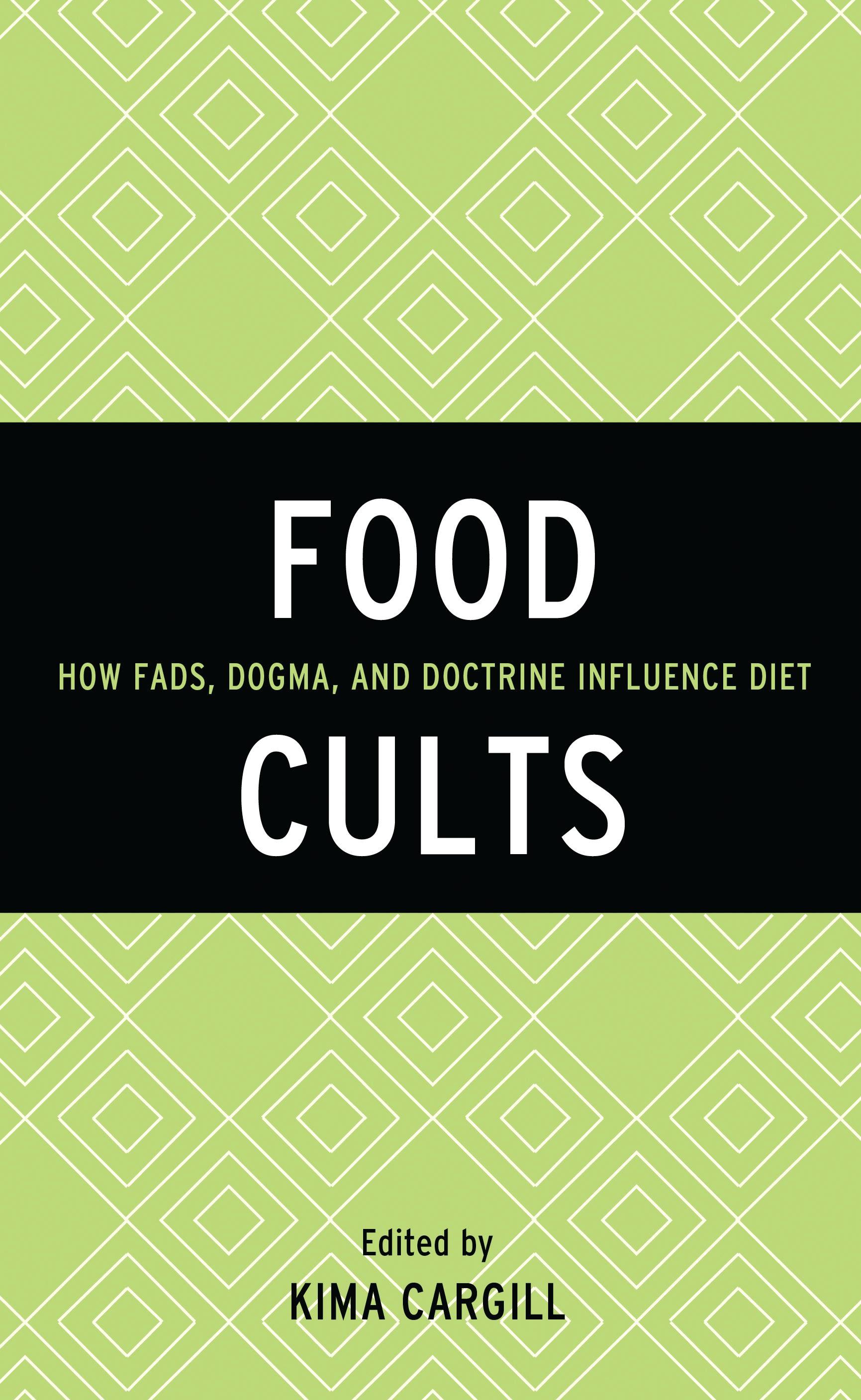
What do we mean when we call any group a cult? Definingthat term is a slippery proposition – the word cult is provocative and arguably pejorative. Does it necessarily refer to a religious group? A group with a charismatic leader? Or something darker and more sinister?
Because beliefs and practices surrounding food often inspire religious and political fervor, as well as function to unite people into insular groups, it is inevitable that "food cults" would emerge. Studying the extreme beliefs and practices of such food cults allows us to see the ways in which food serves as a nexus for religious beliefs, sexuality, death anxiety, preoccupation with the body, asceticism, and hedonism, to name a few. In contrast to religious and political cults, food cults have the added dimension of mediating cultural trends in nutrition and diet through their membership.
Should we then consider raw foodists, many of whom believe that cooked food is poison, a type of food cult? What about paleo diet adherents or those who follow a restricted calorie diet for longevity? Food Cults explores these questions by looking at domestic and international, contemporary and historic food communities characterized by extreme nutritional beliefs or viewed as "fringe" movements by mainstream culture. While there are a variety of accounts of such food communities across disciplines, this collection pulls together these works and explains why we gravitate toward such groups and the social and psychological functions they serve. This volume describes how contemporary and historic food communities come together and foment fanaticism, judgment, charisma, dogma, passion, longevity, condemnation and exaltation.
Because beliefs and practices surrounding food often inspire religious and political fervor, as well as function to unite people into insular groups, it is inevitable that "food cults" would emerge. Studying the extreme beliefs and practices of such food cults allows us to see the ways in which food serves as a nexus for religious beliefs, sexuality, death anxiety, preoccupation with the body, asceticism, and hedonism, to name a few. In contrast to religious and political cults, food cults have the added dimension of mediating cultural trends in nutrition and diet through their membership.
Should we then consider raw foodists, many of whom believe that cooked food is poison, a type of food cult? What about paleo diet adherents or those who follow a restricted calorie diet for longevity? Food Cults explores these questions by looking at domestic and international, contemporary and historic food communities characterized by extreme nutritional beliefs or viewed as "fringe" movements by mainstream culture. While there are a variety of accounts of such food communities across disciplines, this collection pulls together these works and explains why we gravitate toward such groups and the social and psychological functions they serve. This volume describes how contemporary and historic food communities come together and foment fanaticism, judgment, charisma, dogma, passion, longevity, condemnation and exaltation.
Payez facilement par carte, Klarna, Apple Pay ou Google Pay. Pas satisfait ? Vous avez toujours une garantie de remboursement de 14 jours. En savoir plus dans nos conditions. Si vous avez des questions, envoyez-nous un e-mail à hello@memmo.org.
Memmo facilite tes études, où que tu sois dans le monde. On rassemble tes manuels de cours et des outils d'étude intelligents au même endroit : résumés, quiz, podcasts et flashcards. Et il y a Ted, ton compagnon d'étude qui répond à toutes tes questions. Plus de 50 000 étudiants étudient déjà ici – conçu pour t'aider à apprendre plus vite et à moins stresser.