
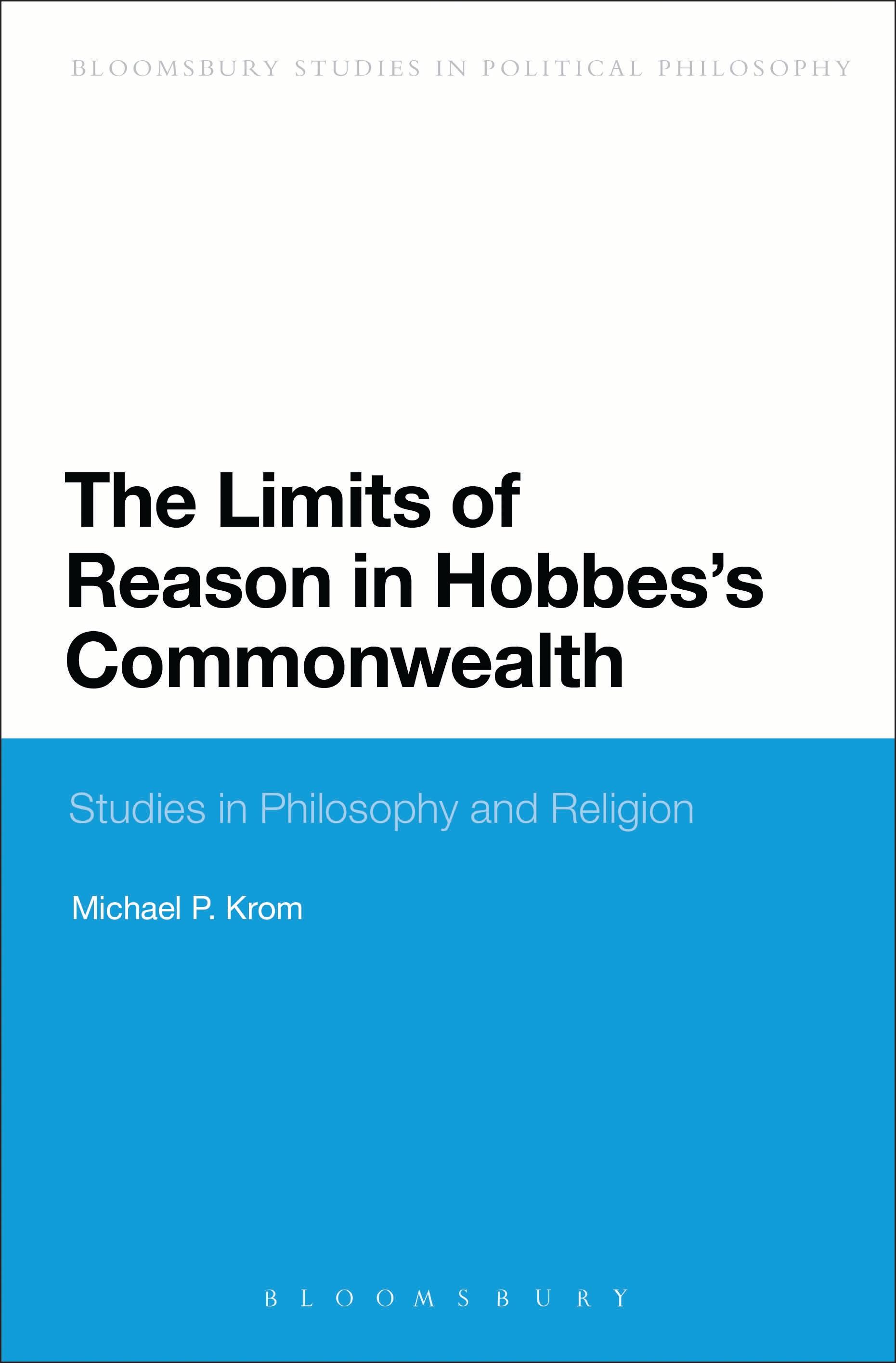
The Limits of Reason in Hobbes's Commonwealth explores Hobbes's attempt to construct a political philosophy of enduring peace on the foundation of the rational individual. Hobbes's rational individual, motivated by self-preservation, obeys the laws of the commonwealth and thus is conceived as the model citizen. Yet Hobbes intimates that there are limits to what such an actor will do for peace, and that the glory-seeker - "too rarely found to be presumed on" - is capable of a generosity that is necessary for political longevity. Michael P. Krom identifies this as a fundamental contradiction in Hobbes's system: he builds the commonwealth on the rational actor, yet acknowledges the need for the irrational glory-seeker.
Krom argues that Hobbes's attempt to establish a "king of the proud" fails to overcome the limits of reason and the precariousness of politics. This book synthesizes recent work on Hobbes's understanding of glory and political stability, challenging the view that Hobbes succeeds in incorporating glory-seekers into his political theory and explores the implications of this for contemporary political philosophy after Rawls.
Payez facilement par carte, Klarna, Apple Pay ou Google Pay. Pas satisfait ? Vous avez toujours une garantie de remboursement de 14 jours. En savoir plus dans nos conditions. Si vous avez des questions, envoyez-nous un e-mail à hello@memmo.org.
Memmo facilite tes études, où que tu sois dans le monde. On rassemble tes manuels de cours et des outils d'étude intelligents au même endroit : résumés, quiz, podcasts et flashcards. Et il y a Ted, ton compagnon d'étude qui répond à toutes tes questions. Plus de 50 000 étudiants étudient déjà ici – conçu pour t'aider à apprendre plus vite et à moins stresser.