
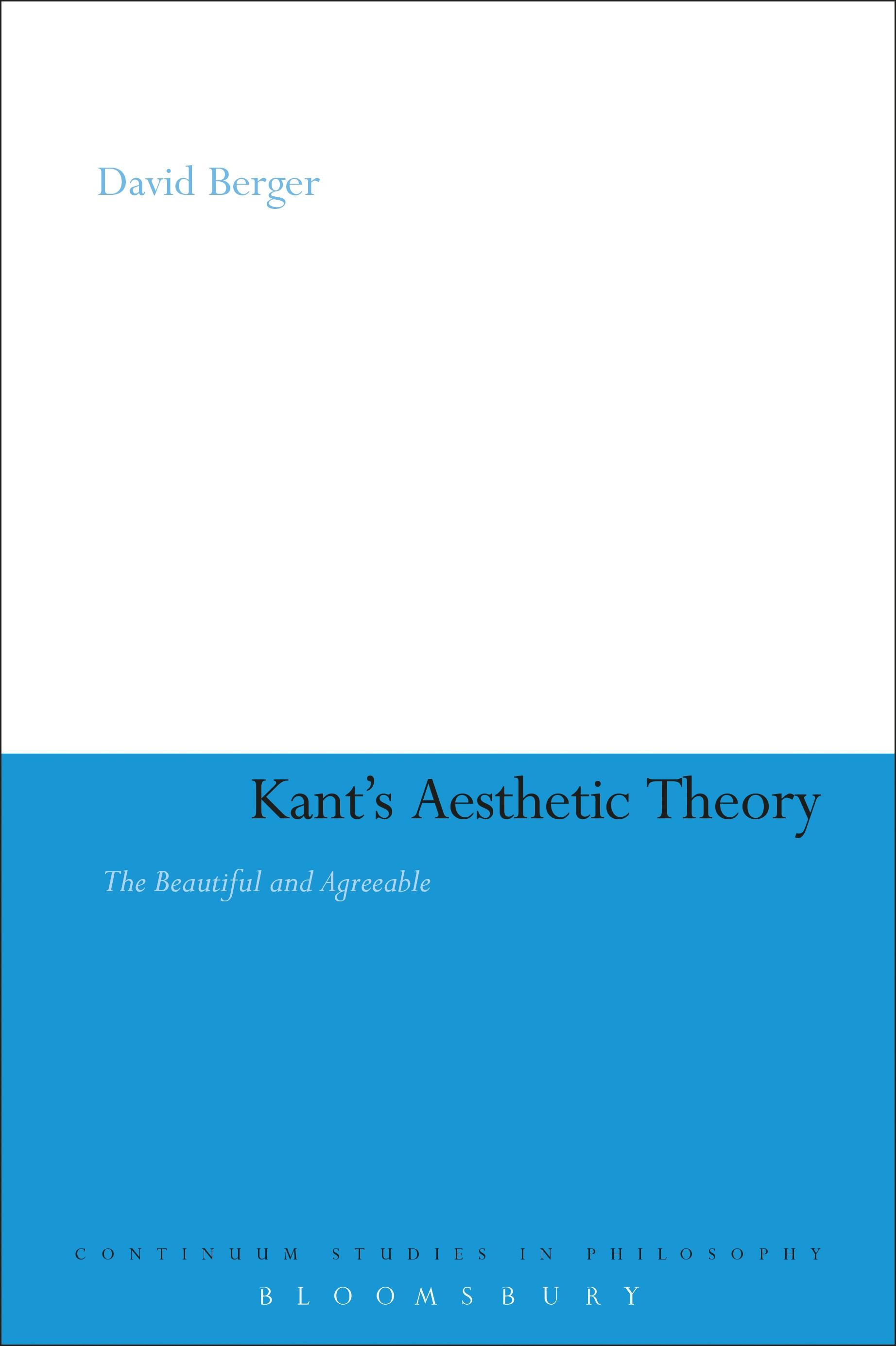
Taste is ordinarily thought of in terms of two very different idioms - a normative idiom of taste as a standard of appraisal and a non-normative idiom of taste as a purely personal matter. Kant attempts to capture this twofold conception of taste within the terms of his mature critical philosophy by distinguishing between the beautiful and the agreeable. Scholars have largely taken Kant's distinction for granted, but David Berger argues that it is both far richer and far more problematic than it may appear. Berger examines in detail Kant's various attempts to distinguish beauty from agreeableness. This approach reveals the complex interplay between Kant's substantive aesthetic theory and his broader views on metaphysics and epistemology. Indeed, Berger argues that the real interest of Kant's distinction between beauty and agreeableness is ultimately epistemological.
His interpretation brings Kant's aesthetic theory into dialogue with questions at the heart of contemporary analytic philosophy and shows how philosophical aesthetics can offer fresh insights into contemporary philosophical debates.
His interpretation brings Kant's aesthetic theory into dialogue with questions at the heart of contemporary analytic philosophy and shows how philosophical aesthetics can offer fresh insights into contemporary philosophical debates.
Payez facilement par carte, Klarna, Apple Pay ou Google Pay. Pas satisfait ? Vous avez toujours une garantie de remboursement de 14 jours. En savoir plus dans nos conditions. Si vous avez des questions, envoyez-nous un e-mail à hello@memmo.org.
Memmo facilite tes études, où que tu sois dans le monde. On rassemble tes manuels de cours et des outils d'étude intelligents au même endroit : résumés, quiz, podcasts et flashcards. Et il y a Ted, ton compagnon d'étude qui répond à toutes tes questions. Plus de 50 000 étudiants étudient déjà ici – conçu pour t'aider à apprendre plus vite et à moins stresser.