
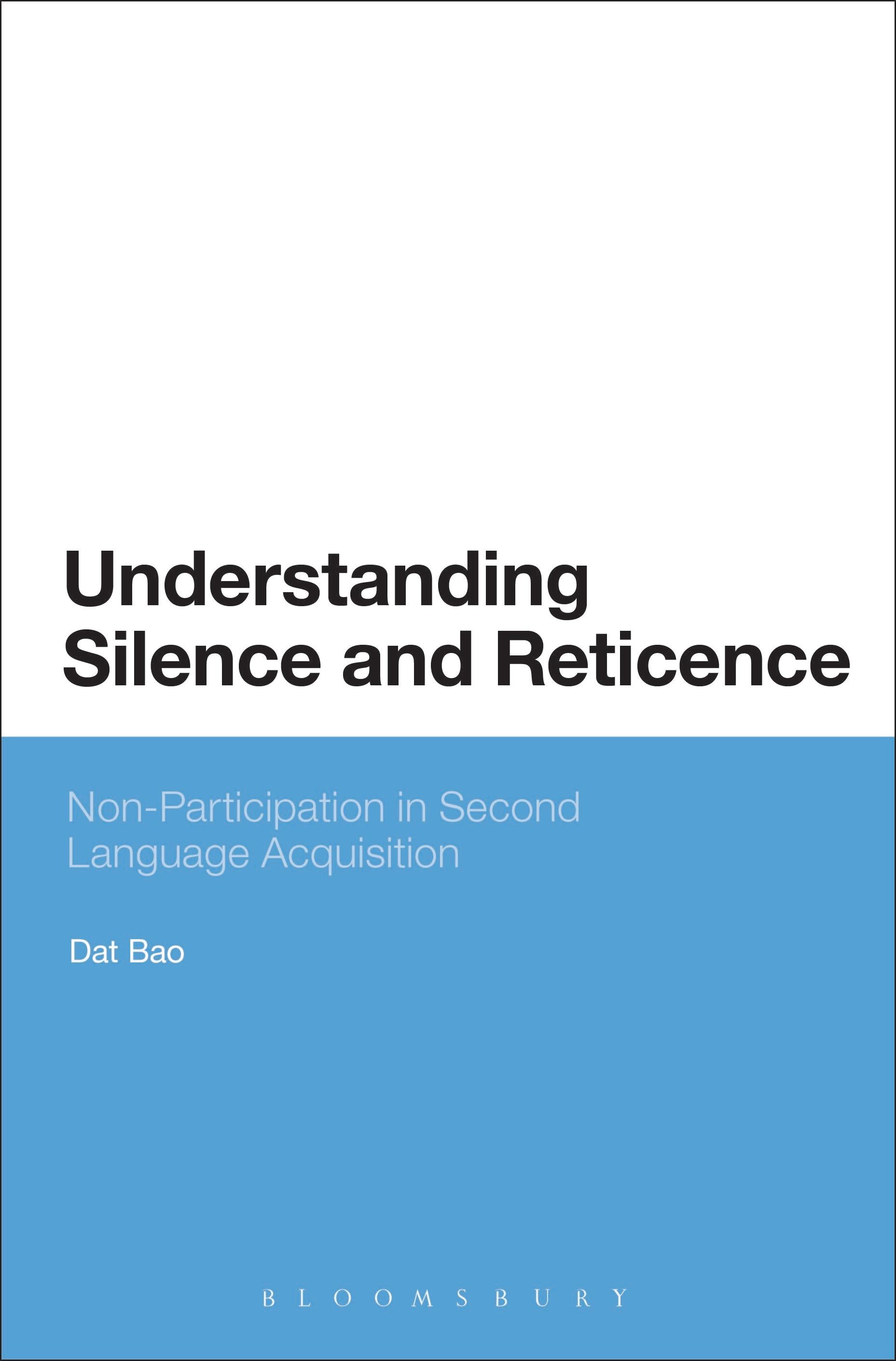
What is the state of that which is not spoken? This book presents empirical research related to the phenomenon of reticence in the second language classroom, connecting current knowledge and theoretical debates in language learning and acquisition.
Why do language learners remain silent or exhibit reticence? In what ways can silence in the language learning classroom be justified? To what extent should learners employ or modify silence? Do quiet learners work more effectively with quiet or verbal learners? Looking at evidence from Australia, China, Japan, Korea, and Vietnam, the book presents research data on many internal and external forces that influence the silent mode of learning in contemporary education. This work gives the reader a chance to reflect more profoundly on cultural ways of learning languages.
Why do language learners remain silent or exhibit reticence? In what ways can silence in the language learning classroom be justified? To what extent should learners employ or modify silence? Do quiet learners work more effectively with quiet or verbal learners? Looking at evidence from Australia, China, Japan, Korea, and Vietnam, the book presents research data on many internal and external forces that influence the silent mode of learning in contemporary education. This work gives the reader a chance to reflect more profoundly on cultural ways of learning languages.
Payez facilement par carte, Klarna, Apple Pay ou Google Pay. Pas satisfait ? Vous avez toujours une garantie de remboursement de 14 jours. En savoir plus dans nos conditions. Si vous avez des questions, envoyez-nous un e-mail à hello@memmo.org.
Memmo facilite tes études, où que tu sois dans le monde. On rassemble tes manuels de cours et des outils d'étude intelligents au même endroit : résumés, quiz, podcasts et flashcards. Et il y a Ted, ton compagnon d'étude qui répond à toutes tes questions. Plus de 50 000 étudiants étudient déjà ici – conçu pour t'aider à apprendre plus vite et à moins stresser.