
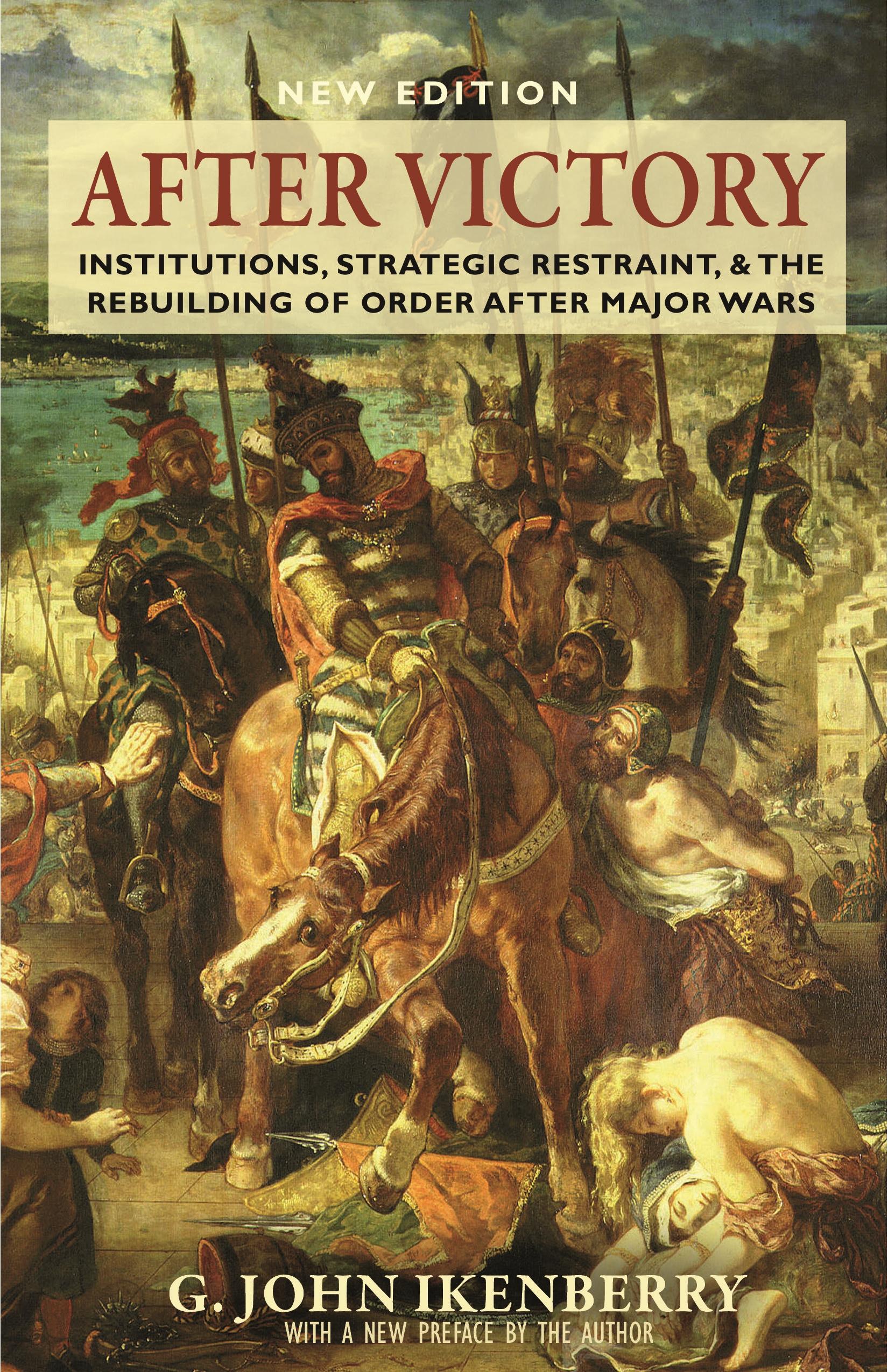
The end of the Cold War was a "big bang" reminiscent of earlier moments after major wars, such as the end of the Napoleonic Wars in 1815 and the end of the world wars in 1919 and 1945. But what do states that win wars do with their newfound power, and how do they use it to build order? In After Victory, John Ikenberry examines postwar settlements in modern history, arguing that powerful countries do seek to build stable and cooperative relations, but the type of order that emerges hinges on their ability to make commitments and restrain power. He explains that only with the spread of democracy in the twentieth century and the innovative use of international institutions—both linked to the emergence of the United States as a world power—has order been created that goes beyond balance of power politics to exhibit "constitutional" characteristics. Blending comparative politics with international relations, and history with theory, After Victory will be of interest to anyone concerned with the organization of world order, the role of institutions in world politics, and the lessons of past postwar settlements for today.
Payez facilement par carte, Klarna, Apple Pay ou Google Pay. Pas satisfait ? Vous avez toujours une garantie de remboursement de 14 jours. En savoir plus dans nos conditions. Si vous avez des questions, envoyez-nous un e-mail à hello@memmo.org.
Memmo facilite tes études, où que tu sois dans le monde. On rassemble tes manuels de cours et des outils d'étude intelligents au même endroit : résumés, quiz, podcasts et flashcards. Et il y a Ted, ton compagnon d'étude qui répond à toutes tes questions. Plus de 50 000 étudiants étudient déjà ici – conçu pour t'aider à apprendre plus vite et à moins stresser.
Tu pourrais aussi aimer
Acheter le livre0