
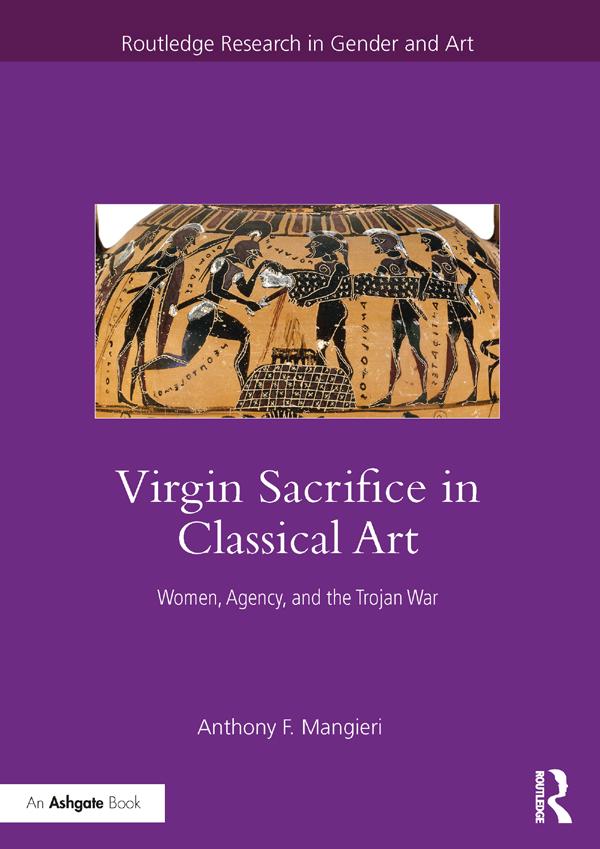
The Trojan War begins and ends with the sacrifice of a virgin princess. The gruesome killing of a woman must have captivated ancient people because the myth of the sacrificial virgin resonates powerfully in the arts of ancient Greece and Rome. Most scholars agree that the Greeks and Romans did not practice human sacrifice, so why then do the myths of virgin sacrifice appear persistently in art and literature for over a millennium? Virgin Sacrifice in Classical Art: Women, Agency, and the Trojan War seeks to answer this question.
This book tells the stories of the sacrificial maidens in order to help the reader discover the meanings bound up in these myths for historical people. In exploring the representations of Iphigeneia and Polyxena in Greek, Etruscan, and Roman art, this book offers a broader cultural history that reveals what people in the ancient world were seeking in these stories. The result is an interdisciplinary study that offers new interpretations on the meaning of the sacrificial virgin as a cultural and ideological construction. This is the first book-length study of virgin sacrifice in ancient art and the first to provide an interpretive framework within which to understand its imagery.
Payez facilement par carte, Klarna, Apple Pay ou Google Pay. Pas satisfait ? Vous avez toujours une garantie de remboursement de 14 jours. En savoir plus dans nos conditions. Si vous avez des questions, envoyez-nous un e-mail à hello@memmo.org.
Memmo facilite tes études, où que tu sois dans le monde. On rassemble tes manuels de cours et des outils d'étude intelligents au même endroit : résumés, quiz, podcasts et flashcards. Et il y a Ted, ton compagnon d'étude qui répond à toutes tes questions. Plus de 50 000 étudiants étudient déjà ici – conçu pour t'aider à apprendre plus vite et à moins stresser.