
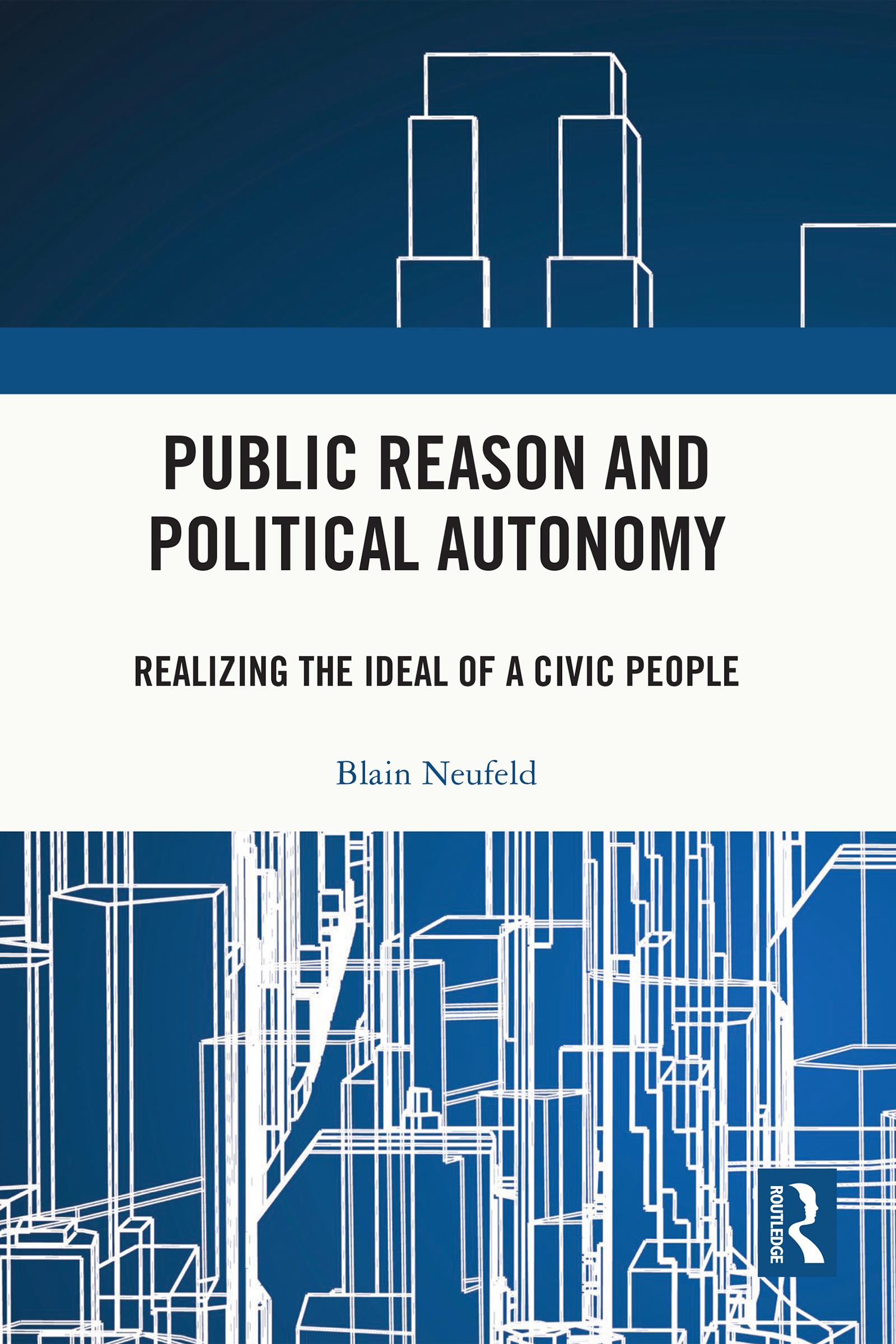
This book advances a novel justification for the idea of "public reason": citizens within diverse societies can realize the ideal of shared political autonomy, despite their adherence to different religious and philosophical views, by deciding fundamental political questions with "public reasons." Public reasons draw upon or are derived from ecumenical political ideas, such as toleration and equal citizenship, and mutually acceptable forms of reasoning, like those of the sciences. This book explains that if citizens share equal political autonomy—and thereby constitute "a civic people"—they will not suffer from alienation or domination and can enjoy relations of civic friendship. Moreover, it contends that the ideal of shared political autonomy cannot be realized by alternative accounts of public justification that eschew any necessary role for public reasons. In addition to explaining how the ideal of political autonomy justifies the idea of public reason, this book presents a new analysis of the relation between public reason and "ideal theory": by engaging in "public reasoning," citizens help create a just society that can secure the free compliance of all. It also explores the distinctive policy implications of the ideal of political autonomy for gender equality, families, children, and education.
Payez facilement par carte, Klarna, Apple Pay ou Google Pay. Pas satisfait ? Vous avez toujours une garantie de remboursement de 14 jours. En savoir plus dans nos conditions. Si vous avez des questions, envoyez-nous un e-mail à hello@memmo.org.
Memmo facilite tes études, où que tu sois dans le monde. On rassemble tes manuels de cours et des outils d'étude intelligents au même endroit : résumés, quiz, podcasts et flashcards. Et il y a Ted, ton compagnon d'étude qui répond à toutes tes questions. Plus de 50 000 étudiants étudient déjà ici – conçu pour t'aider à apprendre plus vite et à moins stresser.