
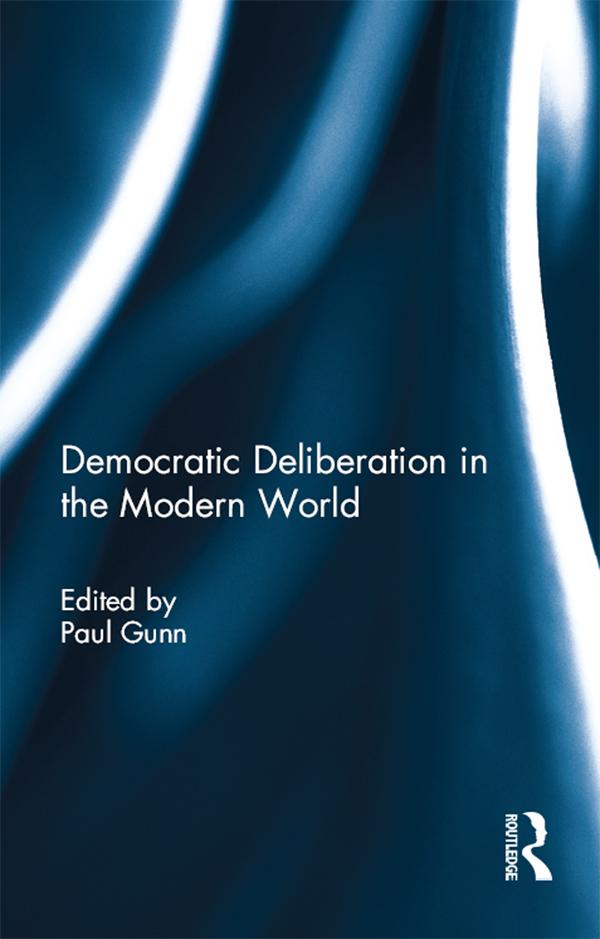
Would ordinary citizens benefit if public decisions were increasingly based on an inclusive and fair exchange of reasons rather than mere voting or choices in the market? Debates amongst deliberative democrats often proceed as though this process of public reasoning is precisely what the democratic ideals of freedom and equality require. Less attention has been paid to whether an inclusive and fair exchange of reasons is possible in any realistic modern setting, and what the effects would be of trying to move democratic institutions in a deliberative direction. To examine these effects, the contributors to this collection of essays bring together a number of analyses of the practical implications of expanding deliberative processes. Some consider the prevailing epistemic conditions in modern societies and their likely effects on deliberative reasoning. Others discuss the politics of these societies, and especially the likely effects of existing political divisions on democratic deliberation. Lastly, the question of what we might hope to see � and what we might hope to avoid � from political argument is addressed. Considered together, these three foci should equip readers to decide whether deliberative democracy is feasible and, if so, if it is desirable.This book was published as a special issue of Critical Review.
Payez facilement par carte, Klarna, Apple Pay ou Google Pay. Pas satisfait ? Vous avez toujours une garantie de remboursement de 14 jours. En savoir plus dans nos conditions. Si vous avez des questions, envoyez-nous un e-mail à hello@memmo.org.
Memmo facilite tes études, où que tu sois dans le monde. On rassemble tes manuels de cours et des outils d'étude intelligents au même endroit : résumés, quiz, podcasts et flashcards. Et il y a Ted, ton compagnon d'étude qui répond à toutes tes questions. Plus de 50 000 étudiants étudient déjà ici – conçu pour t'aider à apprendre plus vite et à moins stresser.
Tu pourrais aussi aimer
Acheter le livre0