
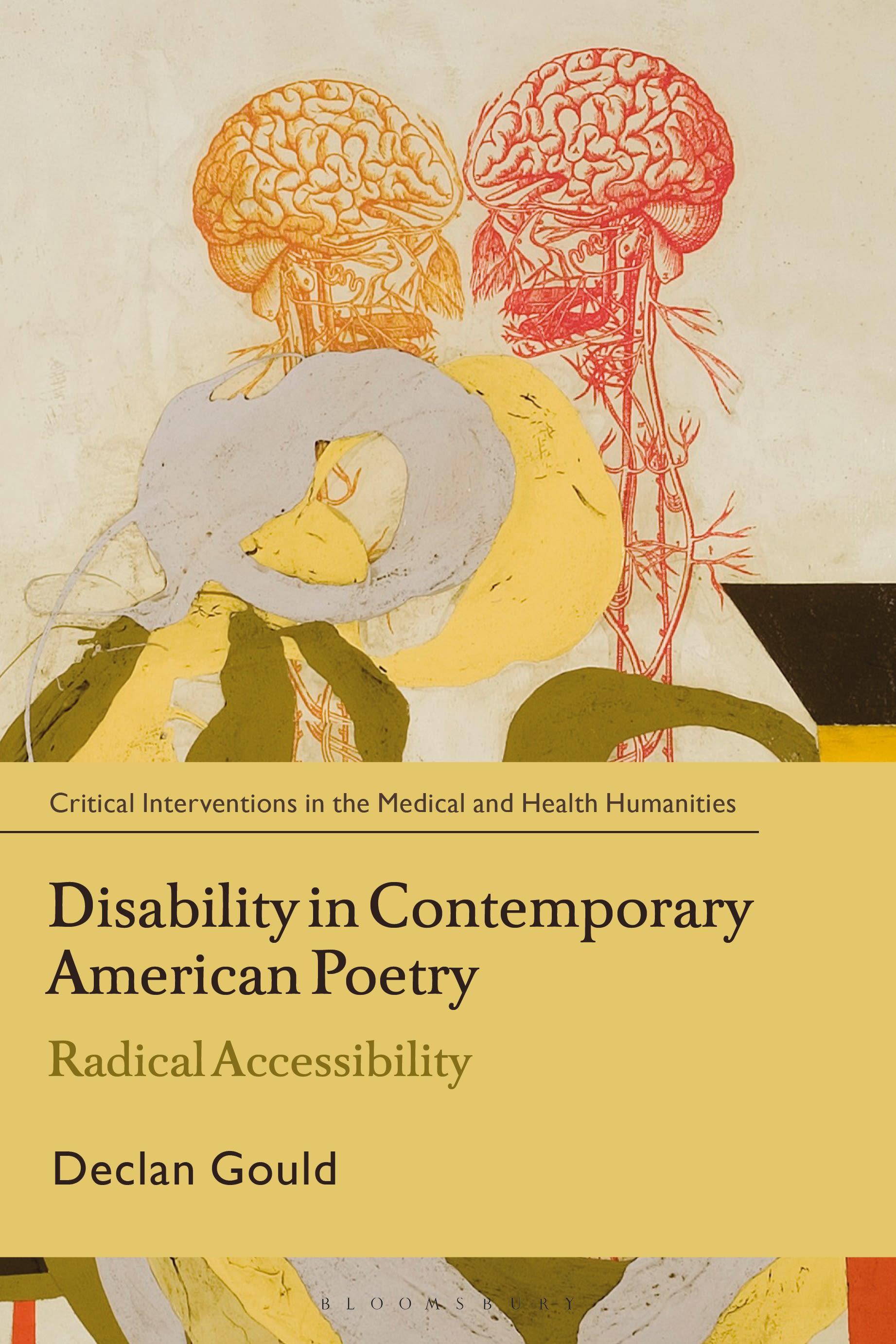
Looking at experimental disability poetry, this book shows how poets from the 1960s to the present develop disability-informed poetics and use the space of literature to launch alternative theories of psychiatric and physical disabilities.
Revising two key binaries that continue to shape accounts of disability writing – experimentation versus identity, and difficulty versus accessibility – this book develops the concept “radical accessibility” to show how the perception of an oppositional relationship between experimental poetics and expressions of disability is a product of ableist concepts of self-reliance and aesthetic production. Using an approach that centers on writers with disabilities, Gould argues that formal experimentation makes poetry more accessible to writers living with disabilities and illnesses by providing the space to create alternative poetic forms for thinking the world and self.
Integrating the insights of poetics, health humanities, and disability studies, the book reveals how Amber DiPietra, Larry Eigner, Bhanu Kapil, Denise Leto, Claudia Rankine, Eleni Stecopoulos, Brian Teare, Hannah Weiner, and David Wolach's experimental poetic forms complicate the medical model of disability and mediate their embodied experiences, material conditions, encounters with Western medicine, and artistic communities.
Revising two key binaries that continue to shape accounts of disability writing – experimentation versus identity, and difficulty versus accessibility – this book develops the concept “radical accessibility” to show how the perception of an oppositional relationship between experimental poetics and expressions of disability is a product of ableist concepts of self-reliance and aesthetic production. Using an approach that centers on writers with disabilities, Gould argues that formal experimentation makes poetry more accessible to writers living with disabilities and illnesses by providing the space to create alternative poetic forms for thinking the world and self.
Integrating the insights of poetics, health humanities, and disability studies, the book reveals how Amber DiPietra, Larry Eigner, Bhanu Kapil, Denise Leto, Claudia Rankine, Eleni Stecopoulos, Brian Teare, Hannah Weiner, and David Wolach's experimental poetic forms complicate the medical model of disability and mediate their embodied experiences, material conditions, encounters with Western medicine, and artistic communities.
Payez facilement par carte, Klarna, Apple Pay ou Google Pay. Pas satisfait ? Vous avez toujours une garantie de remboursement de 14 jours. En savoir plus dans nos conditions. Si vous avez des questions, envoyez-nous un e-mail à hello@memmo.org.
Memmo facilite tes études, où que tu sois dans le monde. On rassemble tes manuels de cours et des outils d'étude intelligents au même endroit : résumés, quiz, podcasts et flashcards. Et il y a Ted, ton compagnon d'étude qui répond à toutes tes questions. Plus de 50 000 étudiants étudient déjà ici – conçu pour t'aider à apprendre plus vite et à moins stresser.