
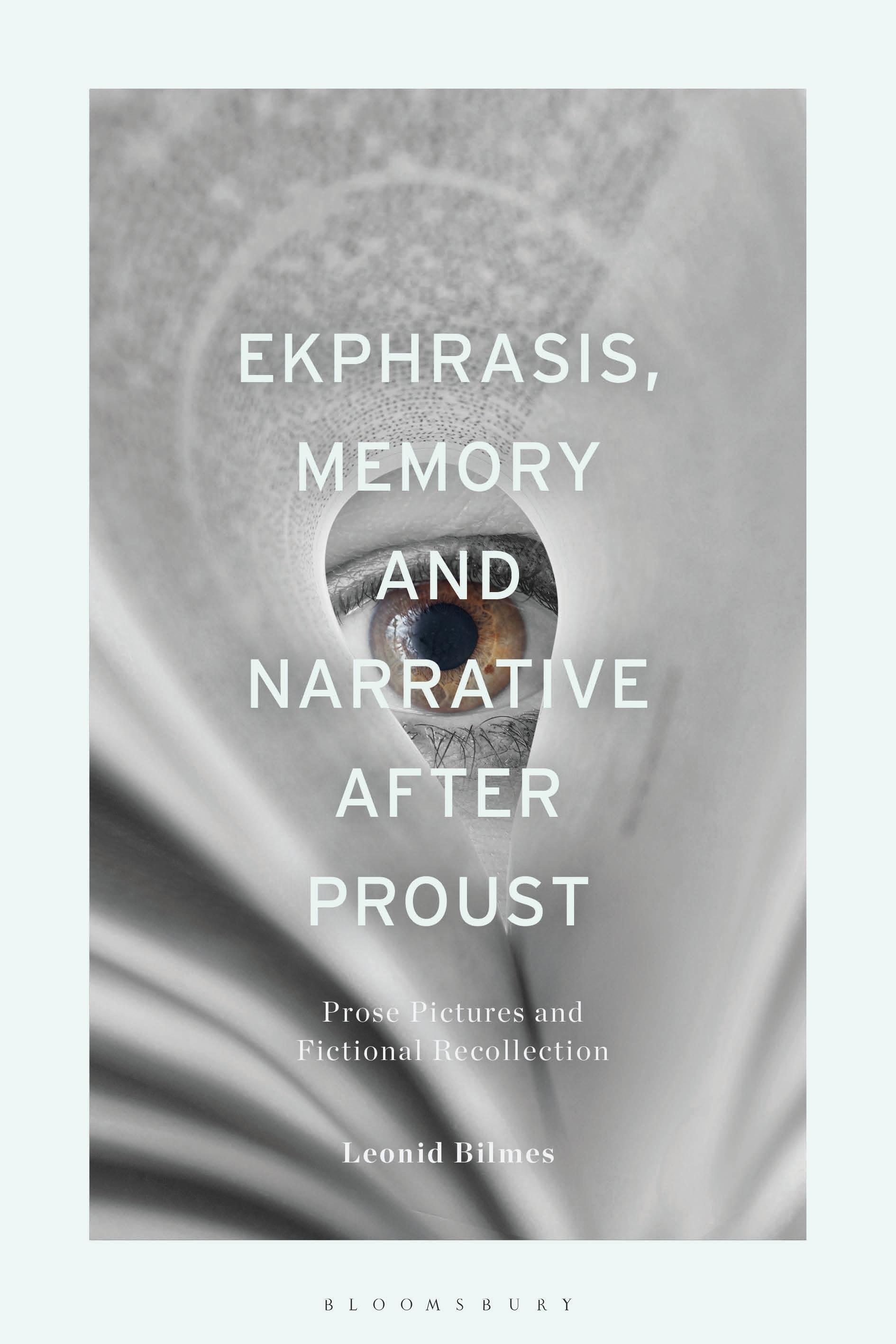
This book explores the relationship between ekphrasis and memory in the novel. Drawing on À la recherche du temps perdu, Leonid Bilmes considers how Vladimir Nabokov, W. G. Sebald, Ben Lerner, Ali Smith and Lydia Davis have employed and reshaped Proust's way of depicting the recollected past.
In Ada, Austerlitz, 10:04, How to Be Both and The End of the Story, memory images are variously transposed into intermedial descriptions that inform the narrator's story, just as they serve to shape the reader's own remembrance of each of these narratives. Ekphrasis in the novel after Proust, Bilmes argues, acts as a distinct site within the text where past and present, self and other, image and text, seeing and hearing, are ever on the brink of reconciliation.
The book surveys a wide field of critical inquiry, encompassing classical theorizations of ekphrasis, philosophical explorations of memory and visuality, as well as seminal studies of image-text relations by, among others, W. J. T. Mitchell, Jean-Luc Nancy and Liliane Louvel. Bilmes's compelling dialogue with theory and literature evinces the underexplored bond between ekphrasis and memory in the contemporary novel.
In Ada, Austerlitz, 10:04, How to Be Both and The End of the Story, memory images are variously transposed into intermedial descriptions that inform the narrator's story, just as they serve to shape the reader's own remembrance of each of these narratives. Ekphrasis in the novel after Proust, Bilmes argues, acts as a distinct site within the text where past and present, self and other, image and text, seeing and hearing, are ever on the brink of reconciliation.
The book surveys a wide field of critical inquiry, encompassing classical theorizations of ekphrasis, philosophical explorations of memory and visuality, as well as seminal studies of image-text relations by, among others, W. J. T. Mitchell, Jean-Luc Nancy and Liliane Louvel. Bilmes's compelling dialogue with theory and literature evinces the underexplored bond between ekphrasis and memory in the contemporary novel.
Payez facilement par carte, Klarna, Apple Pay ou Google Pay. Pas satisfait ? Vous avez toujours une garantie de remboursement de 14 jours. En savoir plus dans nos conditions. Si vous avez des questions, envoyez-nous un e-mail à hello@memmo.org.
Memmo facilite tes études, où que tu sois dans le monde. On rassemble tes manuels de cours et des outils d'étude intelligents au même endroit : résumés, quiz, podcasts et flashcards. Et il y a Ted, ton compagnon d'étude qui répond à toutes tes questions. Plus de 50 000 étudiants étudient déjà ici – conçu pour t'aider à apprendre plus vite et à moins stresser.