
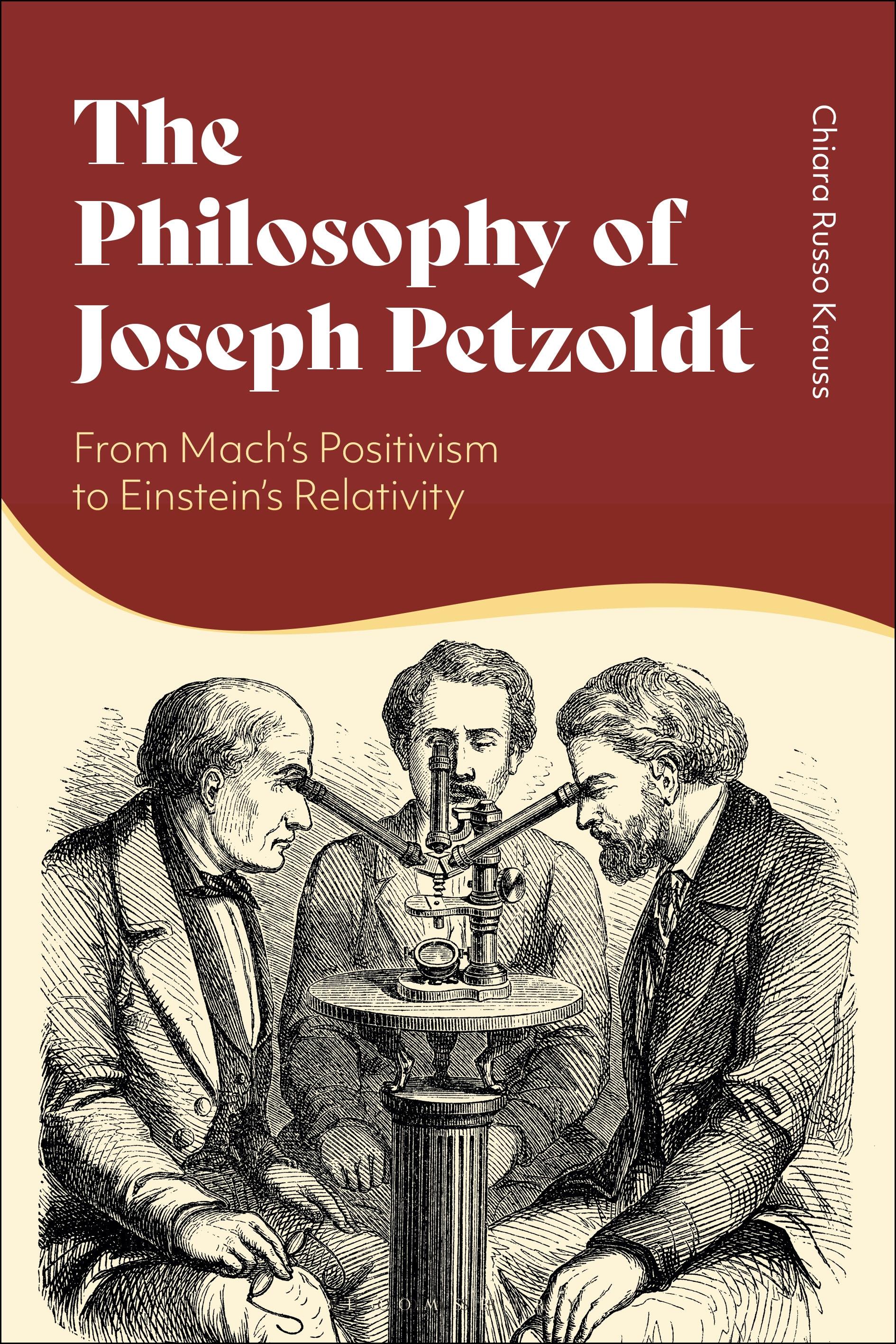
This volume is the first English resource to shed light on the philosophy of Joseph Petzoldt (1862-1929), the main pupil of Ernst Mach and founder of the Gesellschaft für wissenschaftliche Philosophie, later the association of Berlin logical positivists. A central figure in the early debate on the theory of relativity, his work was praised by Einstein himself.
Tracing the development of Petzoldt's ideas, starting from his early acceptance of materialism and Kantian agnosticism, Chiara Russo Krauss presents a comprehensive reconstruction of his philosophy in the context of the German milieu. She examines his attempt to develop a new philosophy following Gustav Fechner and the empiriocriticism of Richard Avenarius and Ernst Mach. In the final chapter, she sets out how Petzoldt proposed relativistic positivism as the official interpretation of Einstein's relativity.
By illuminating key elements of Petzoldt's work, this is a valuable case study for students and scholars of philosophy of science and late 19th-century and early 20th-century philosophy. It reveals the complex interplay of two different tendencies of the time: neo-Kantianism and its struggle to overcome the notion of thing-in-itself, as well as the need for an epistemological foundation for the new advances of science.
Tracing the development of Petzoldt's ideas, starting from his early acceptance of materialism and Kantian agnosticism, Chiara Russo Krauss presents a comprehensive reconstruction of his philosophy in the context of the German milieu. She examines his attempt to develop a new philosophy following Gustav Fechner and the empiriocriticism of Richard Avenarius and Ernst Mach. In the final chapter, she sets out how Petzoldt proposed relativistic positivism as the official interpretation of Einstein's relativity.
By illuminating key elements of Petzoldt's work, this is a valuable case study for students and scholars of philosophy of science and late 19th-century and early 20th-century philosophy. It reveals the complex interplay of two different tendencies of the time: neo-Kantianism and its struggle to overcome the notion of thing-in-itself, as well as the need for an epistemological foundation for the new advances of science.
Payez facilement par carte, Klarna, Apple Pay ou Google Pay. Pas satisfait ? Vous avez toujours une garantie de remboursement de 14 jours. En savoir plus dans nos conditions. Si vous avez des questions, envoyez-nous un e-mail à hello@memmo.org.
Memmo facilite tes études, où que tu sois dans le monde. On rassemble tes manuels de cours et des outils d'étude intelligents au même endroit : résumés, quiz, podcasts et flashcards. Et il y a Ted, ton compagnon d'étude qui répond à toutes tes questions. Plus de 50 000 étudiants étudient déjà ici – conçu pour t'aider à apprendre plus vite et à moins stresser.