
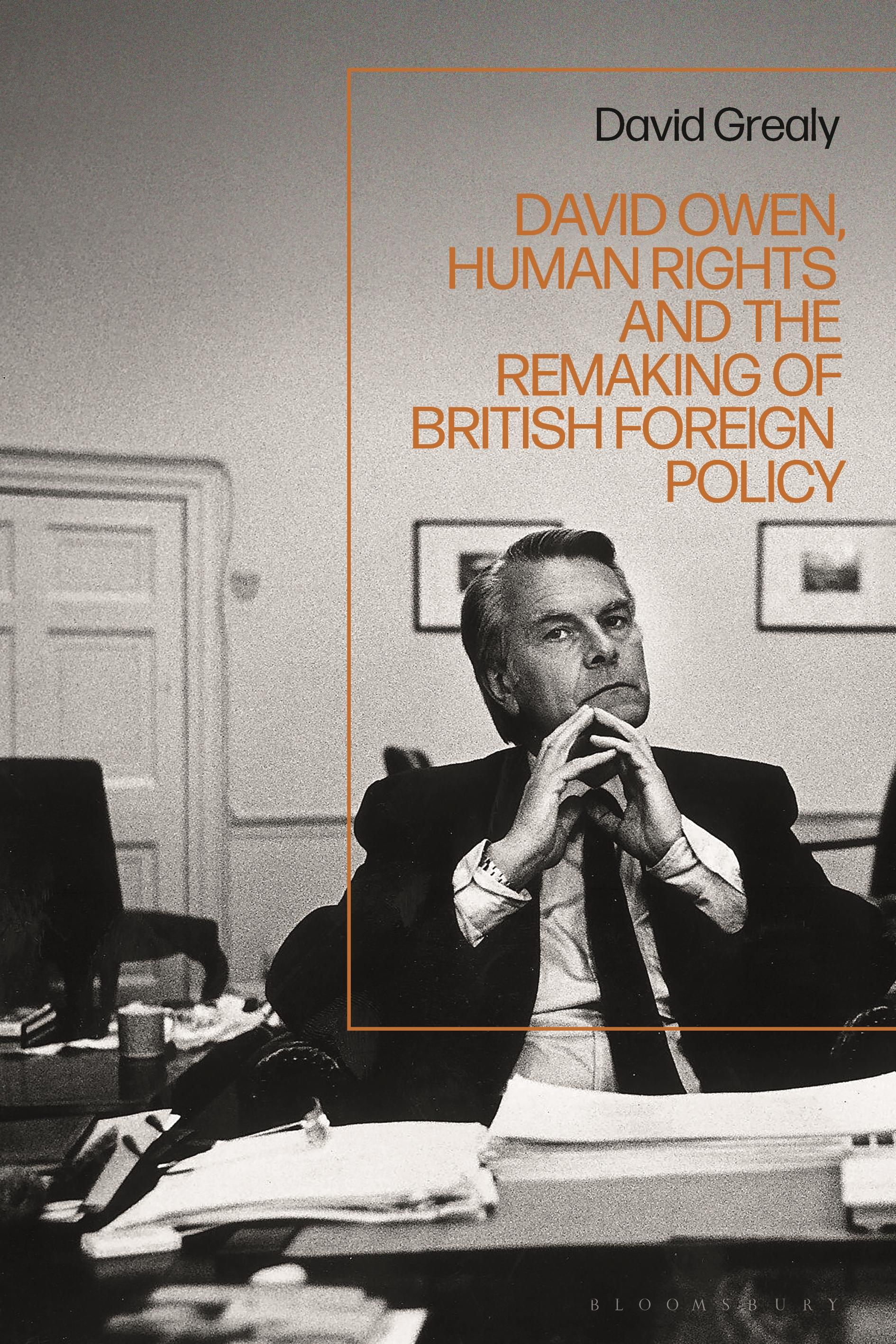
Although the evolution of human rights diplomacy during the second half of the 20th century has been the subject of a wealth of scholarship in recent years, British foreign policy perspectives remain largely underappreciated. Focusing on former Foreign Secretary David Owen's sustained engagement with the related concepts of human rights and humanitarianism, David Owen, Human Rights and the Remaking of British Foreign Policy addresses this striking omission by exploring the relationship between international human rights promotion and British foreign policy between c.1956-1997.
In doing so, this book uncovers how human rights concerns have shaped national responses to foreign policy dilemmas at the intersections of civil society, media, and policymaking; how economic and geopolitical interests have defined the parameters within which human rights concerns influence policy; how human rights considerations have influenced British interventions in overseas conflicts; and how activism on normative issues such as human rights has been shaped by concepts of national identity.
Furthermore, by bringing these issues and debates into focus through the lens of Owen's human rights advocacy, analysis provides a reappraisal of one of the most recognisable, albeit enigmatic, parliamentarians in recent British history. Both within the confines of Whitehall and without, Owen's human rights advocacy served to alter the course of British foreign policy at key junctures during the late Cold War and post-Cold War periods, and provides a unique prism through which to interrogate the intersections between Britain's enduring search for a distinctive 'role' in the world and the development of the international human rights regime during the period in question.
In doing so, this book uncovers how human rights concerns have shaped national responses to foreign policy dilemmas at the intersections of civil society, media, and policymaking; how economic and geopolitical interests have defined the parameters within which human rights concerns influence policy; how human rights considerations have influenced British interventions in overseas conflicts; and how activism on normative issues such as human rights has been shaped by concepts of national identity.
Furthermore, by bringing these issues and debates into focus through the lens of Owen's human rights advocacy, analysis provides a reappraisal of one of the most recognisable, albeit enigmatic, parliamentarians in recent British history. Both within the confines of Whitehall and without, Owen's human rights advocacy served to alter the course of British foreign policy at key junctures during the late Cold War and post-Cold War periods, and provides a unique prism through which to interrogate the intersections between Britain's enduring search for a distinctive 'role' in the world and the development of the international human rights regime during the period in question.
Payez facilement par carte, Klarna, Apple Pay ou Google Pay. Pas satisfait ? Vous avez toujours une garantie de remboursement de 14 jours. En savoir plus dans nos conditions. Si vous avez des questions, envoyez-nous un e-mail à hello@memmo.org.
Memmo facilite tes études, où que tu sois dans le monde. On rassemble tes manuels de cours et des outils d'étude intelligents au même endroit : résumés, quiz, podcasts et flashcards. Et il y a Ted, ton compagnon d'étude qui répond à toutes tes questions. Plus de 50 000 étudiants étudient déjà ici – conçu pour t'aider à apprendre plus vite et à moins stresser.