
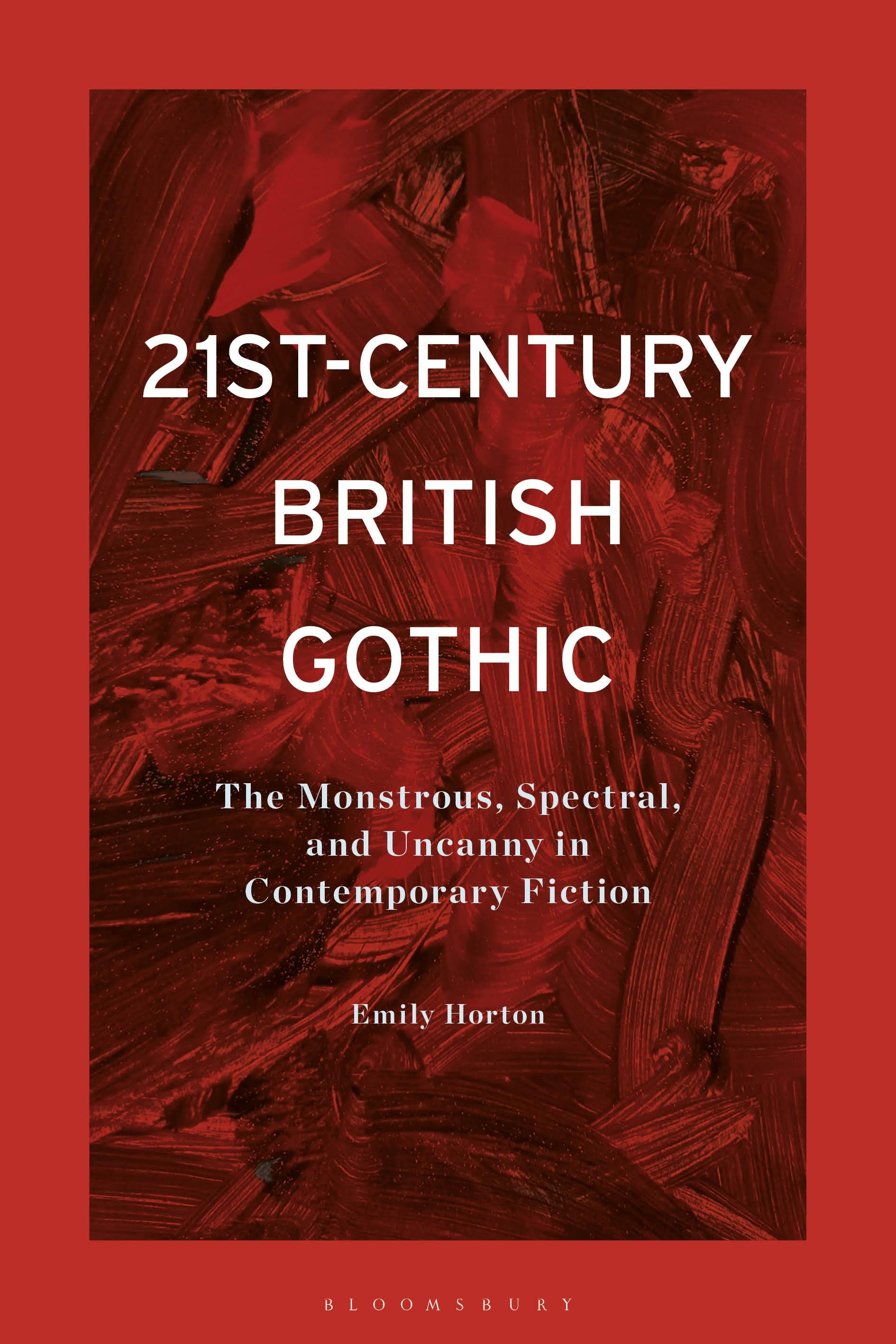
In this innovative re-casting of the genre and its received canon, Emily Horton explores fictional investments in the Gothic within contemporary British literature, revealing how such concepts as the monstrous, spectral and uncanny work to illuminate the insecure, uneven and precarious experience of 21st-century life. Reading contemporary works of Gothic fiction by Helen Oyeyemi, Kazuo Ishiguro, Sarah Moss, Patrick McGrath and M.R. Carey alongside writers not previously grouped under this umbrella, including Brian Chikwava, Chloe Aridjis and Mohsin Hamid, Horton illuminates the way the Gothic has been engaged and reread by contemporary writers to address the cultural anxieties invoked living under neocolonial and neoliberal governance, including terrorism, migration, homelessness, racism, and climate change.
Marshalling new modes of diasporic and cross-disciplinary critical theory concerned with the violent dimensions of contemporary life, this book sets the Gothic aesthetics in such works as White is for Witching, Double Vision, Never Let Me Go, The Wasted Vigil and Ghost Wall against a backdrop of key events in the 21st-century. Drawing connections between moments of anxiety, such as 9/11, the wars in Afghanistan and Iraq, ecological disaster, the refugee crisis, Brexit, the pandemic, and the Gothic, Horton demonstrates how British literature mediates transnational experiences of trauma and horror, while also addressing local and national insecurities and preoccupations. As a result, 21st-Century British Gothic can tests geographical, psychological, cultural, and aesthetic borders to expose an often spectralised experience of human and planetary vulnerability and speaks back against the brutality of global capitalism.
Marshalling new modes of diasporic and cross-disciplinary critical theory concerned with the violent dimensions of contemporary life, this book sets the Gothic aesthetics in such works as White is for Witching, Double Vision, Never Let Me Go, The Wasted Vigil and Ghost Wall against a backdrop of key events in the 21st-century. Drawing connections between moments of anxiety, such as 9/11, the wars in Afghanistan and Iraq, ecological disaster, the refugee crisis, Brexit, the pandemic, and the Gothic, Horton demonstrates how British literature mediates transnational experiences of trauma and horror, while also addressing local and national insecurities and preoccupations. As a result, 21st-Century British Gothic can tests geographical, psychological, cultural, and aesthetic borders to expose an often spectralised experience of human and planetary vulnerability and speaks back against the brutality of global capitalism.
Payez facilement par carte, Klarna, Apple Pay ou Google Pay. Pas satisfait ? Vous avez toujours une garantie de remboursement de 14 jours. En savoir plus dans nos conditions. Si vous avez des questions, envoyez-nous un e-mail à hello@memmo.org.
Memmo facilite tes études, où que tu sois dans le monde. On rassemble tes manuels de cours et des outils d'étude intelligents au même endroit : résumés, quiz, podcasts et flashcards. Et il y a Ted, ton compagnon d'étude qui répond à toutes tes questions. Plus de 50 000 étudiants étudient déjà ici – conçu pour t'aider à apprendre plus vite et à moins stresser.