
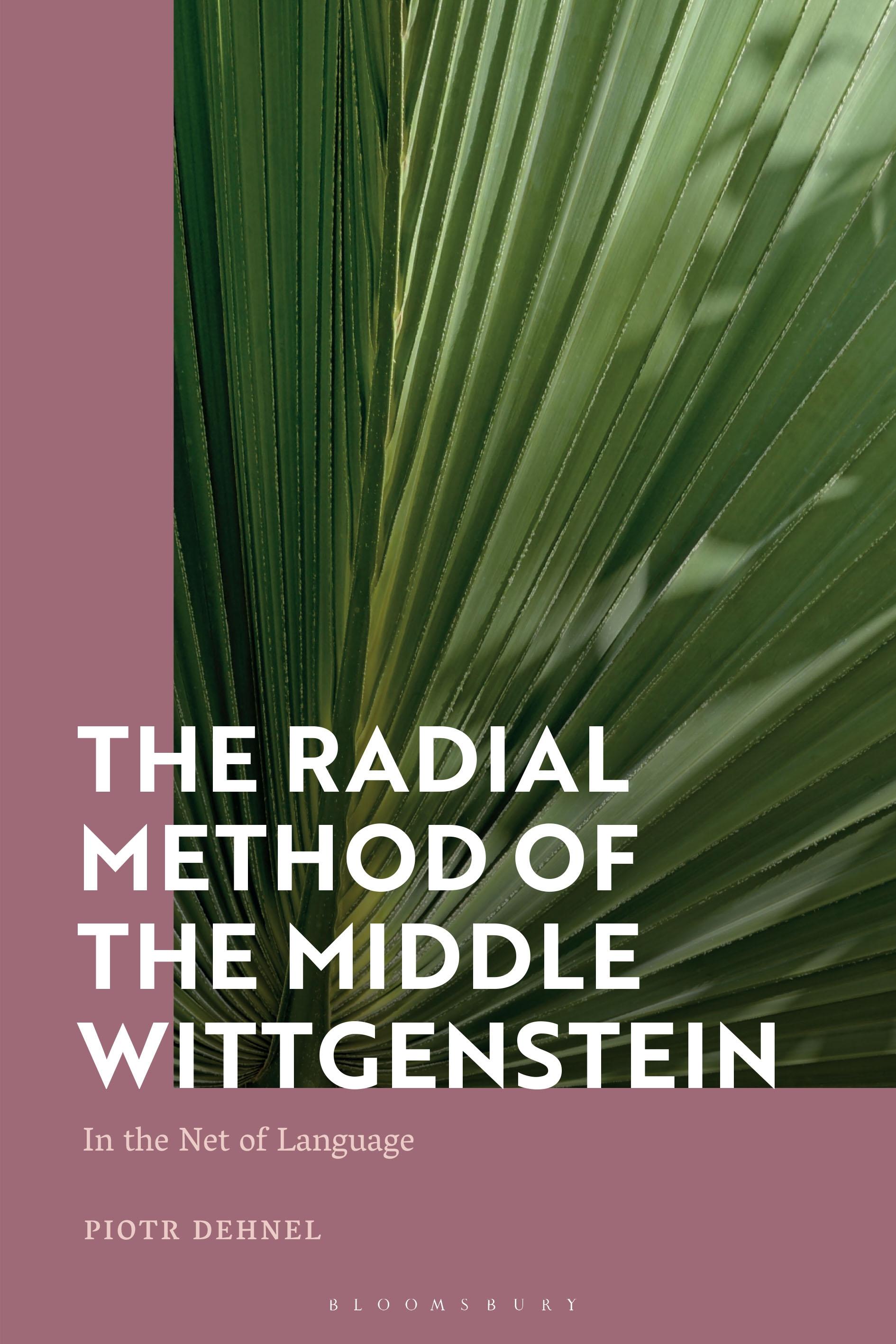
Spanning the period between Wittgenstein's return to Cambridge in 1929 and the first version of Philosophical Investigations in 1936, Piotr Dehnel explores the middle stage in Ludwig Wittgenstein's philosophical development and identifies the major issues which engrossed him, including phenomenology, philosophy of mathematics and philosophy of language. Contrary to the dominant perspective, Dehnel argues that this period was intrinsically different from the early and late stages and should not be viewed as a mere transitional phase.
The distinctiveness of Wittgenstein's middle work can be seen in his philosophical thinking as it unfolds in a non-linear trajectory: thoughts do not follow upon each other, ideas do not appear sequentially one by one, and insights do not form a straight chain. Dehnel portrays the diffused and multifarious quality of Wittgenstein's middle thinking, enabling readers to form a more comprehensive view of his entire philosophy and acquire a better grasp of his conceptual trajectory, complete with the intricacies and challenges that it poses.
The distinctiveness of Wittgenstein's middle work can be seen in his philosophical thinking as it unfolds in a non-linear trajectory: thoughts do not follow upon each other, ideas do not appear sequentially one by one, and insights do not form a straight chain. Dehnel portrays the diffused and multifarious quality of Wittgenstein's middle thinking, enabling readers to form a more comprehensive view of his entire philosophy and acquire a better grasp of his conceptual trajectory, complete with the intricacies and challenges that it poses.
Payez facilement par carte, Klarna, Apple Pay ou Google Pay. Pas satisfait ? Vous avez toujours une garantie de remboursement de 14 jours. En savoir plus dans nos conditions. Si vous avez des questions, envoyez-nous un e-mail à hello@memmo.org.
Memmo facilite tes études, où que tu sois dans le monde. On rassemble tes manuels de cours et des outils d'étude intelligents au même endroit : résumés, quiz, podcasts et flashcards. Et il y a Ted, ton compagnon d'étude qui répond à toutes tes questions. Plus de 50 000 étudiants étudient déjà ici – conçu pour t'aider à apprendre plus vite et à moins stresser.