
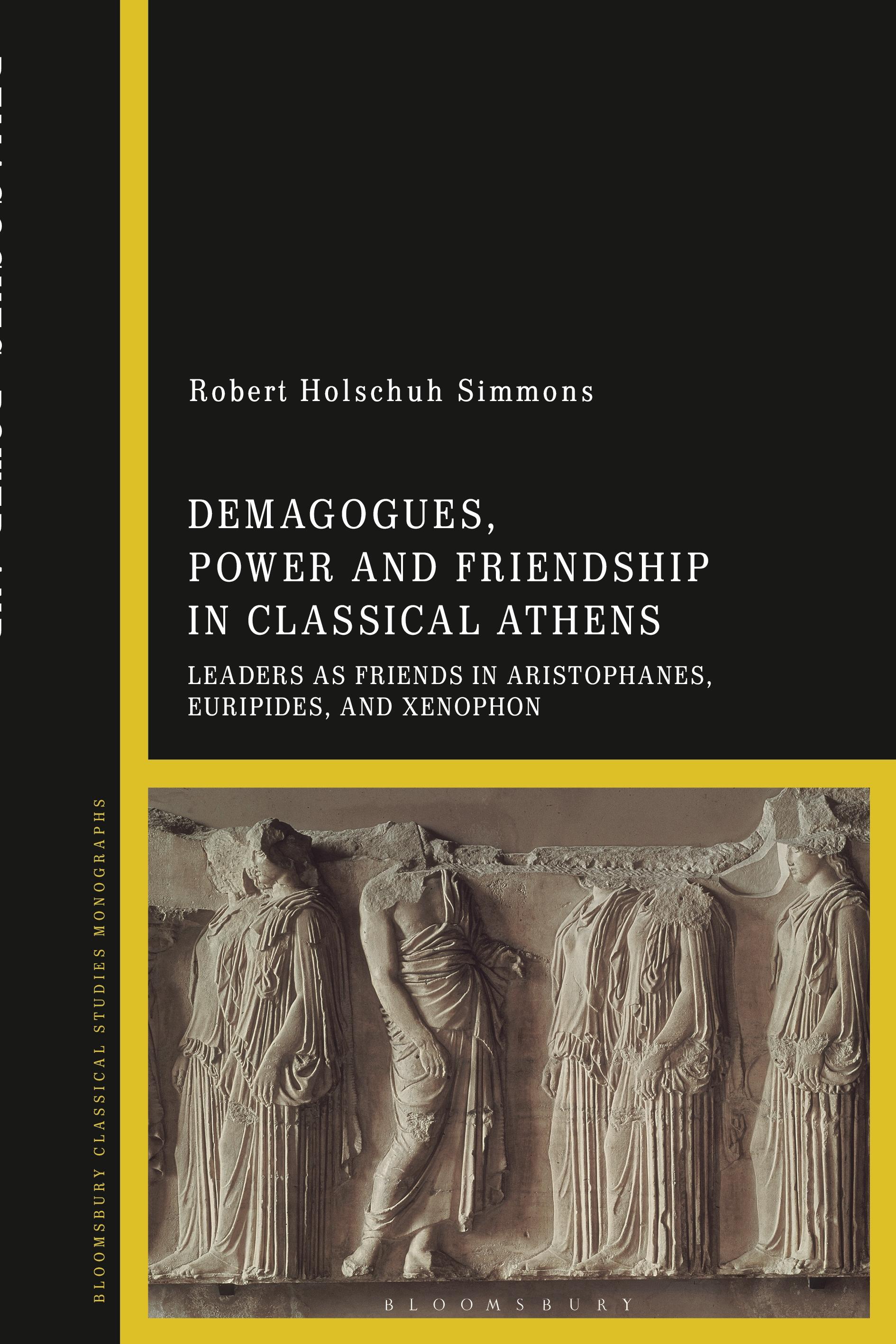
What makes a demagogue? A much more friendly touch, or more importantly, a perception of a friendly touch, than has previously been explored. Demagogues, Power and Friendship in Classical Athens examines the ways in which a demagogic leadership style based on personal connection became ingrained in this period, drawing on close study of several genres of literature of the late 5th and early-to-mid 4th centuries BCE. Such connection was particularly effective with lower classes of Athenians, who had been accustomed to being excluded from politicians' friendship-based approaches to coalition-building.
Comedies of Aristophanes (particularly Knights), tragedies of Euripides (particularly Iphigenia in Aulis), and historical biographies of Xenophon (particularly Anabasis and Cyropaedia) depict demagogues, or characters exhibiting demagogic characteristics, using a style of outreach to members of neglected classes that involved provoking feelings of friendship with individuals in these classes, whether the demagogues and individual supporters actually interacted closely or not. These leaders employed techniques, such as propinquity, homophily, and transitivity, that both contemporary sociologists (and, in some cases, Aristotle) recognize as effective for such purposes. Particular attention is paid to discrepancies in Aristophanes' Knights between how the demagogue Cleon is hyperbolically portrayed (as a pederastic lover of the Athenian people) and how his language and actions make him out – as a friend of theirs, as he likely portrayed himself.
Comedies of Aristophanes (particularly Knights), tragedies of Euripides (particularly Iphigenia in Aulis), and historical biographies of Xenophon (particularly Anabasis and Cyropaedia) depict demagogues, or characters exhibiting demagogic characteristics, using a style of outreach to members of neglected classes that involved provoking feelings of friendship with individuals in these classes, whether the demagogues and individual supporters actually interacted closely or not. These leaders employed techniques, such as propinquity, homophily, and transitivity, that both contemporary sociologists (and, in some cases, Aristotle) recognize as effective for such purposes. Particular attention is paid to discrepancies in Aristophanes' Knights between how the demagogue Cleon is hyperbolically portrayed (as a pederastic lover of the Athenian people) and how his language and actions make him out – as a friend of theirs, as he likely portrayed himself.
Payez facilement par carte, Klarna, Apple Pay ou Google Pay. Pas satisfait ? Vous avez toujours une garantie de remboursement de 14 jours. En savoir plus dans nos conditions. Si vous avez des questions, envoyez-nous un e-mail à hello@memmo.org.
Memmo facilite tes études, où que tu sois dans le monde. On rassemble tes manuels de cours et des outils d'étude intelligents au même endroit : résumés, quiz, podcasts et flashcards. Et il y a Ted, ton compagnon d'étude qui répond à toutes tes questions. Plus de 50 000 étudiants étudient déjà ici – conçu pour t'aider à apprendre plus vite et à moins stresser.