
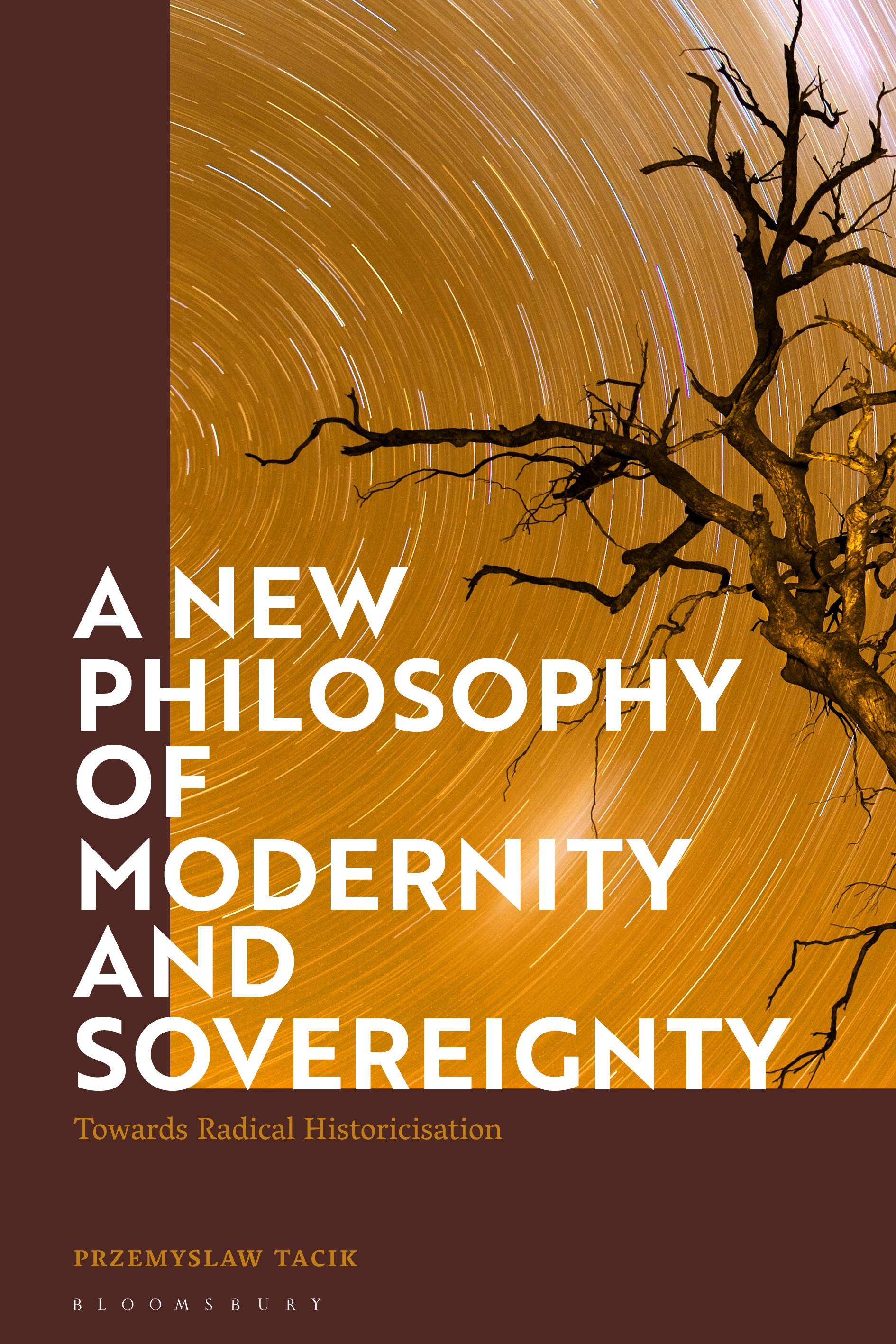
Tackling important philosophical questions on modernity – what it is, where it begins and when it ends – Przemyslaw Tacik challenges the idea that modernity marks a particular epoch, and historicises its conception to offer a radical critique of it. His deconstruction-informed critique collects and assesses reflections on modernity from major philosophers including Hegel, Heidegger, Lacan, Arendt, Agamben, and Žižek.
This analysis progresses a new understanding of modernity intrinsically connected to the growth of sovereignty as an organising principle of contemporary life. He argues that it is the idea of 'modernity', as a taken-for-granted era, which is positioned as the essential condition for making linear history possible, when it should instead be history, in and of itself, which dictates the existence of a particular period. Using Hegel's notion of 'spirit' to trace the importance of sovereignty to the conception of the modern epoch within German idealism, Tacik traces Hegel's influence on Heidegger through reference to the 'star' in his late philosophy which represents the hope of overcoming the metaphysical poverty of modernity. This line of thought reveals the necessity of a paradigm shift in our understanding of modernity that speaks to contemporary continental philosophy, theories of modernity, political theory, and critical re-assessments of Marxism.
This analysis progresses a new understanding of modernity intrinsically connected to the growth of sovereignty as an organising principle of contemporary life. He argues that it is the idea of 'modernity', as a taken-for-granted era, which is positioned as the essential condition for making linear history possible, when it should instead be history, in and of itself, which dictates the existence of a particular period. Using Hegel's notion of 'spirit' to trace the importance of sovereignty to the conception of the modern epoch within German idealism, Tacik traces Hegel's influence on Heidegger through reference to the 'star' in his late philosophy which represents the hope of overcoming the metaphysical poverty of modernity. This line of thought reveals the necessity of a paradigm shift in our understanding of modernity that speaks to contemporary continental philosophy, theories of modernity, political theory, and critical re-assessments of Marxism.
Payez facilement par carte, Klarna, Apple Pay ou Google Pay. Pas satisfait ? Vous avez toujours une garantie de remboursement de 14 jours. En savoir plus dans nos conditions. Si vous avez des questions, envoyez-nous un e-mail à hello@memmo.org.
Memmo facilite tes études, où que tu sois dans le monde. On rassemble tes manuels de cours et des outils d'étude intelligents au même endroit : résumés, quiz, podcasts et flashcards. Et il y a Ted, ton compagnon d'étude qui répond à toutes tes questions. Plus de 50 000 étudiants étudient déjà ici – conçu pour t'aider à apprendre plus vite et à moins stresser.