
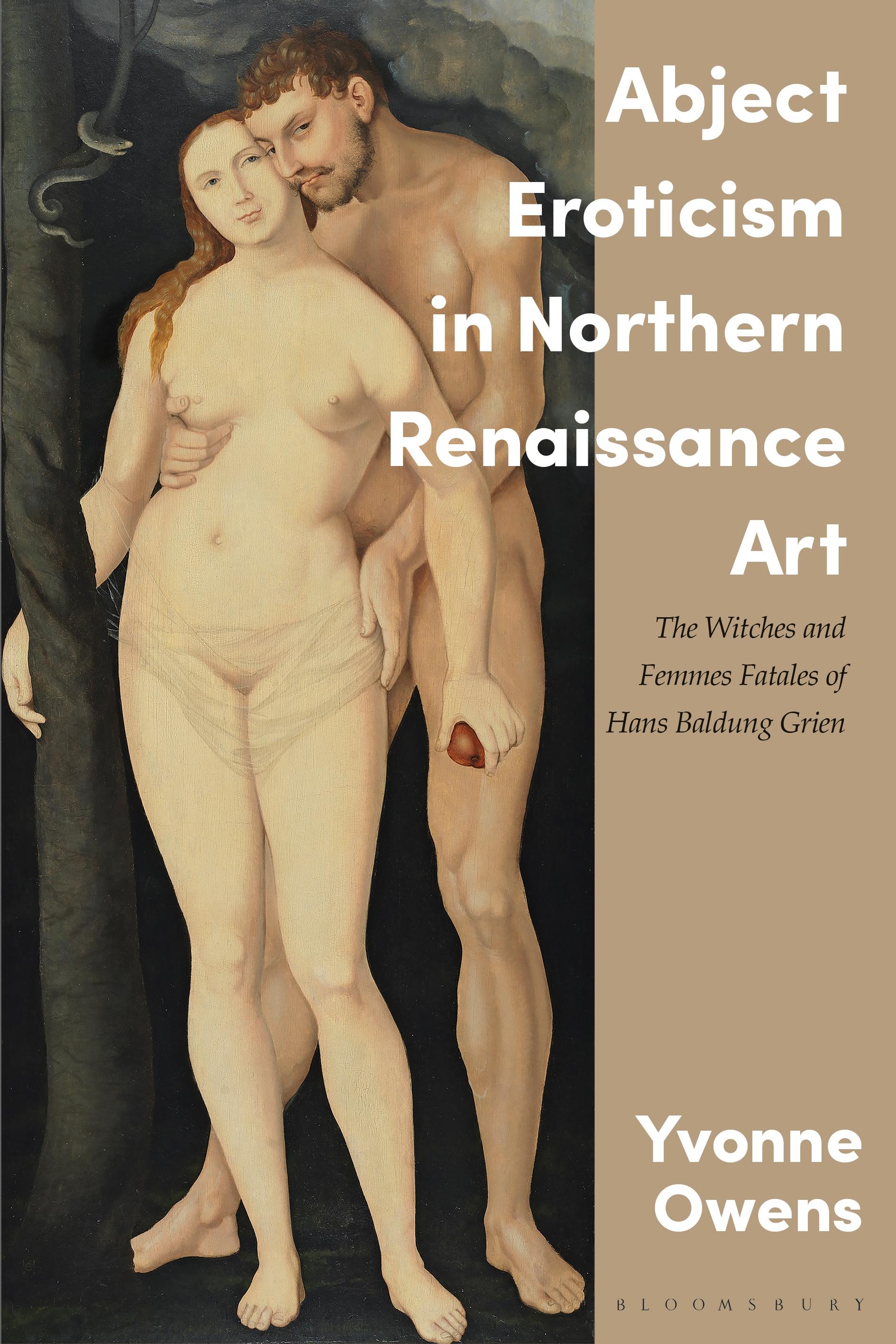
Hans Baldung Grien, the most famous apprentice and close friend of German artist Albrecht Dürer, was known for his unique and highly eroticised images of witches. In paintings and woodcut prints, he gave powerful visual expression to late medieval tropes and stereotypes, such as the poison maiden, venomous virgin, the Fall of Man, 'death and the maiden' and other motifs and eschatological themes, which mingled abject and erotic qualities in the female body.
Yvonne Owens reads these images against the humanist intellectual milieu of Renaissance Germany, showing how classical and medieval medicine and natural philosophy interpreted female anatomy as toxic, defective and dangerously beguiling. She reveals how Hans Baldung exploited this radical polarity to create moralising and titillating portrayals of how monstrous female sexuality victimised men and brought them low. Furthermore, these images issued from-and contributed to-the contemporary understanding of witchcraft as a heresy that stemmed from natural 'feminine defect,' a concept derived from Aristotle. Offering new and provocative interpretations of Hans Baldung's iconic witchcraft imagery, this book is essential reading for historians of art, culture and gender relations in the late medieval and early modern periods.
Yvonne Owens reads these images against the humanist intellectual milieu of Renaissance Germany, showing how classical and medieval medicine and natural philosophy interpreted female anatomy as toxic, defective and dangerously beguiling. She reveals how Hans Baldung exploited this radical polarity to create moralising and titillating portrayals of how monstrous female sexuality victimised men and brought them low. Furthermore, these images issued from-and contributed to-the contemporary understanding of witchcraft as a heresy that stemmed from natural 'feminine defect,' a concept derived from Aristotle. Offering new and provocative interpretations of Hans Baldung's iconic witchcraft imagery, this book is essential reading for historians of art, culture and gender relations in the late medieval and early modern periods.
Payez facilement par carte, Klarna, Apple Pay ou Google Pay. Pas satisfait ? Vous avez toujours une garantie de remboursement de 14 jours. En savoir plus dans nos conditions. Si vous avez des questions, envoyez-nous un e-mail à hello@memmo.org.
Memmo facilite tes études, où que tu sois dans le monde. On rassemble tes manuels de cours et des outils d'étude intelligents au même endroit : résumés, quiz, podcasts et flashcards. Et il y a Ted, ton compagnon d'étude qui répond à toutes tes questions. Plus de 50 000 étudiants étudient déjà ici – conçu pour t'aider à apprendre plus vite et à moins stresser.