
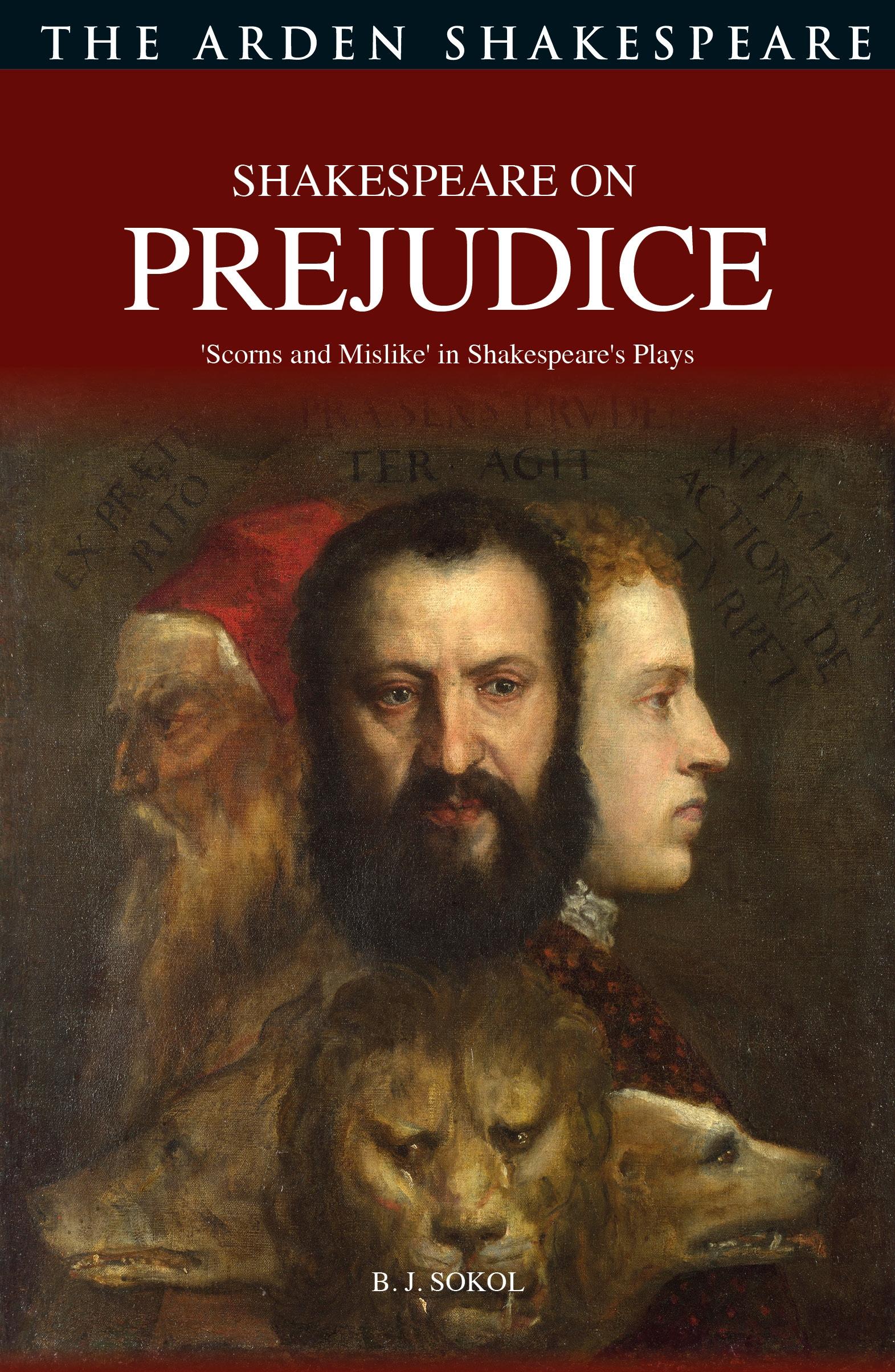
How are unwarranted dislikes and prejudices portrayed in the works of Shakespeare and to what extent does Shakespeare differ from his contemporaries in their portrayal? What can we learn about Shakespeare's times and our own through a close reading of prejudice depicted in his plays?
In this study, B. J. Sokol examines what King Edward in Henry VI Part III calls 'your scorns and mislike' (4.1.23) – the unfounded prejudices depicted in Shakespeare's works and targeted at five distinct areas: education, the arts, peace, 'strangers' or outsiders and sexual love. Through a close reading of his plays, comparison with the works of other Elizabethan writers and a consideration of Shakespeare's social environment, this study provides a detailed appreciation of Shakespeare's dramatic method and his insights into the psychological motivations behind the prejudices portrayed.
Presenting Shakespeare's prejudice against education, Sokol examines numerous representations of pupils, teachers and schooling, focusing on anti-educational prejudices in The Merry Wives of Windsor and in King Henry VI Part 2. The distaste of characters for art is considered alongside Shakespeare's repeated depiction of the destructive downgrading of the arts that erupts during political upheavals, while prejudice against peaceful living is traced in Shakespeare's various portrayals of 'honour'-driven feuding, such as in Romeo and Juliet, and in warrior characters such as Coriolanus. Prejudice against strangers as depicted in plays including Titus Andronicus, Othello and The Merchant of Venice is contrasted with that of plays by his contemporaries, including Christopher Marlowe's The Jew of Malta. A final chapter examines prejudice against sex and the representation of many male and female characters who evade the erotic, subordinate the erotic to power seeking, or regard their own or others' erotic attachments with revulsion.
In this study, B. J. Sokol examines what King Edward in Henry VI Part III calls 'your scorns and mislike' (4.1.23) – the unfounded prejudices depicted in Shakespeare's works and targeted at five distinct areas: education, the arts, peace, 'strangers' or outsiders and sexual love. Through a close reading of his plays, comparison with the works of other Elizabethan writers and a consideration of Shakespeare's social environment, this study provides a detailed appreciation of Shakespeare's dramatic method and his insights into the psychological motivations behind the prejudices portrayed.
Presenting Shakespeare's prejudice against education, Sokol examines numerous representations of pupils, teachers and schooling, focusing on anti-educational prejudices in The Merry Wives of Windsor and in King Henry VI Part 2. The distaste of characters for art is considered alongside Shakespeare's repeated depiction of the destructive downgrading of the arts that erupts during political upheavals, while prejudice against peaceful living is traced in Shakespeare's various portrayals of 'honour'-driven feuding, such as in Romeo and Juliet, and in warrior characters such as Coriolanus. Prejudice against strangers as depicted in plays including Titus Andronicus, Othello and The Merchant of Venice is contrasted with that of plays by his contemporaries, including Christopher Marlowe's The Jew of Malta. A final chapter examines prejudice against sex and the representation of many male and female characters who evade the erotic, subordinate the erotic to power seeking, or regard their own or others' erotic attachments with revulsion.
Payez facilement par carte, Klarna, Apple Pay ou Google Pay. Pas satisfait ? Vous avez toujours une garantie de remboursement de 14 jours. En savoir plus dans nos conditions. Si vous avez des questions, envoyez-nous un e-mail à hello@memmo.org.
Memmo facilite tes études, où que tu sois dans le monde. On rassemble tes manuels de cours et des outils d'étude intelligents au même endroit : résumés, quiz, podcasts et flashcards. Et il y a Ted, ton compagnon d'étude qui répond à toutes tes questions. Plus de 50 000 étudiants étudient déjà ici – conçu pour t'aider à apprendre plus vite et à moins stresser.