
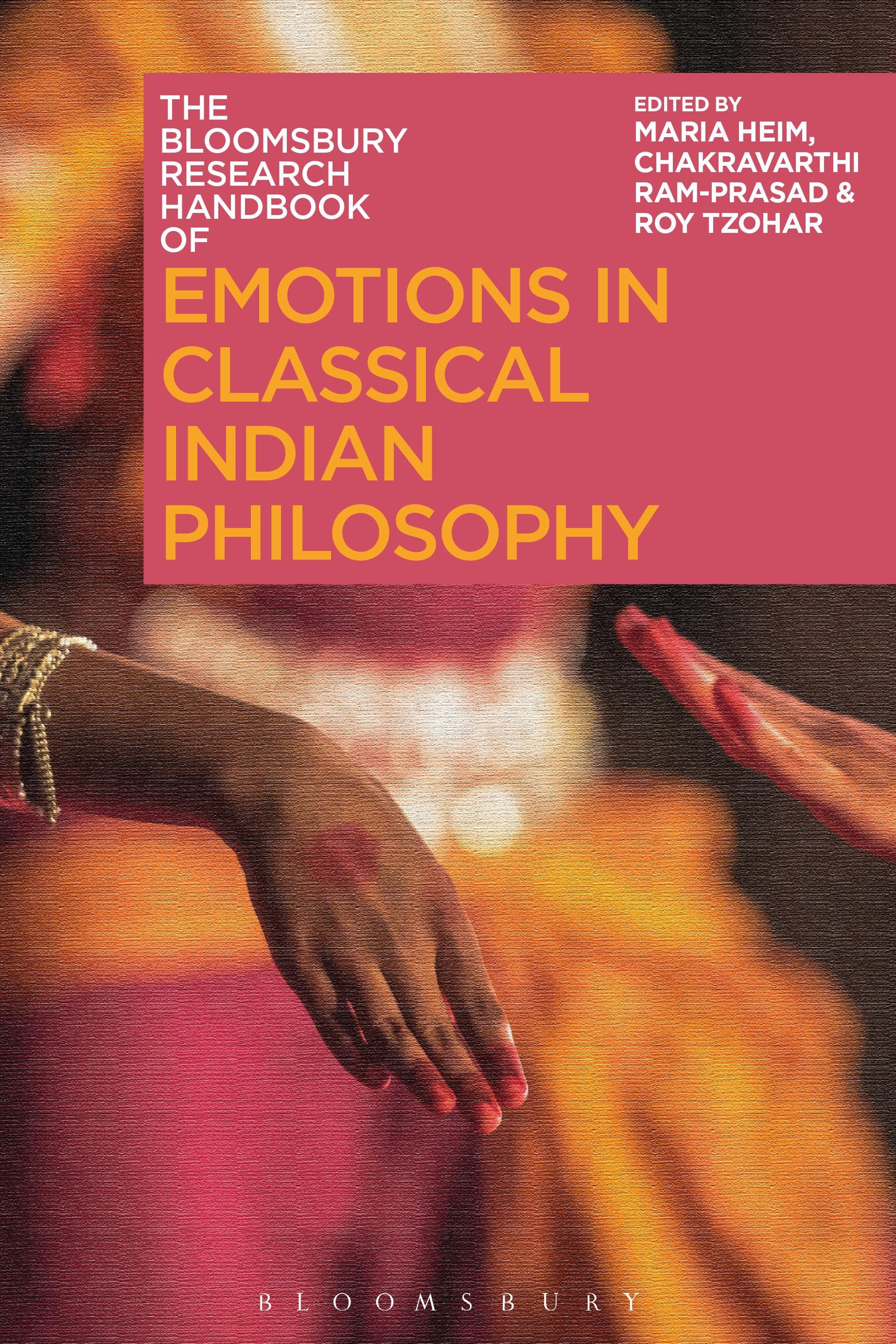
Drawing on a rich variety of premodern Indian texts across multiple traditions, genres, and languages, this collection explores how emotional experience is framed, evoked, and theorized in order to offer compelling insights into human subjectivity.
Rather than approaching emotion through the prism of Western theory, a team of leading scholars of Indian traditions showcases the literary texture, philosophical reflections, and theoretical paradigms that classical Indian sources provide in their own right. The focus is on how the texts themselves approach those dimensions of the human condition we may intuitively think of as being about emotion, without pre-judging what that might be. The result is a collection that reveals the range and diversity of phenomena that benefit from being gathered under the formal term “emotion”, but which in fact open up what such theorisation, representation, and expression might contribute to a cross-cultural understanding of this term. In doing so, these chapters contribute to a cosmopolitan, comparative, and pluralistic conception of human experience.
Adopting a broad phenomenological methodology, this handbook reframes debates on emotion within classical Indian thought and is an invaluable resource for researchers and students seeking to understand the field beyond the Western tradition.
Rather than approaching emotion through the prism of Western theory, a team of leading scholars of Indian traditions showcases the literary texture, philosophical reflections, and theoretical paradigms that classical Indian sources provide in their own right. The focus is on how the texts themselves approach those dimensions of the human condition we may intuitively think of as being about emotion, without pre-judging what that might be. The result is a collection that reveals the range and diversity of phenomena that benefit from being gathered under the formal term “emotion”, but which in fact open up what such theorisation, representation, and expression might contribute to a cross-cultural understanding of this term. In doing so, these chapters contribute to a cosmopolitan, comparative, and pluralistic conception of human experience.
Adopting a broad phenomenological methodology, this handbook reframes debates on emotion within classical Indian thought and is an invaluable resource for researchers and students seeking to understand the field beyond the Western tradition.
Payez facilement par carte, Klarna, Apple Pay ou Google Pay. Pas satisfait ? Vous avez toujours une garantie de remboursement de 14 jours. En savoir plus dans nos conditions. Si vous avez des questions, envoyez-nous un e-mail à hello@memmo.org.
Memmo facilite tes études, où que tu sois dans le monde. On rassemble tes manuels de cours et des outils d'étude intelligents au même endroit : résumés, quiz, podcasts et flashcards. Et il y a Ted, ton compagnon d'étude qui répond à toutes tes questions. Plus de 50 000 étudiants étudient déjà ici – conçu pour t'aider à apprendre plus vite et à moins stresser.