
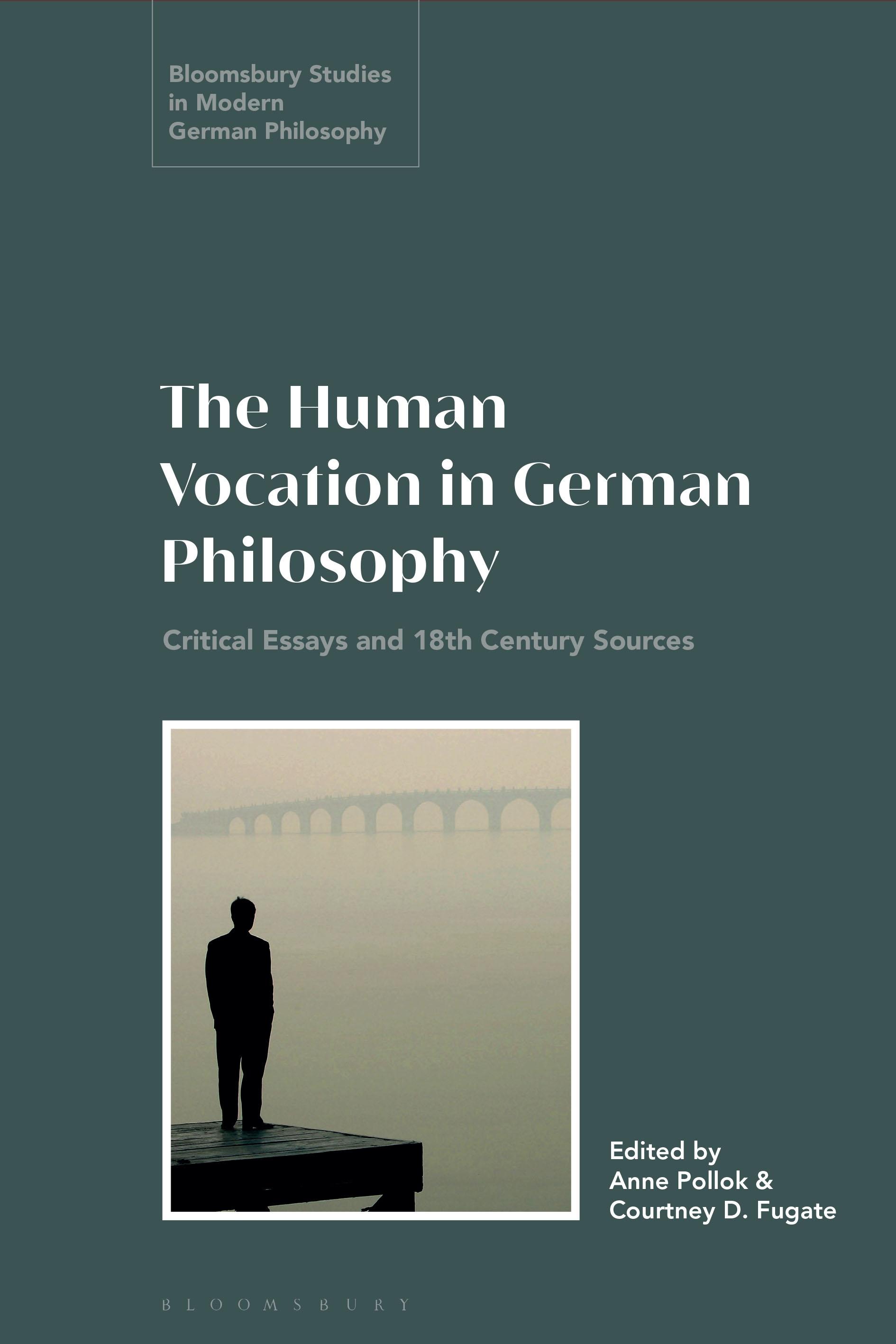
In 18th-century Germany philosophers were occupied with questions of who we are and what we should be. Can the individual fulfill its vocation or is this possible only for humanity as a whole? Is significant progress towards perfection in any way possible for me or just for me as part of humanity? By following the origin and nature of these debates, this collection sheds light on the vocation of humanity in early German philosophy.
Featuring translations of Spalding's Contemplation on the Vocation of the Human Being in its first version from 1748 and an extended translation of Abbt's and Mendelssohn's epistolary discussion around the Doubts and the Oracle from 1767, newly-commissioned chapters cover Johann Gottfried Herder's inherently cultural concept of the human being, Immanuel Kant's transformative interplay of moral and natural aspects, and the notion of metempsychosis in Fichte's work inspired by two neglected philosophers, Gotthold Ephraim Lessing and Johann Georg Schlosser. Opening further lines of inquiry, contributors address questions about the adaptations of Spalding's work that focus on the vocation of women as wife, mother or citizen.
Exploring the multitude of ways 18th-century German thinkers understand our position in the world, this volume captures major changes in metaphysics and anthropology and enriches current debates within modern philosophy.
Featuring translations of Spalding's Contemplation on the Vocation of the Human Being in its first version from 1748 and an extended translation of Abbt's and Mendelssohn's epistolary discussion around the Doubts and the Oracle from 1767, newly-commissioned chapters cover Johann Gottfried Herder's inherently cultural concept of the human being, Immanuel Kant's transformative interplay of moral and natural aspects, and the notion of metempsychosis in Fichte's work inspired by two neglected philosophers, Gotthold Ephraim Lessing and Johann Georg Schlosser. Opening further lines of inquiry, contributors address questions about the adaptations of Spalding's work that focus on the vocation of women as wife, mother or citizen.
Exploring the multitude of ways 18th-century German thinkers understand our position in the world, this volume captures major changes in metaphysics and anthropology and enriches current debates within modern philosophy.
Payez facilement par carte, Klarna, Apple Pay ou Google Pay. Pas satisfait ? Vous avez toujours une garantie de remboursement de 14 jours. En savoir plus dans nos conditions. Si vous avez des questions, envoyez-nous un e-mail à hello@memmo.org.
Memmo facilite tes études, où que tu sois dans le monde. On rassemble tes manuels de cours et des outils d'étude intelligents au même endroit : résumés, quiz, podcasts et flashcards. Et il y a Ted, ton compagnon d'étude qui répond à toutes tes questions. Plus de 50 000 étudiants étudient déjà ici – conçu pour t'aider à apprendre plus vite et à moins stresser.