
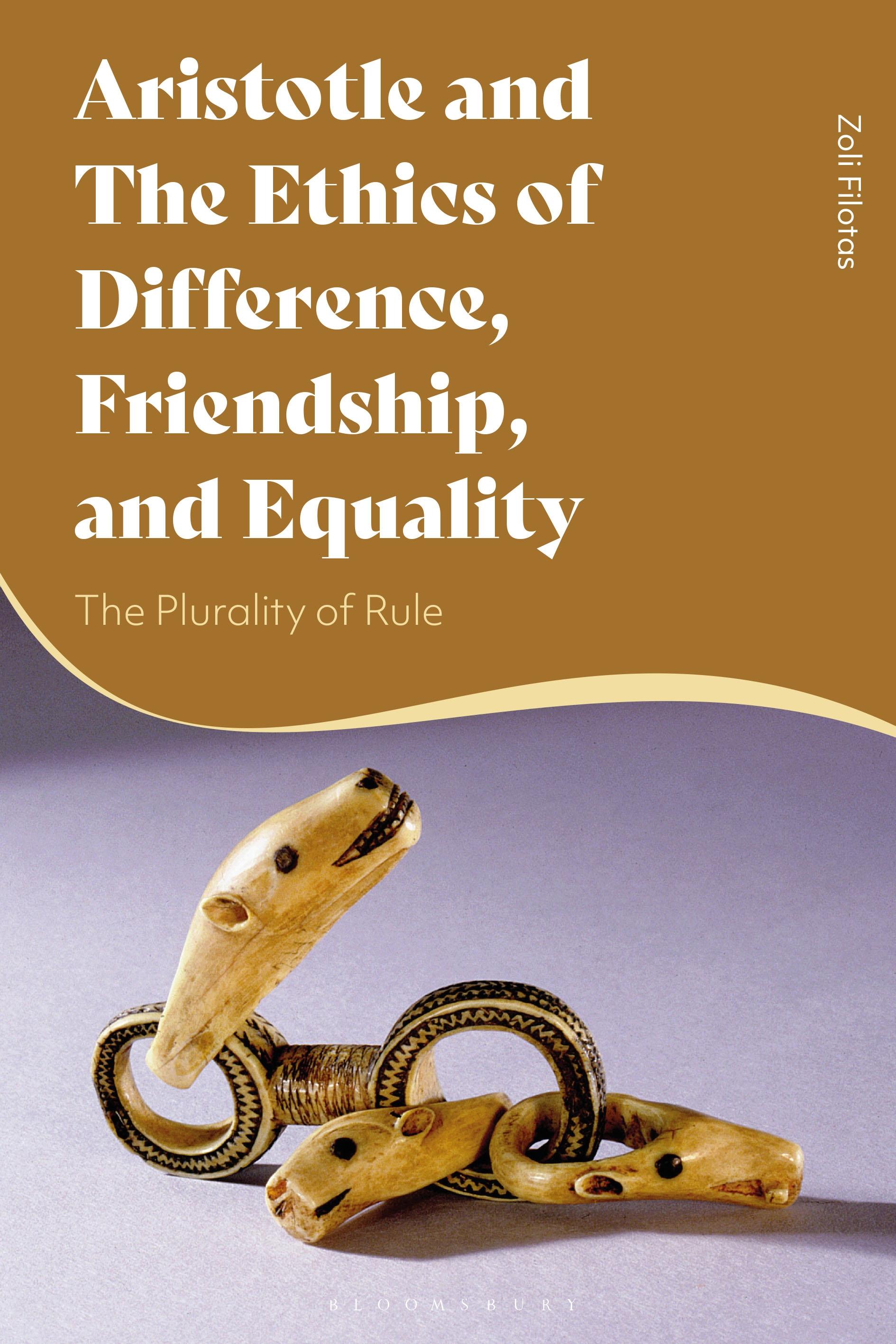
Connecting several strands of Aristotle's thought, Zoli Filotas sheds light on one of the axioms of Aristotle's ethics and political philosophy – that every community has a ruler – and demonstrates its relevance to his ideas on personal relationships.
Aristotle and the Ethics of Difference, Friendship, and Equality reveals a pluralistic theory of rule in Aristotle's thought, tracing it through his corpus and situating it in a discussion among such figures as Gorgias, Xenophon, and Plato. Considering the similarities and differences among various forms of rule, Filotas shows that for Aristotle even virtuous friends must exercise a version of rule akin to that of slaveholders. He also explores why Aristotle distinguishes the hierarchical rule over women from both the mastery of slaves and the political rule exercised by free and equal citizens. In doing so, he argues that natural and social differences among human beings play a complex, and troubling, role in Aristotle's reasoning. Illuminating and thought-provoking, this book reveals Aristotle's ambivalence about political relations and the equal treatment they involve and offers an engaging inquiry into how he understood the common structures of human relationships.
Aristotle and the Ethics of Difference, Friendship, and Equality reveals a pluralistic theory of rule in Aristotle's thought, tracing it through his corpus and situating it in a discussion among such figures as Gorgias, Xenophon, and Plato. Considering the similarities and differences among various forms of rule, Filotas shows that for Aristotle even virtuous friends must exercise a version of rule akin to that of slaveholders. He also explores why Aristotle distinguishes the hierarchical rule over women from both the mastery of slaves and the political rule exercised by free and equal citizens. In doing so, he argues that natural and social differences among human beings play a complex, and troubling, role in Aristotle's reasoning. Illuminating and thought-provoking, this book reveals Aristotle's ambivalence about political relations and the equal treatment they involve and offers an engaging inquiry into how he understood the common structures of human relationships.
Payez facilement par carte, Klarna, Apple Pay ou Google Pay. Pas satisfait ? Vous avez toujours une garantie de remboursement de 14 jours. En savoir plus dans nos conditions. Si vous avez des questions, envoyez-nous un e-mail à hello@memmo.org.
Memmo facilite tes études, où que tu sois dans le monde. On rassemble tes manuels de cours et des outils d'étude intelligents au même endroit : résumés, quiz, podcasts et flashcards. Et il y a Ted, ton compagnon d'étude qui répond à toutes tes questions. Plus de 50 000 étudiants étudient déjà ici – conçu pour t'aider à apprendre plus vite et à moins stresser.