
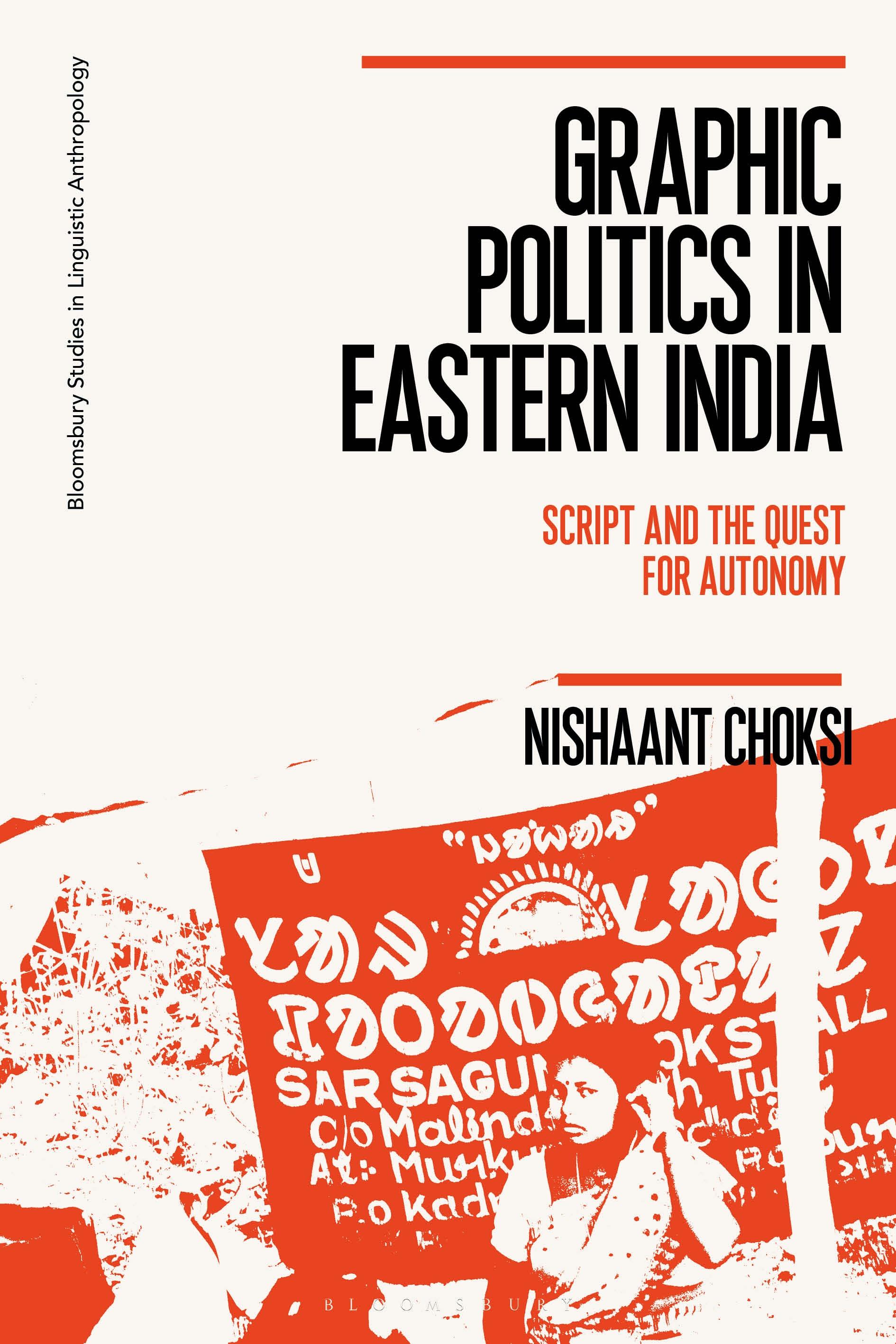
Investigating the communicative practices of indigenous Santali speakers in eastern India, Nishaant Choksi examines the overlooked role of script in regional movements for autonomy to provide one of the first comprehensive theoretical and ethnographical accounts of 'graphic politics'.
Based on extensive fieldwork in the villages of southwestern West Bengal, Choksi explores the deployment of Santali scripts, including a newly created script called Ol Chiki, in Bengali-dominated local markets, the education system and in the circulation of print media. He shows how manipulating the linguistic landscape and challenging the idea of a vernacular enables Santali speakers to delineate their own political domains and scale their language on local, regional and national levels. In doing so, they contest Bengali-speaking upper castes' hegemony over public spaces and institutions, as well as the administrative demarcations of the contemporary Indian nation-state.
Combining semiotic theory with ethnographically grounded investigation, Graphic Politics in Eastern India provides a new framework for understanding writing and literacy practices among ethnic minorities and points to future directions for interdisciplinary research on indigenous autonomy in South Asia.
Based on extensive fieldwork in the villages of southwestern West Bengal, Choksi explores the deployment of Santali scripts, including a newly created script called Ol Chiki, in Bengali-dominated local markets, the education system and in the circulation of print media. He shows how manipulating the linguistic landscape and challenging the idea of a vernacular enables Santali speakers to delineate their own political domains and scale their language on local, regional and national levels. In doing so, they contest Bengali-speaking upper castes' hegemony over public spaces and institutions, as well as the administrative demarcations of the contemporary Indian nation-state.
Combining semiotic theory with ethnographically grounded investigation, Graphic Politics in Eastern India provides a new framework for understanding writing and literacy practices among ethnic minorities and points to future directions for interdisciplinary research on indigenous autonomy in South Asia.
Payez facilement par carte, Klarna, Apple Pay ou Google Pay. Pas satisfait ? Vous avez toujours une garantie de remboursement de 14 jours. En savoir plus dans nos conditions. Si vous avez des questions, envoyez-nous un e-mail à hello@memmo.org.
Memmo facilite tes études, où que tu sois dans le monde. On rassemble tes manuels de cours et des outils d'étude intelligents au même endroit : résumés, quiz, podcasts et flashcards. Et il y a Ted, ton compagnon d'étude qui répond à toutes tes questions. Plus de 50 000 étudiants étudient déjà ici – conçu pour t'aider à apprendre plus vite et à moins stresser.