
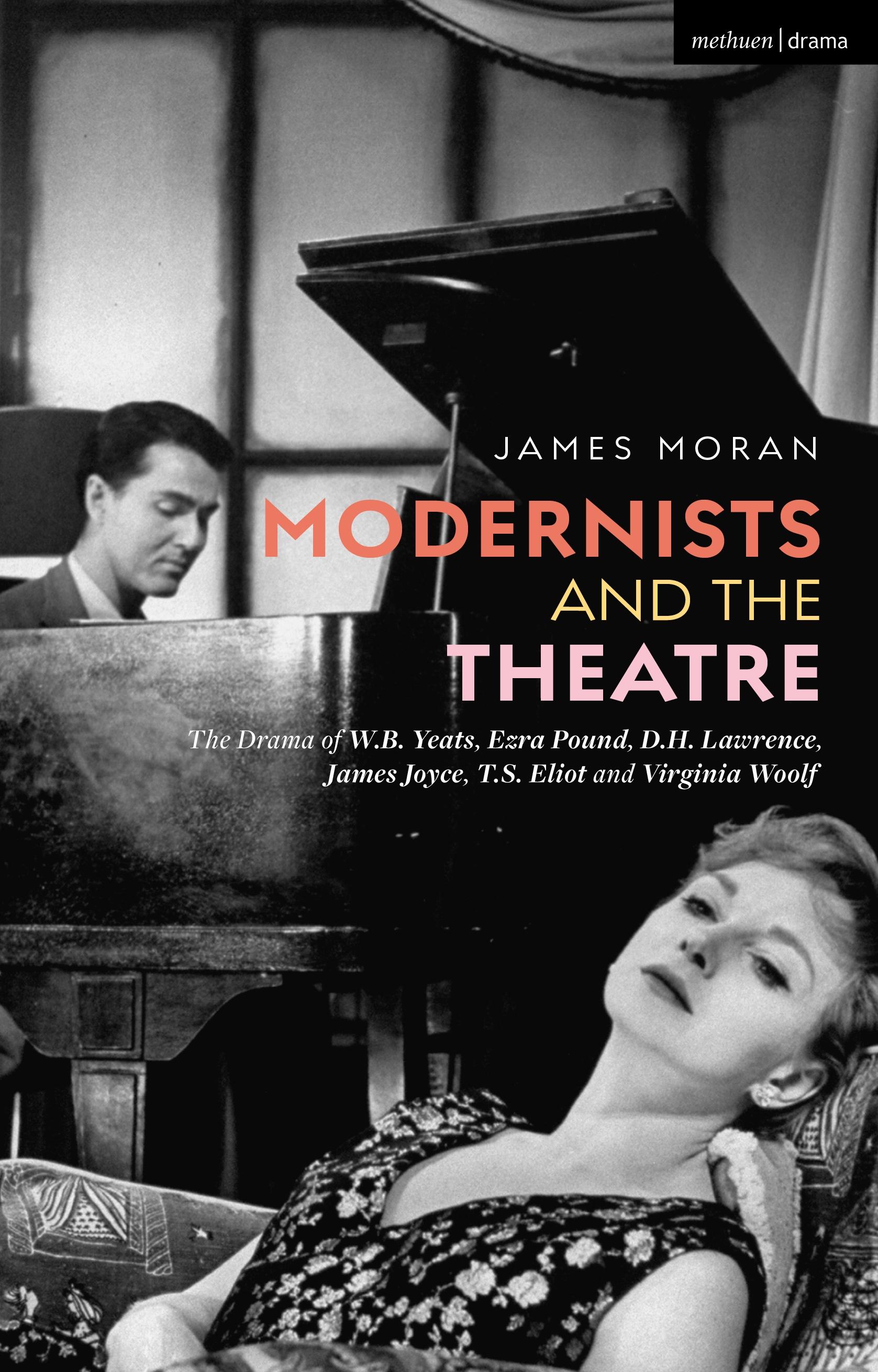
Modernists and the Theatre examines how six key modernists, who are best known as poets and novelists, engaged with the realm of theatre and performance. Drawing on a wealth of unfamiliar archival material and fresh readings of neglected documents, James Moran demonstrates how these literary figures interacted with the playhouse, exploring W.B. Yeats's earliest playwriting, Ezra Pound's onstage acting, the links between James Joyce's and D.H. Lawrence's sense of drama, T.S. Eliot's thinking about theatrical popularity, and the feminist politics of Virginia Woolf's small-scale theatrical experimentation.
While these modernists often made hostile comments about drama, this volume highlights how the writers were all repeatedly drawn to the form. While Yeats and Pound were fascinated by the controlling aspect of theatre, other authors felt inspired by theatre as a democratic forum in which dissenting voices could be heard. Some of these modernists used theatre to express and explore identities that had previously been sidelined in the public forum, including the working-class mining communities of Lawrence's plays, the sexually unconventional and non-binary gender expressions of Joyce's fiction, and the female experience that Woolf sought to represent and discuss in terms of theatrical performance.
These writers may be known primarily for creating non-dramatic texts, but this book demonstrates the importance of the theatre to the activities of these authors, and shows how a sense of the theatrical repeatedly motivated the wider thinking and writing of six major figures in literary history.
While these modernists often made hostile comments about drama, this volume highlights how the writers were all repeatedly drawn to the form. While Yeats and Pound were fascinated by the controlling aspect of theatre, other authors felt inspired by theatre as a democratic forum in which dissenting voices could be heard. Some of these modernists used theatre to express and explore identities that had previously been sidelined in the public forum, including the working-class mining communities of Lawrence's plays, the sexually unconventional and non-binary gender expressions of Joyce's fiction, and the female experience that Woolf sought to represent and discuss in terms of theatrical performance.
These writers may be known primarily for creating non-dramatic texts, but this book demonstrates the importance of the theatre to the activities of these authors, and shows how a sense of the theatrical repeatedly motivated the wider thinking and writing of six major figures in literary history.
Payez facilement par carte, Klarna, Apple Pay ou Google Pay. Pas satisfait ? Vous avez toujours une garantie de remboursement de 14 jours. En savoir plus dans nos conditions. Si vous avez des questions, envoyez-nous un e-mail à hello@memmo.org.
Memmo facilite tes études, où que tu sois dans le monde. On rassemble tes manuels de cours et des outils d'étude intelligents au même endroit : résumés, quiz, podcasts et flashcards. Et il y a Ted, ton compagnon d'étude qui répond à toutes tes questions. Plus de 50 000 étudiants étudient déjà ici – conçu pour t'aider à apprendre plus vite et à moins stresser.