
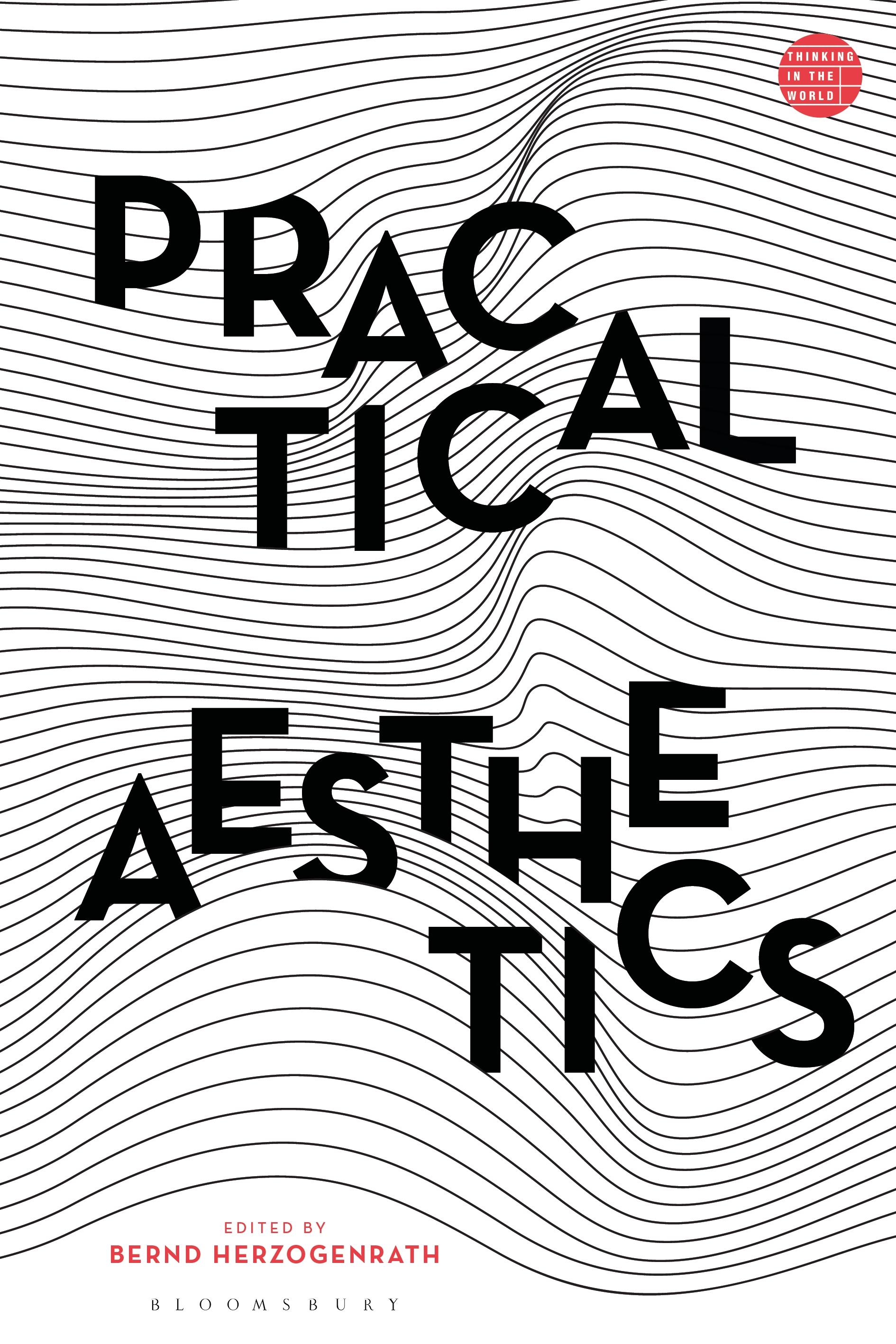
This collection brings together artists and theoreticians to provide the first anthology of a new field: Practical Aesthetics.
A work of art already contains its own criticism, a knowledge of its own which need not be conceptual or propositional. Yet today, there are many approaches to different forms of art that work on the brink between science and art, 'sensible cognition' and proposition, aesthetic knowledge and rational knowledge, while thinking with art (or the artistic material) rather than about it.
This volumes presents ways of thinking with different forms of art (film, sound, dance, literature, etc), as well as new forms of aesthetic research and presentation such as Media Philosophy, the audiovisual essay, fictocriticism, the audio paper, and Artistic Research. It reveals how writing about art can become 'artistic' or 'poetic' in its own right: not only writing about artistic effects, but producing them in the first place. This takes art not as an object of (external) analysis, but as a subject with a knowledge in its own right, creating a co-composing 'conceptual interference pattern' between theory and practice.
A 'practical aesthetics' thus understood, can be described as thinking with art, in order to find new ways to create worlds and thus to make the world perceivable in different ways.
A work of art already contains its own criticism, a knowledge of its own which need not be conceptual or propositional. Yet today, there are many approaches to different forms of art that work on the brink between science and art, 'sensible cognition' and proposition, aesthetic knowledge and rational knowledge, while thinking with art (or the artistic material) rather than about it.
This volumes presents ways of thinking with different forms of art (film, sound, dance, literature, etc), as well as new forms of aesthetic research and presentation such as Media Philosophy, the audiovisual essay, fictocriticism, the audio paper, and Artistic Research. It reveals how writing about art can become 'artistic' or 'poetic' in its own right: not only writing about artistic effects, but producing them in the first place. This takes art not as an object of (external) analysis, but as a subject with a knowledge in its own right, creating a co-composing 'conceptual interference pattern' between theory and practice.
A 'practical aesthetics' thus understood, can be described as thinking with art, in order to find new ways to create worlds and thus to make the world perceivable in different ways.
Payez facilement par carte, Klarna, Apple Pay ou Google Pay. Pas satisfait ? Vous avez toujours une garantie de remboursement de 14 jours. En savoir plus dans nos conditions. Si vous avez des questions, envoyez-nous un e-mail à hello@memmo.org.
Memmo facilite tes études, où que tu sois dans le monde. On rassemble tes manuels de cours et des outils d'étude intelligents au même endroit : résumés, quiz, podcasts et flashcards. Et il y a Ted, ton compagnon d'étude qui répond à toutes tes questions. Plus de 50 000 étudiants étudient déjà ici – conçu pour t'aider à apprendre plus vite et à moins stresser.